Second day in Hanoi, and our first real day of sightseeing. No taxi, no minute-by-minute schedule: we set off on foot, from morning until night. The Temple of Literature, the mausoleum, the big lakes up north, then back to the heart of the city. And in Hanoi, just walking is an experience in itself.
October 24 · 9:30 am
An ocean of scooters
A lie-in, breakfast at the hotel, then out on foot. And the first thing that hits you is what I'd already noticed the day before from the taxi: the scooters. Hundreds, thousands of them. Women, men, teenagers, old folks, kids wedged between two adults, Grab delivery riders in green. They come from every direction, weave, honk, and never really stop. To cross the street, there's just one rule: walk at a steady pace, don't run. They're the ones who go around you.
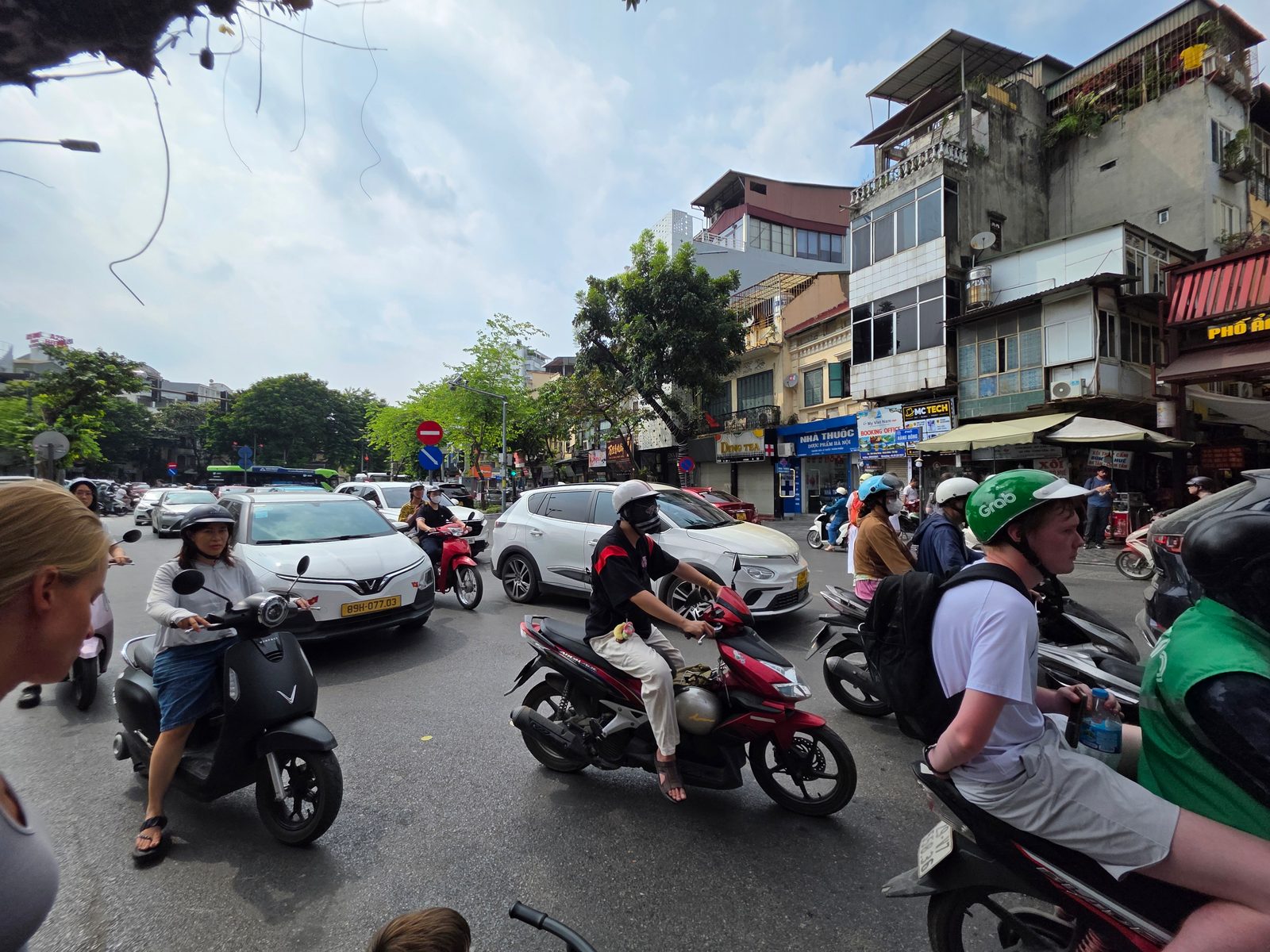
The first sensation of the day. And of the whole trip, really.
Along the way, the city tells a bit of history too. On a street corner, a building with columns and gilded moldings, almost Parisian, topped by a huge glass tower cut like a diamond: it's a jeweler's headquarters. A little further on, on an old electrical substation, painted ads from another era: a Citroën from the “Auto-Hall” of Saigon, Phnom Penh and Hanoi, and a Renault, “xe hơi của Pháp-quốc”, the automobile of France. France passed through here, and left its billboards behind.
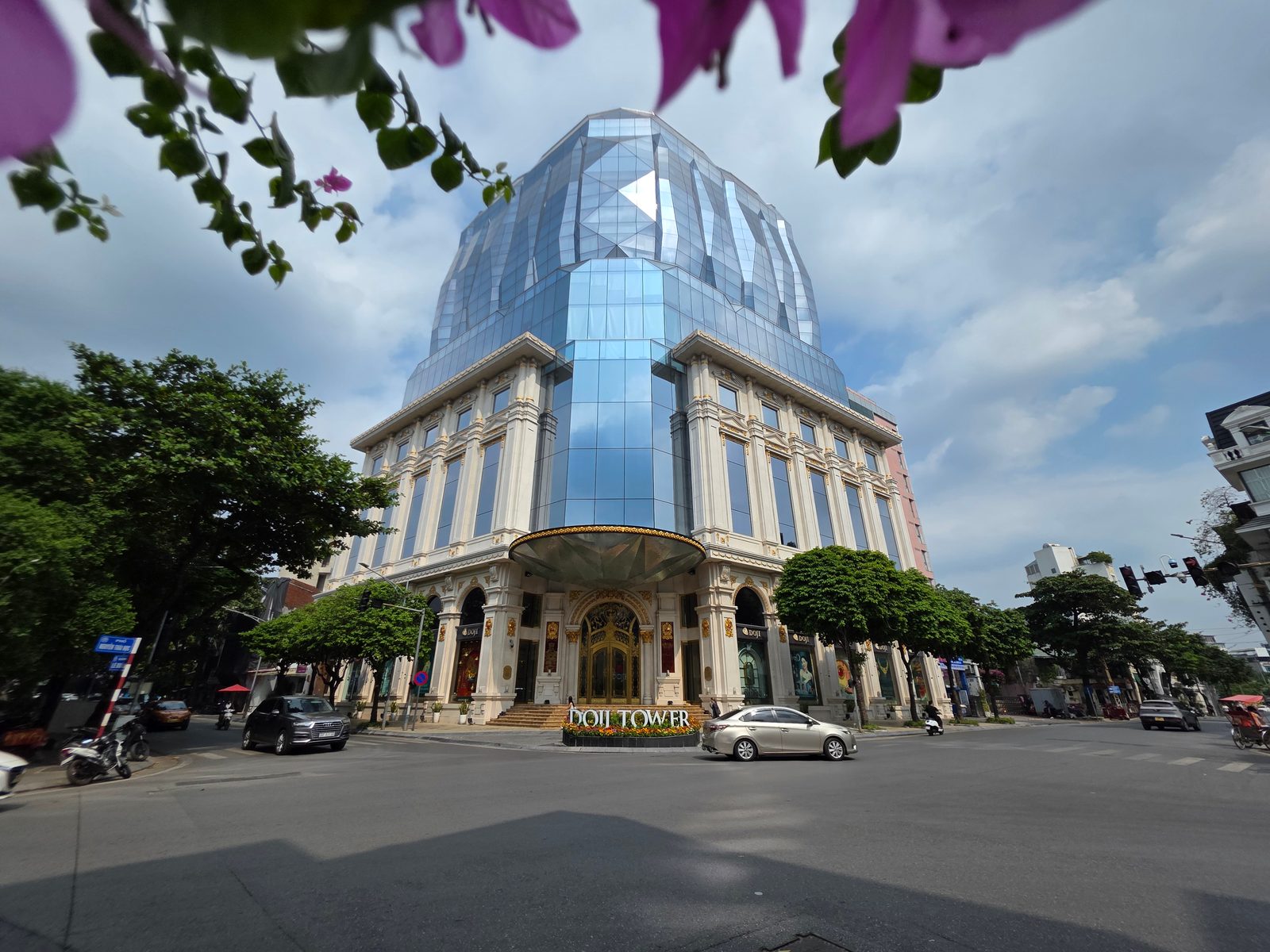
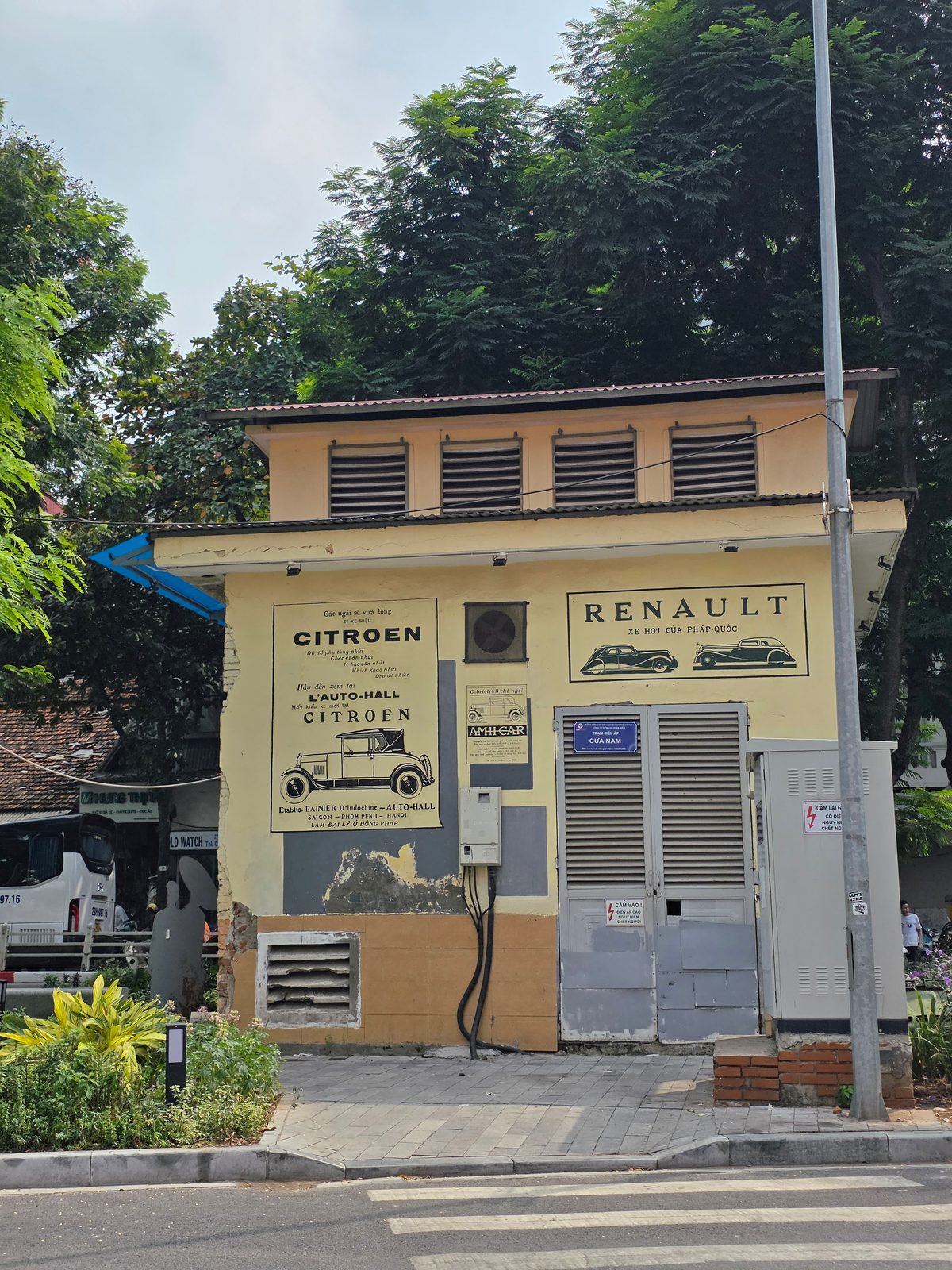
A palace crowned with a diamond, and ads from French Indochina on a substation.
On a sidewalk, a man is repairing a sewing machine, sitting on a child's school chair, between the power cables and the cardboard boxes. And we stop at a small café, Tròn, with a pared-back, slightly Japanese look, for a good strong espresso. Very good, in fact. On the side, dates and a little sesame cake from my bag: Algerian treats, brought back from my vacation there a week earlier. A Vietnamese coffee, an Algerian snack: the perfect break.
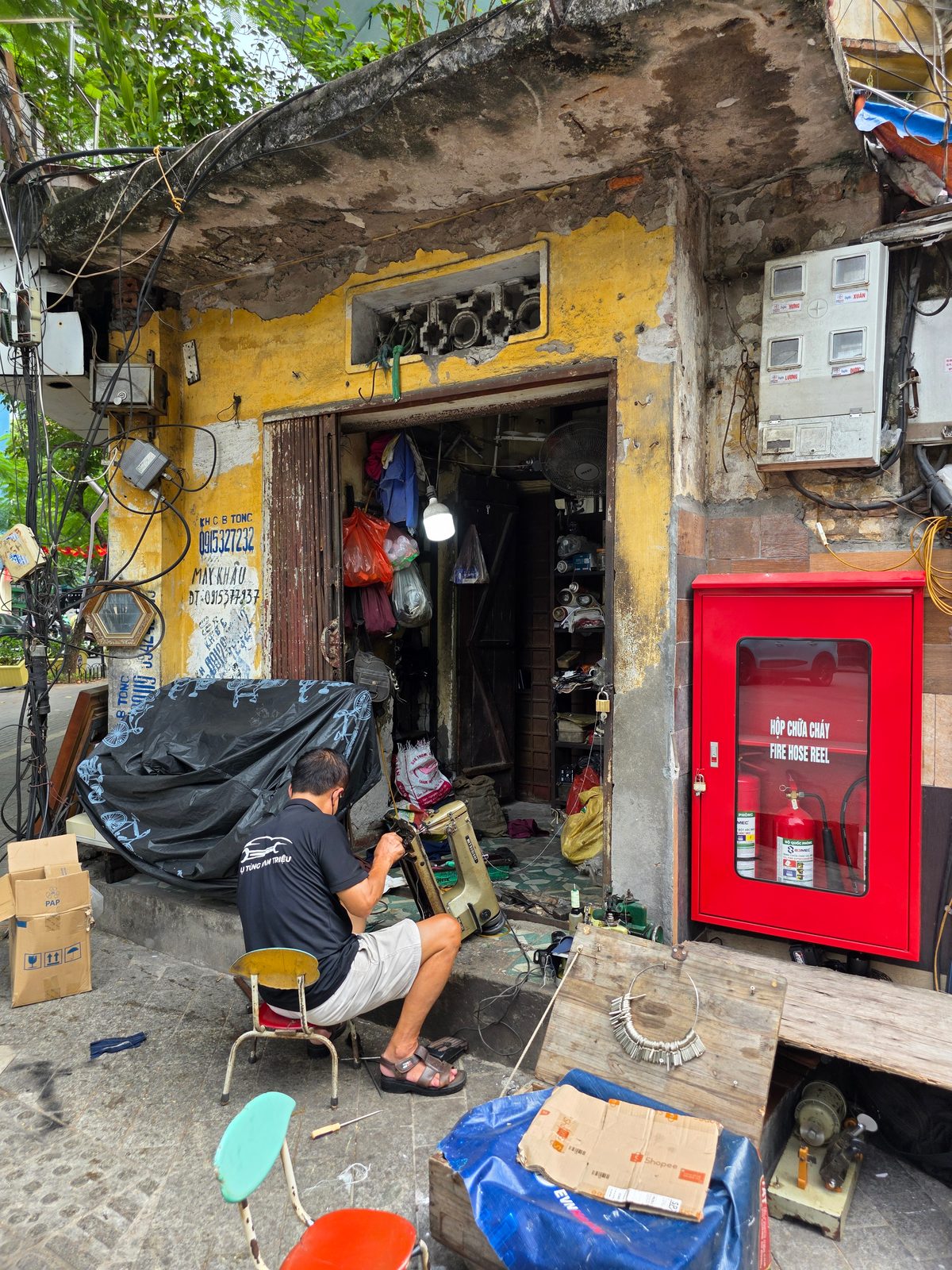
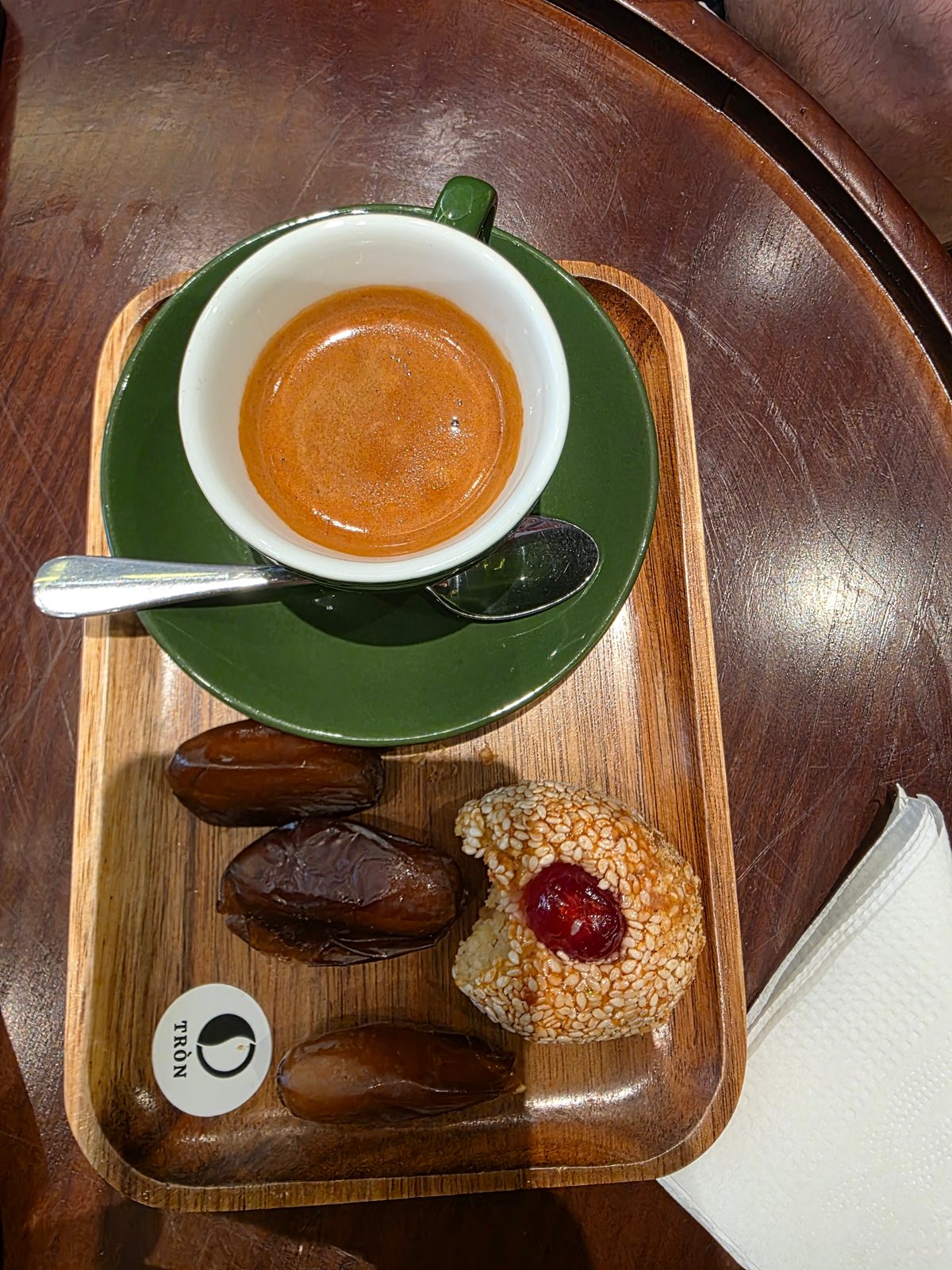
Sidewalk trades, and a coffee break, French-Algerian-Vietnamese style.
Café Tròn, Hanoi
Old Quarter · Japanese-inspired decor · Espresso
October 24 · late morning
A thousand years of learning
Văn Miếu, the Temple of Literature, was founded in 1070 and dedicated to Confucius. A few years later, the Imperial Academy moved in, Vietnam's first university. This is where the mandarins, the kingdom's top civil servants, were trained. The entrance gate, white and weathered, sets the tone: here, everything is old, everything is calm, everything makes you lower your voice.
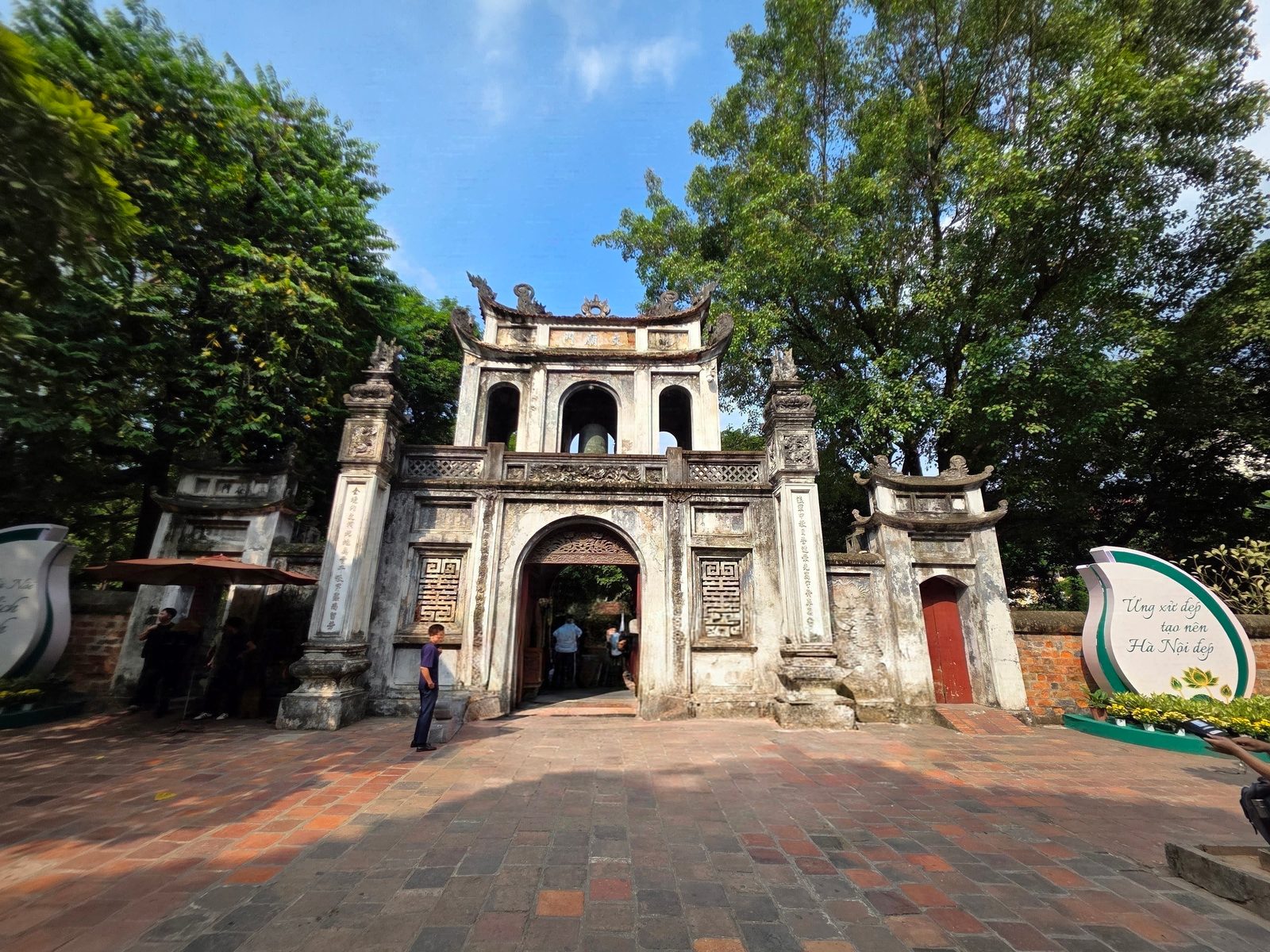
The Văn Miếu gate. Behind it, five courtyards in a row.
We move from courtyard to courtyard, along brick paths shaded by tall trees, to the Khuê Văn Các pavilion and its round window. It's one of Hanoi's symbols: you'll even find it on the banknotes.
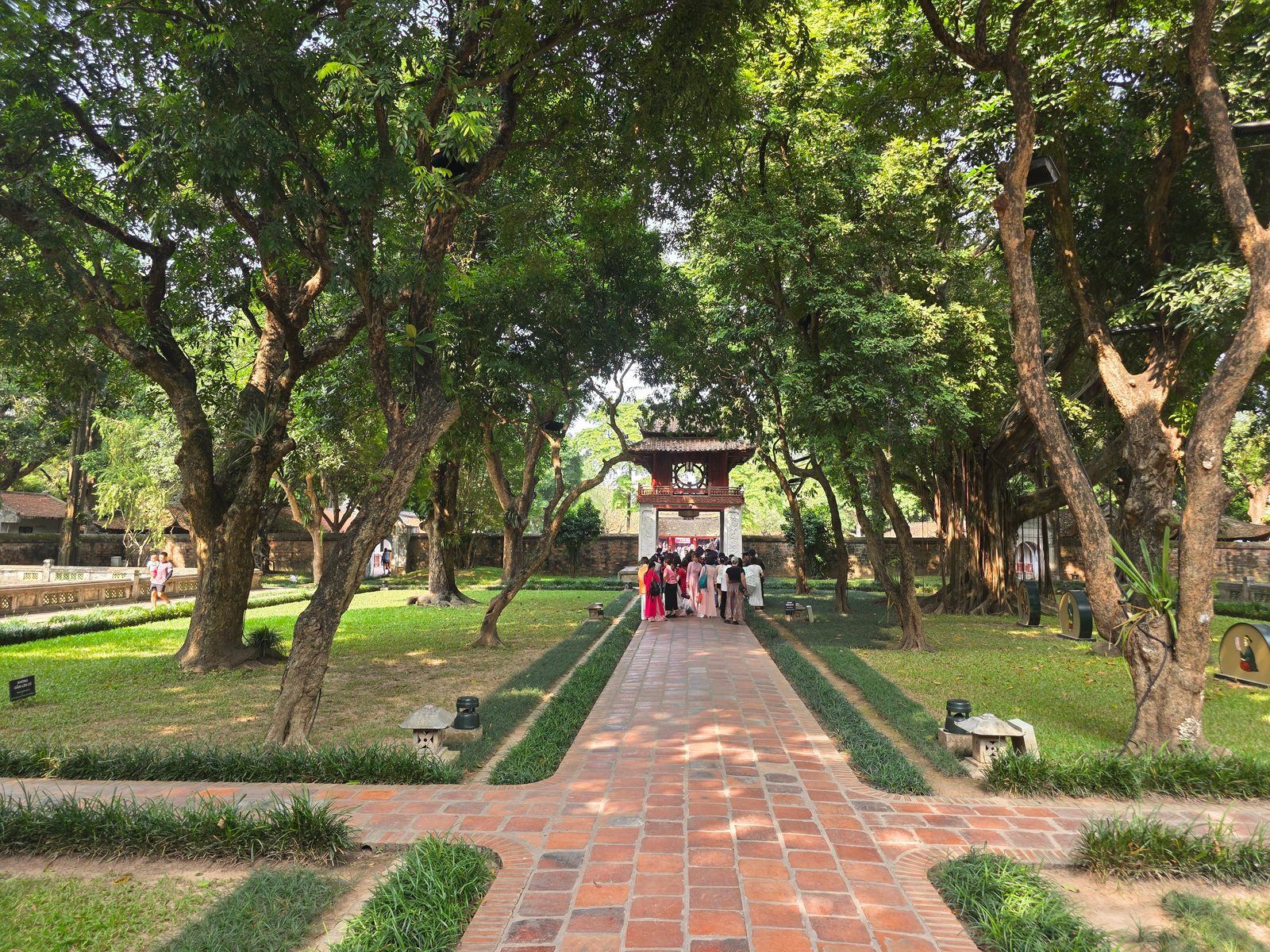
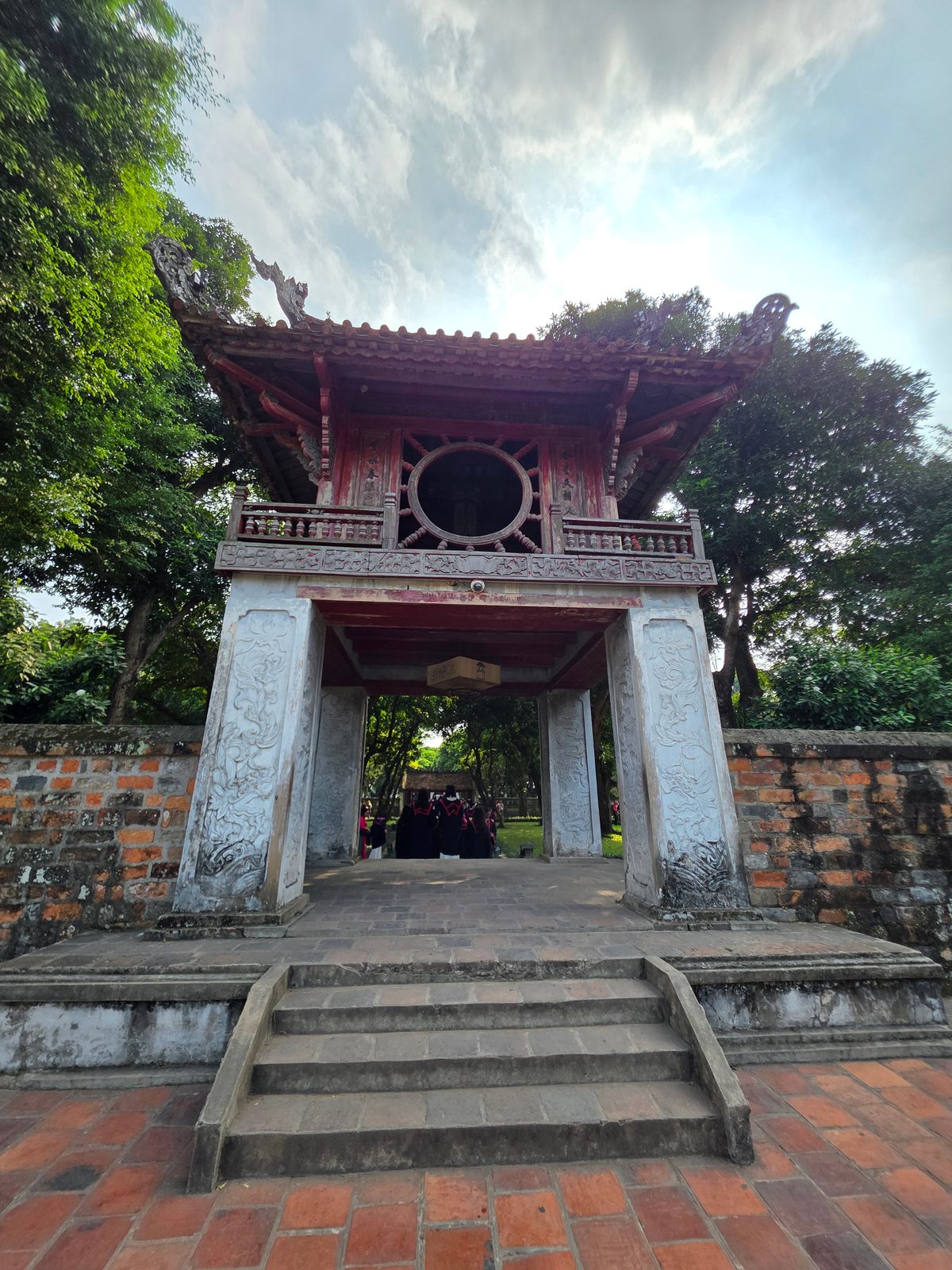
The shady path, then the pavilion with the round window.
Behind it, a large square pond, the Well of Heavenly Clarity, reflects the trees and the roofs. Total calm, a stone's throw from the scooters.
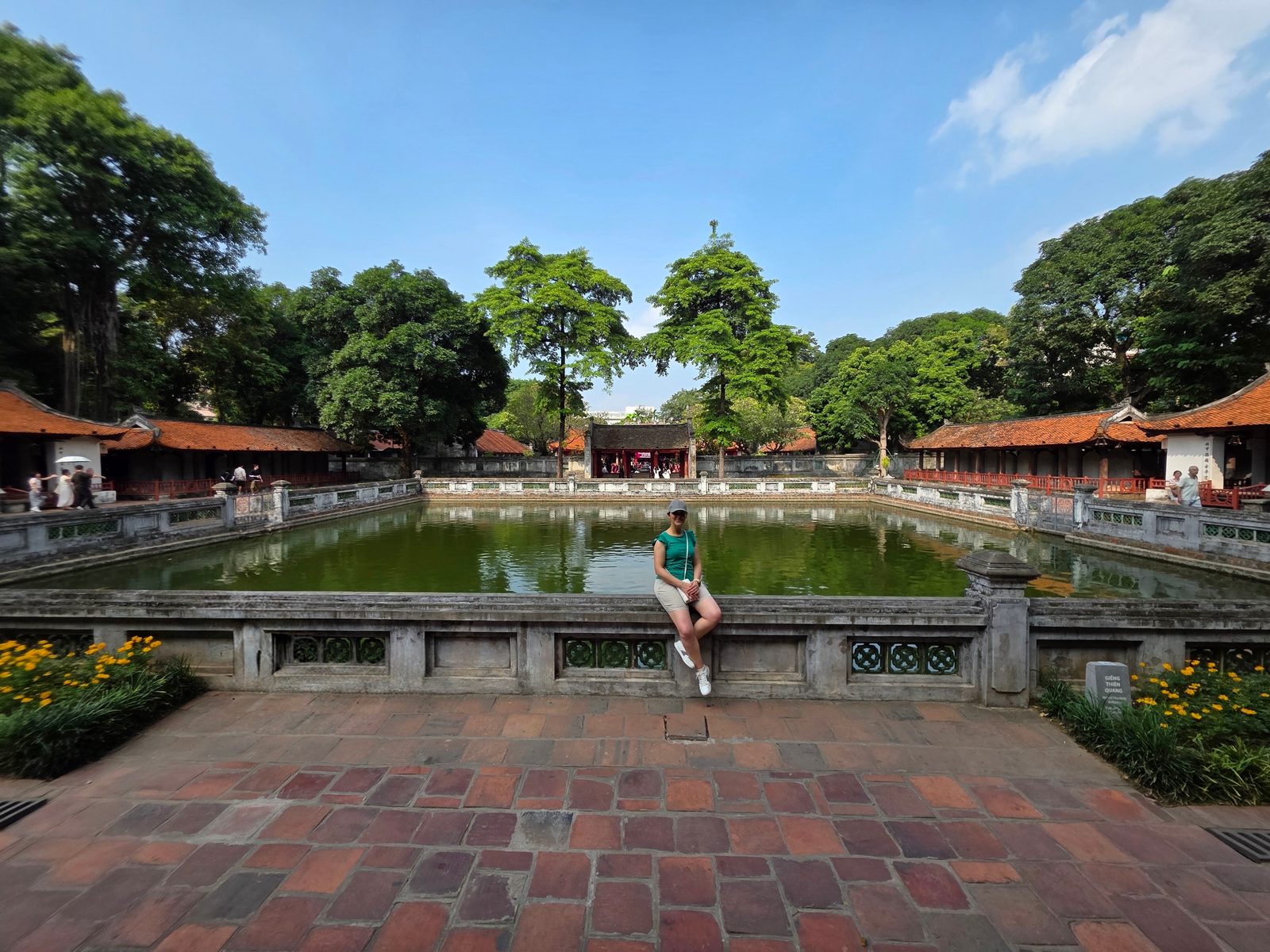
The Well of Heavenly Clarity. A break in the shade, well, almost.
On either side of the pond, under wooden galleries, dozens of large stone steles stand tall, each one resting on the back of a turtle. They bear the names of those who passed the imperial exams.
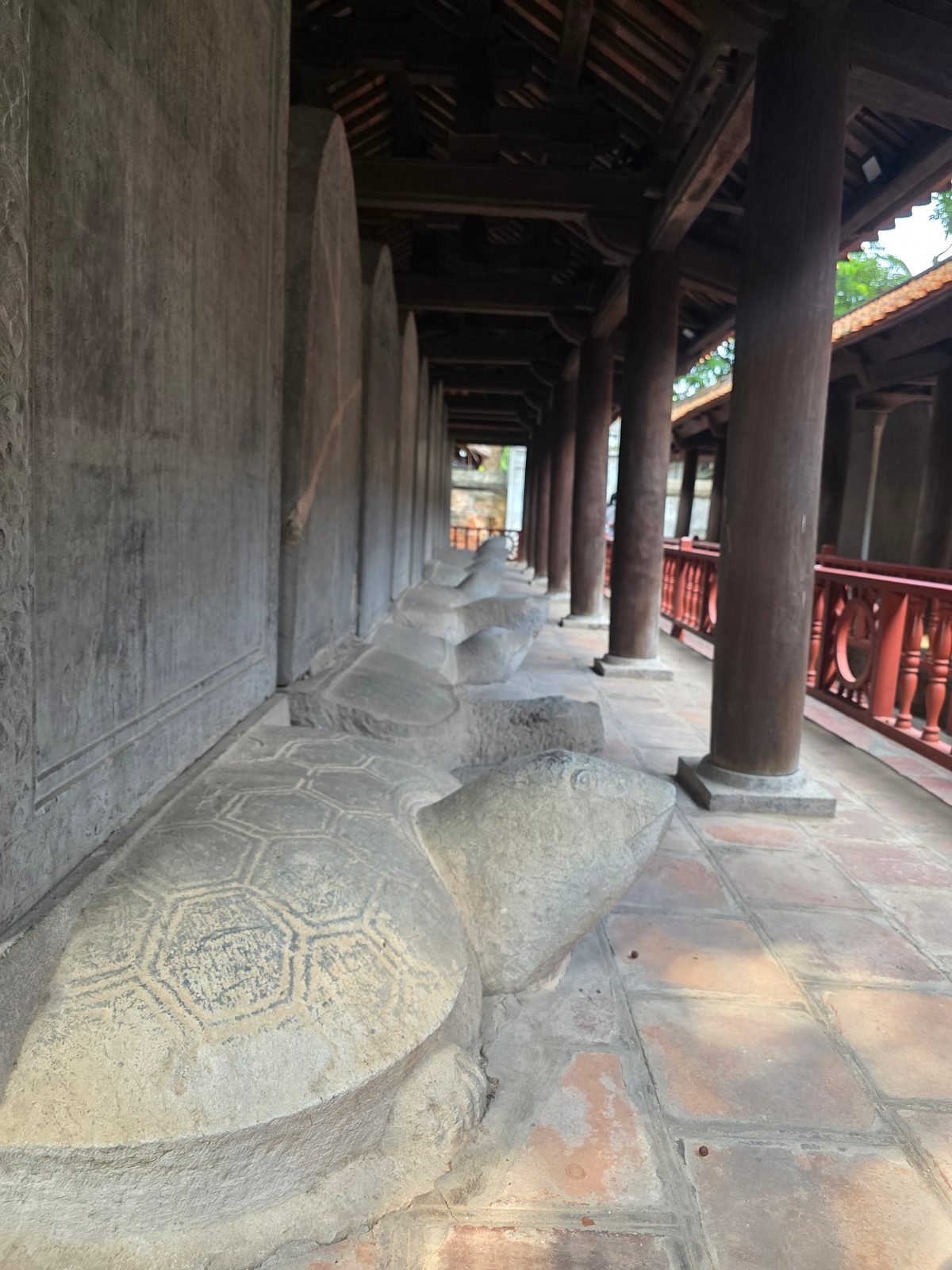
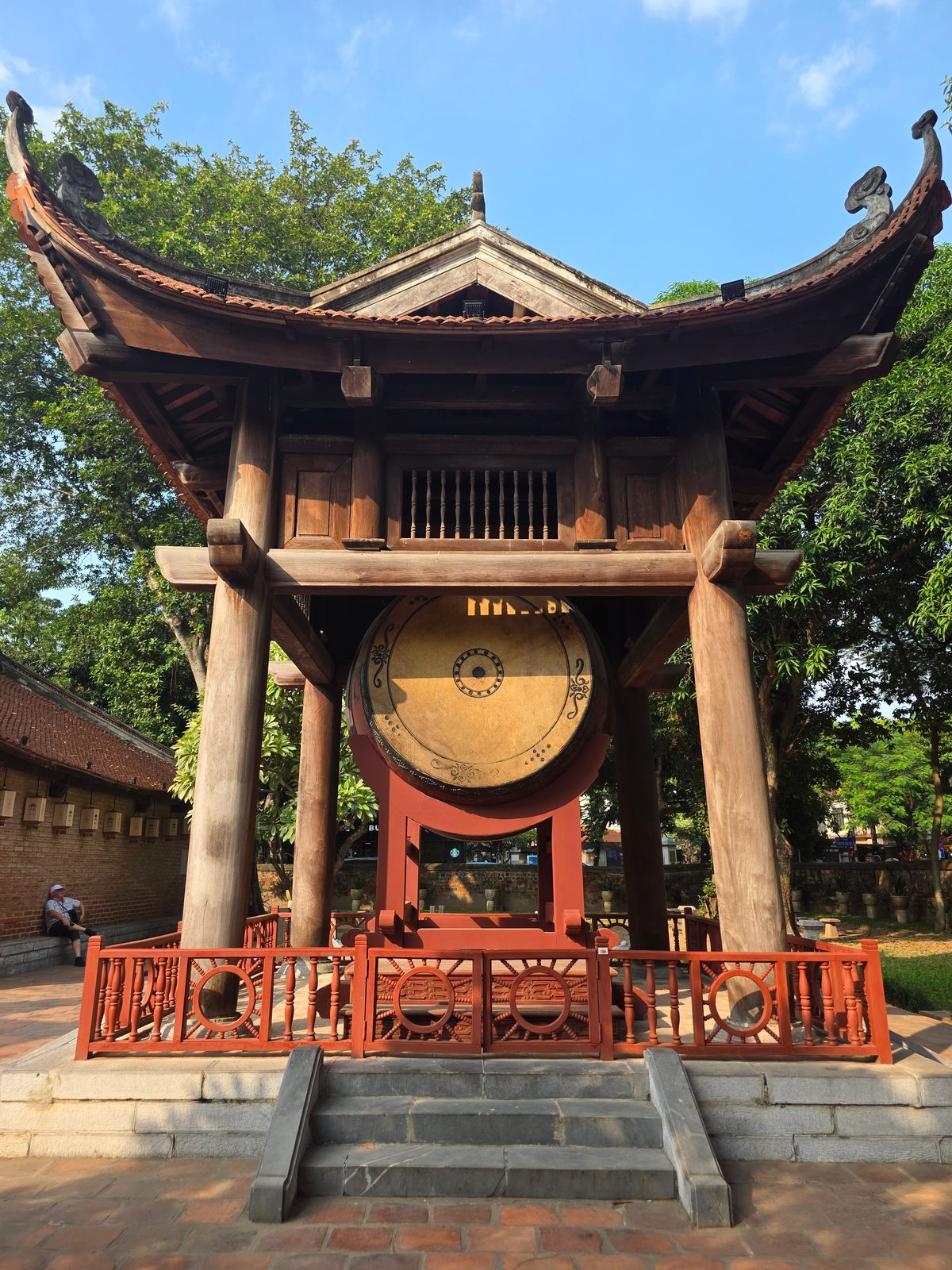
The doctors' steles, each on its turtle, and the pavilion of the great drum.
82 steles remain, bearing the names of more than 1,300 laureates of the imperial exams held between 1442 and 1779. They sit on turtles, a symbol of longevity and wisdom, and are listed in UNESCO's Memory of the World register. Students used to rub the turtles' heads for luck in their exams. To protect them, touching is no longer allowed.
In the next courtyard, the great hall is dedicated to Confucius. His statue sits enthroned among red and gold lacquer, surrounded by lilies, pomelos and incense sticks.
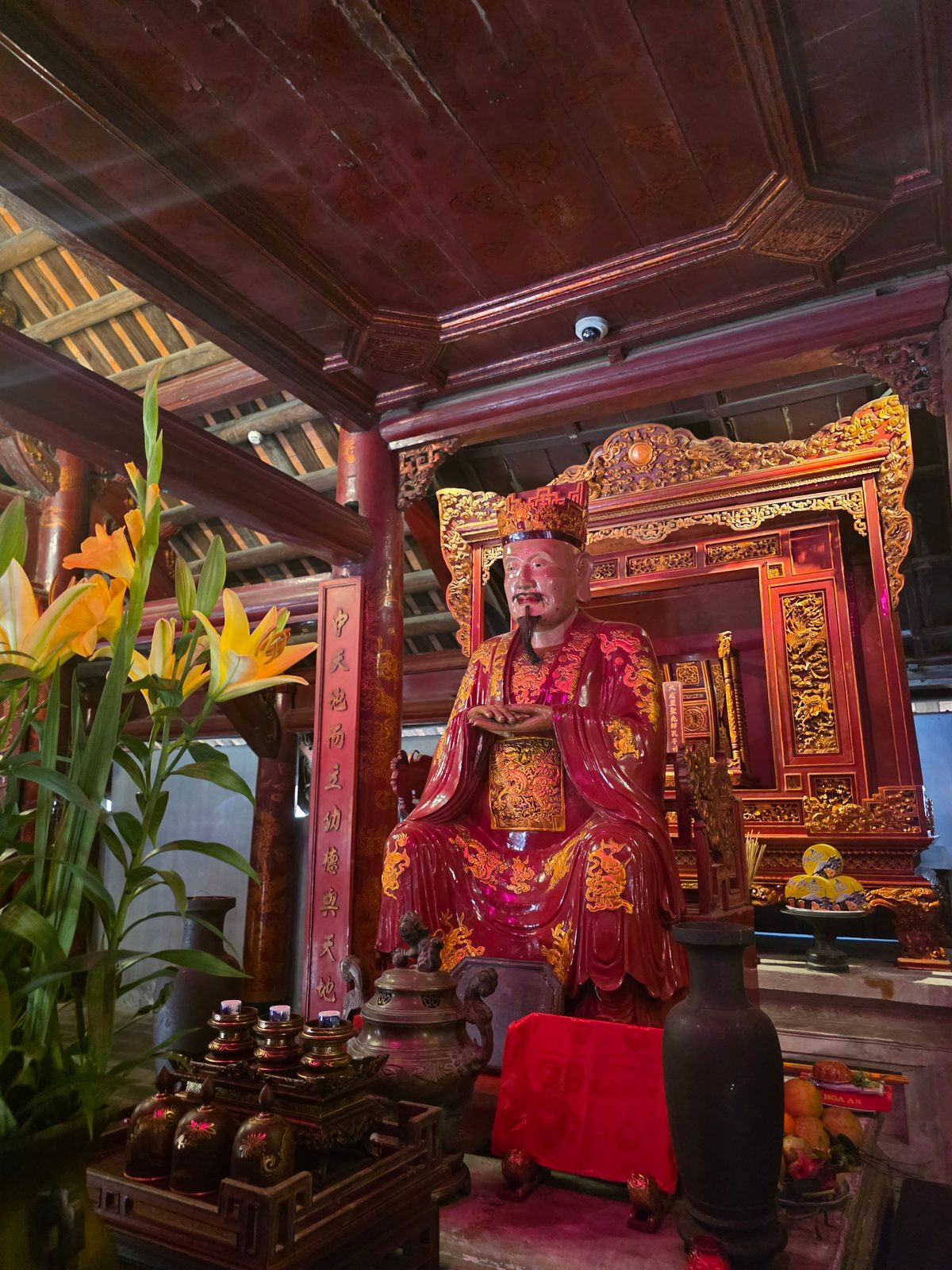
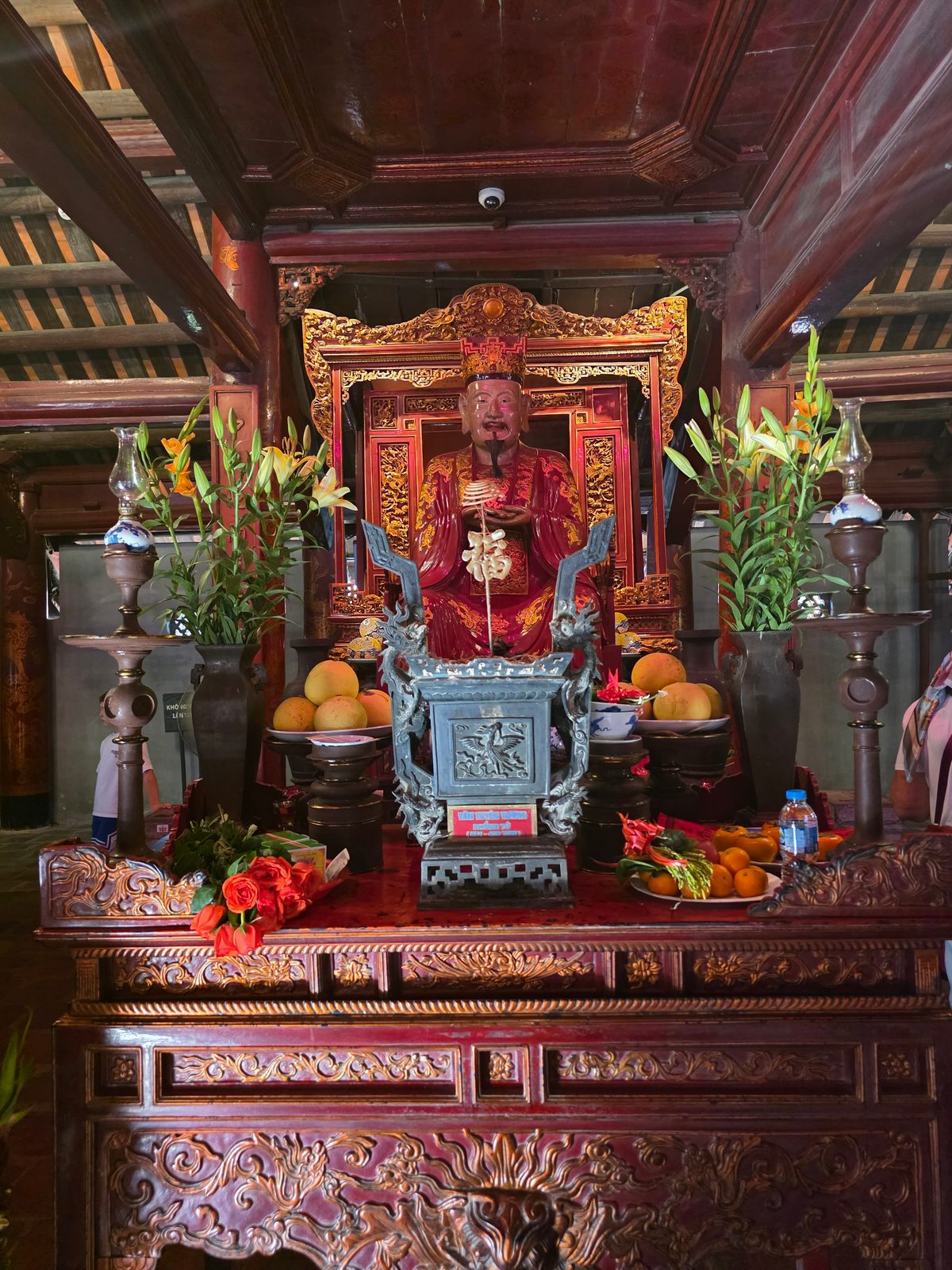
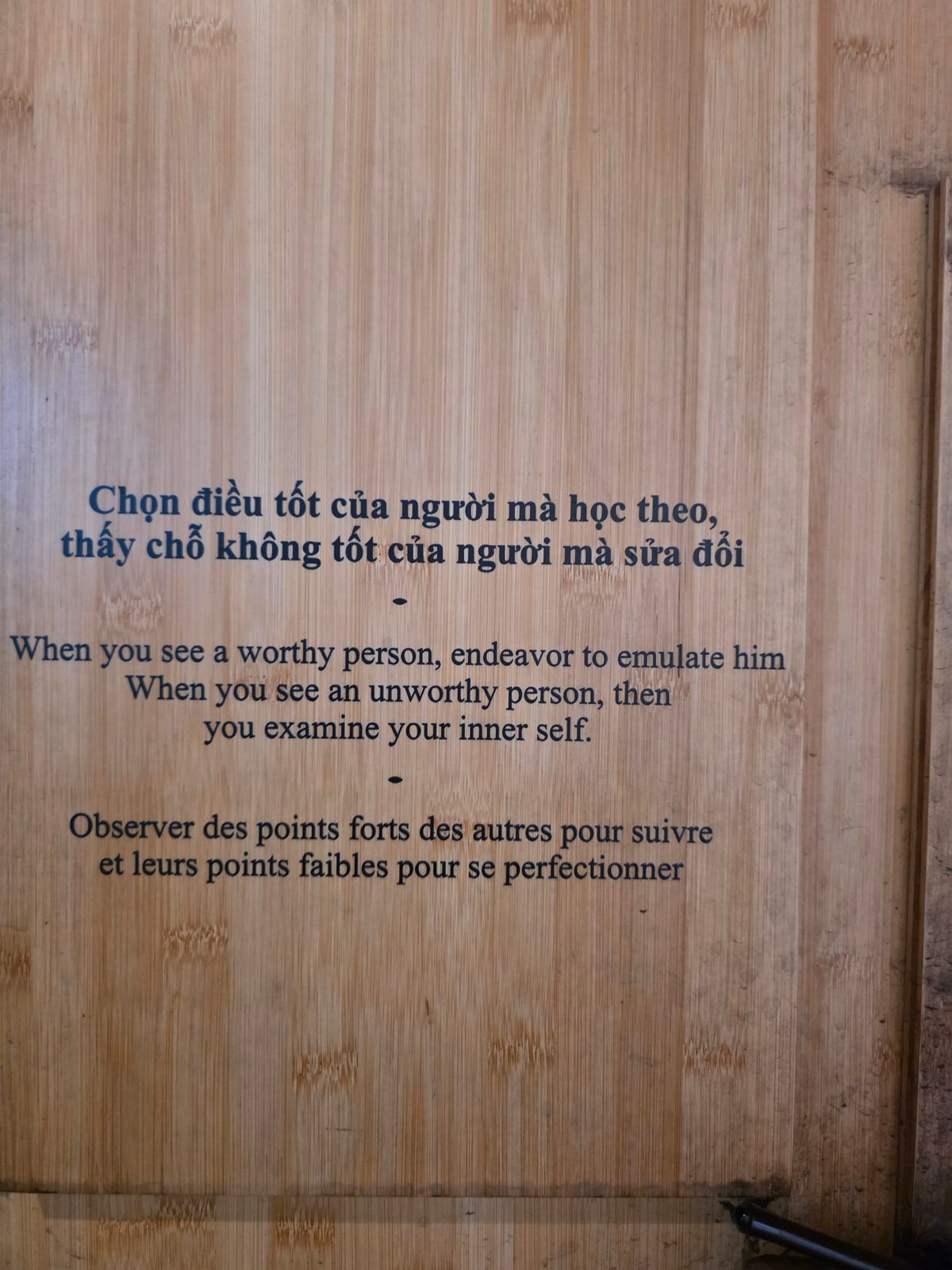
Confucius, today's offerings, and a maxim to ponder.
Mortarboards in the sky
And then, in the middle of the courtyard, a show we weren't expecting. A whole class in black and red gowns lines up in front of the pavilion for a photo: some sitting, some standing. One, two, three, and every mortarboard flies at once. Laughter, shrieks, caps clattering back down on the paving stones. Across the way, other groups wait their turn, lined up as well.
Their banner reads: “Lớp 9A2 Trường THCS Nhân Chính, Lễ dâng hương, Văn Miếu Quốc Tử Giám, 24/10/2026”. So it's not a graduation: these are final-year middle schoolers who've come to make an incense offering at the temple. In Vietnam, people come here to pray for exam success, and at the end of the year these kids will sit the high school entrance exam.
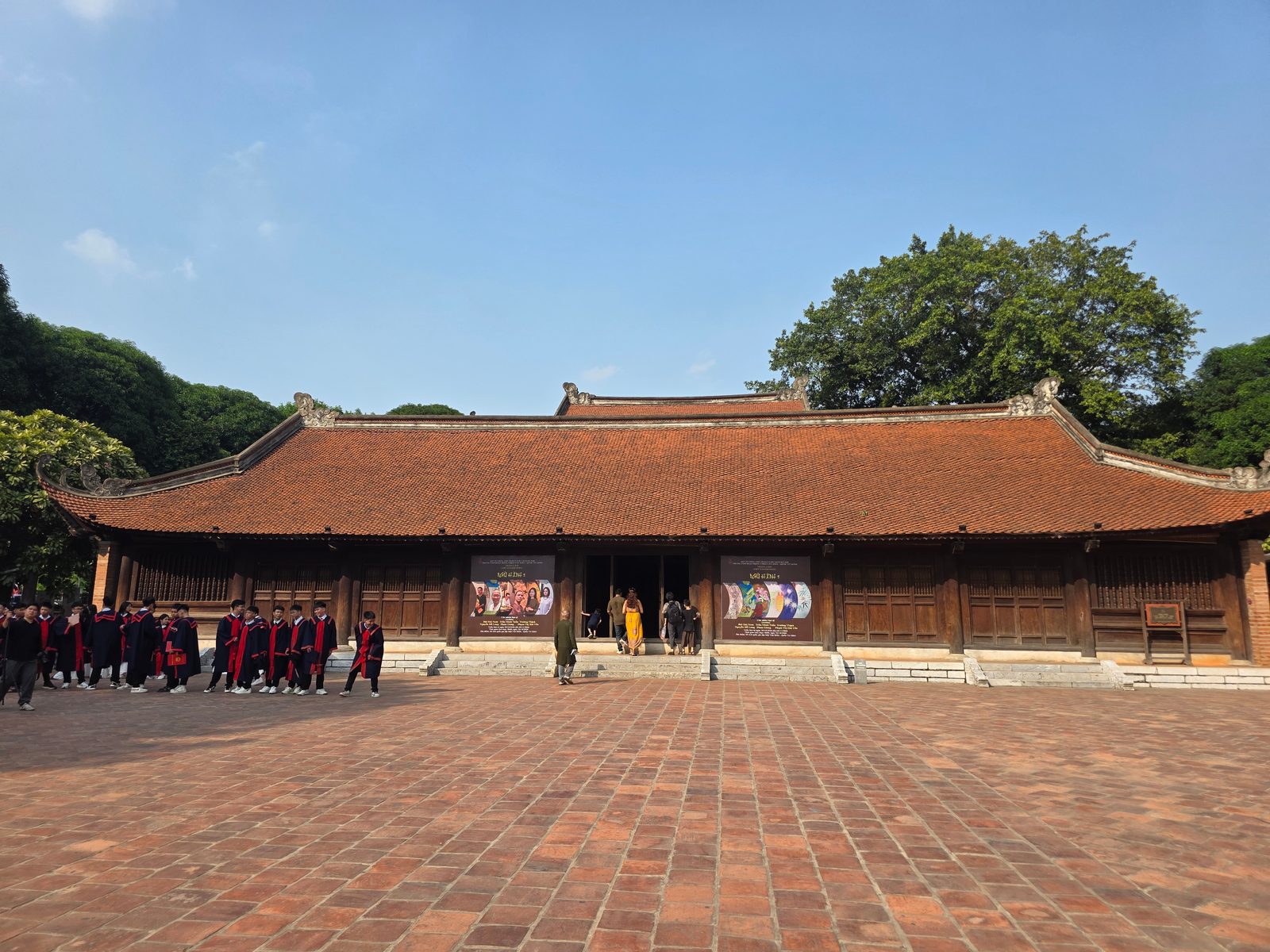
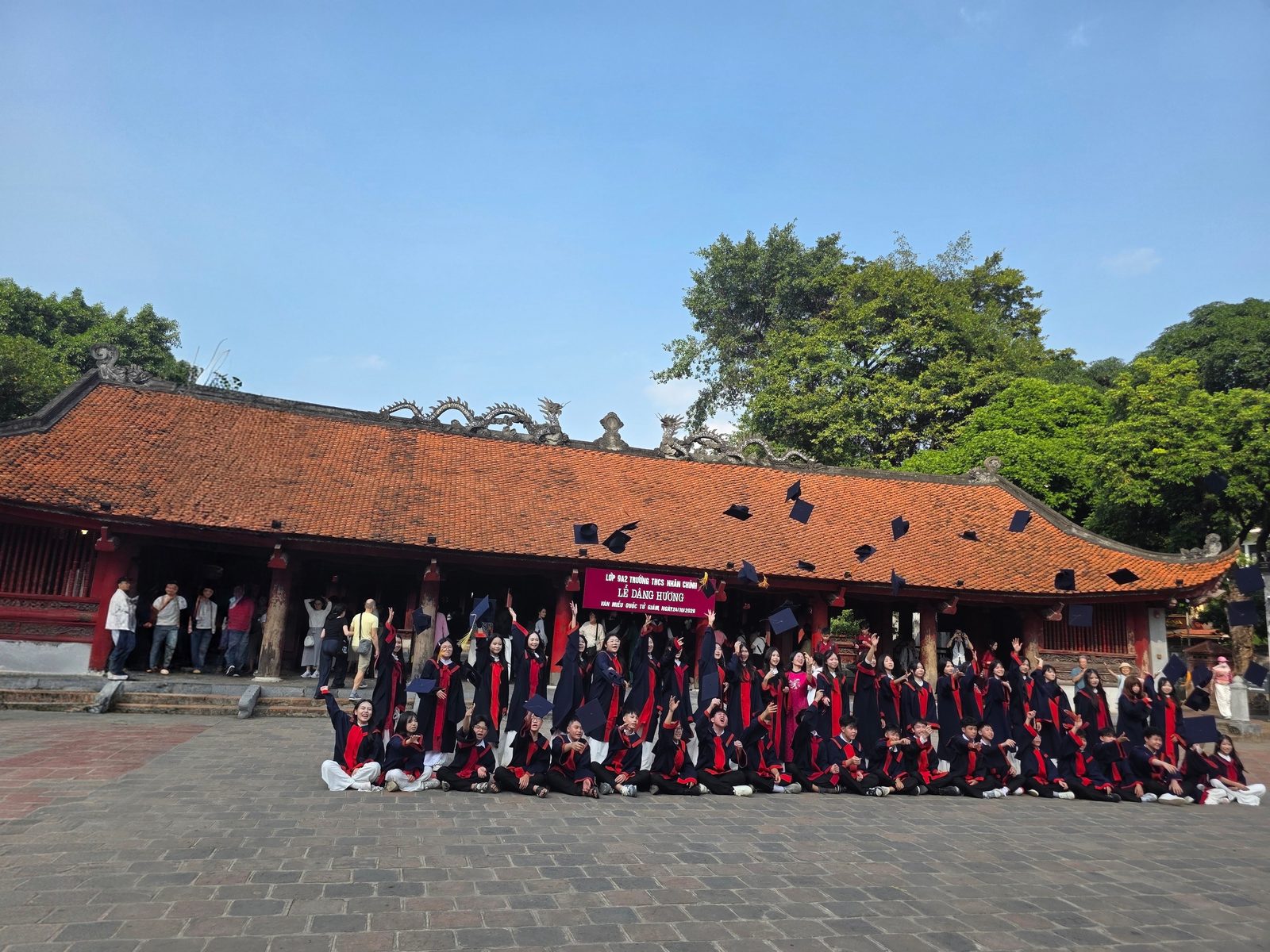
Before the photo, then one, two, three: every cap in the air.
Every year, before the high school entrance exam or the end-of-school exams, thousands of students and parents come to Văn Miếu to burn incense and ask for luck. The temple of the scholars of old has become today's students' lucky charm.
At the very back, the last courtyard houses the former academy. Inside, an immense carved wooden fresco unfolds scenes of processions, soldiers and villages, and a dark altar honors a great scholar, most likely Chu Văn An, one of the Academy's most famous teachers.
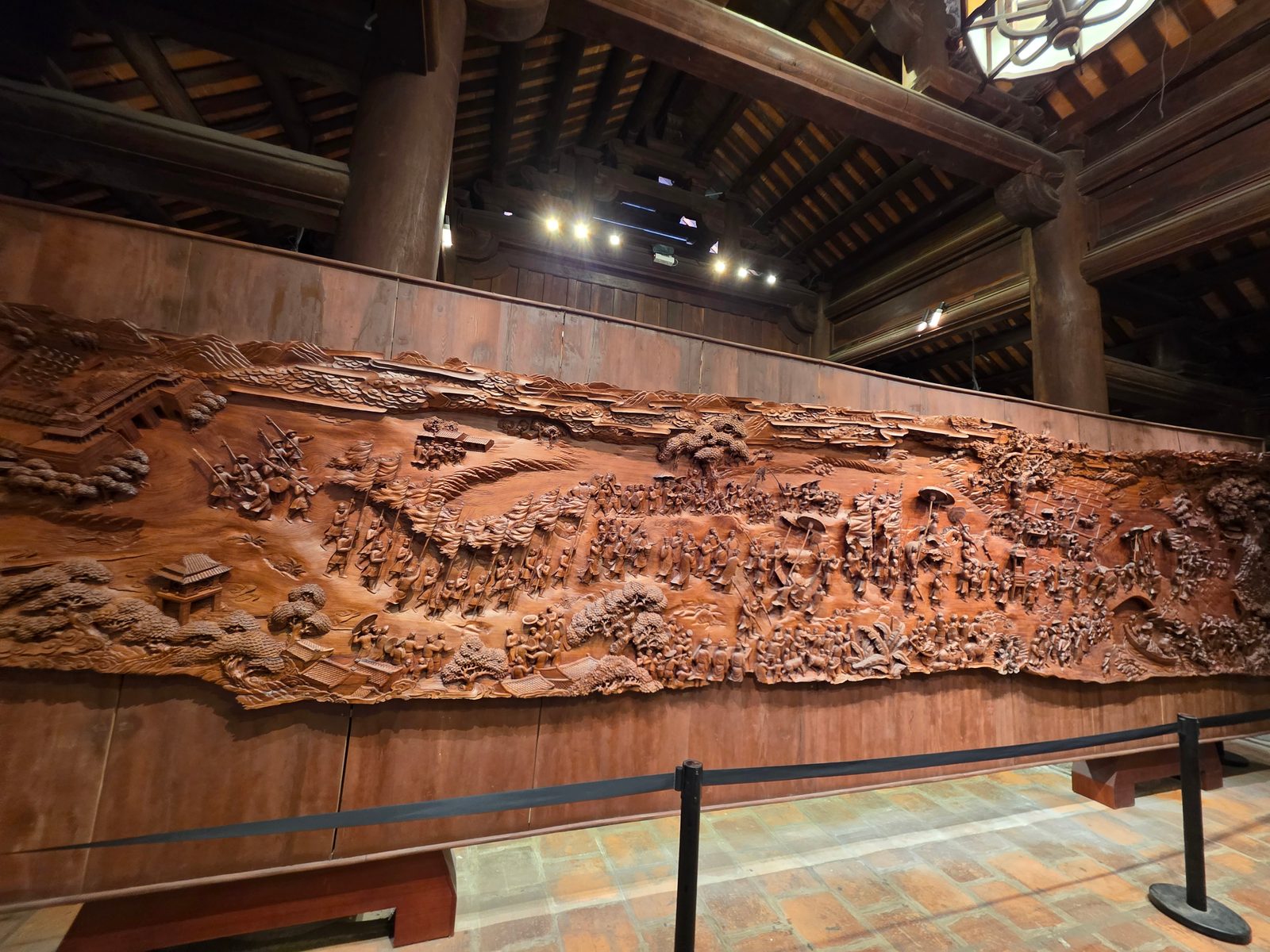
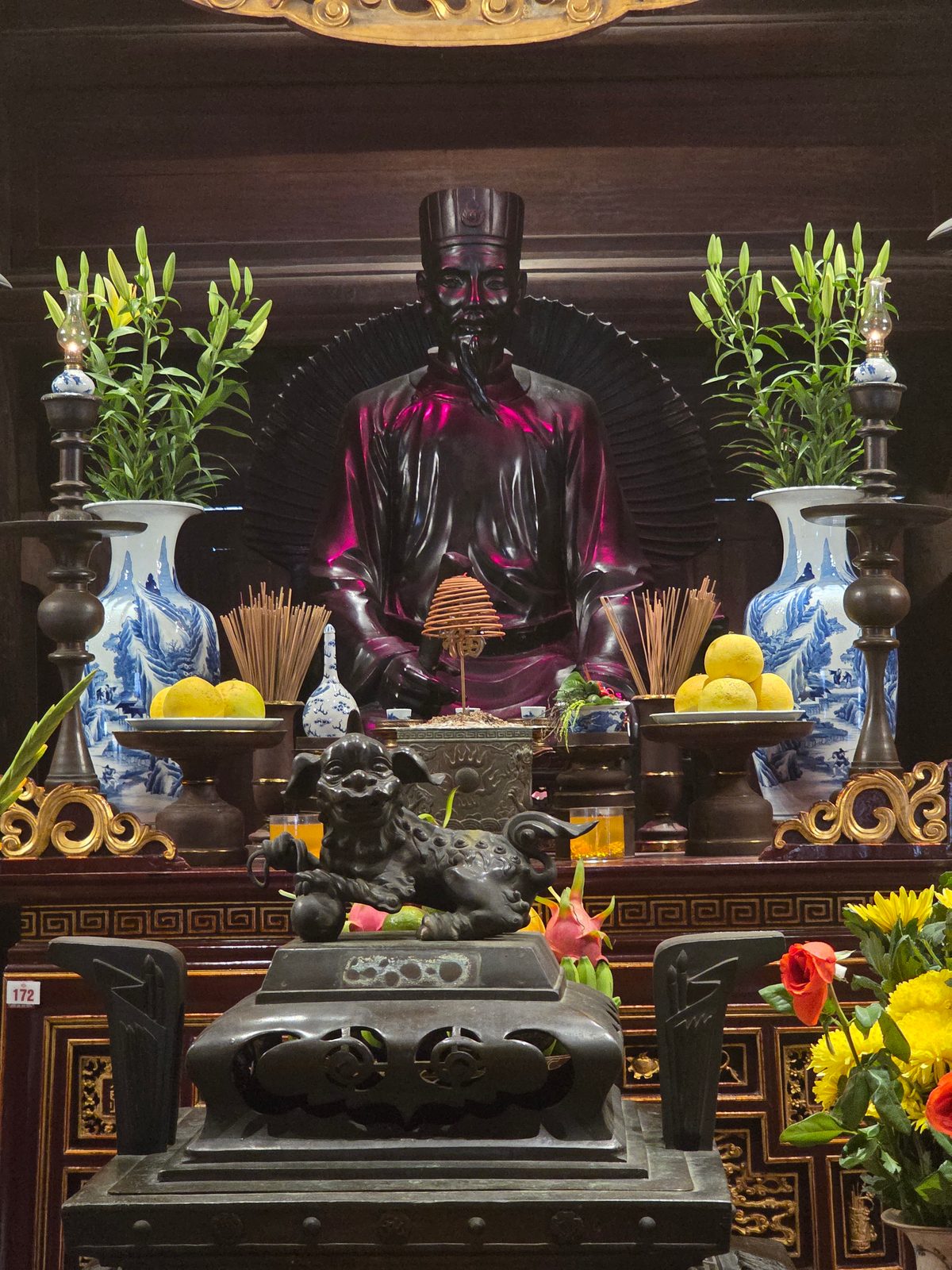
The great carved fresco, and the teacher's altar.
October 24 · afternoon
Seven kilometers and a scarf
Leaving the temple, we set off on a big loop on foot: the One Pillar Pagoda, then West Lake, then the Old Quarter. Seven kilometers on paper. The pagoda, we never found. While looking for it, we reach the Hồ Chí Minh complex, where a dress-code check stops us. I'd planned ahead for my legs: a long skirt was waiting in my backpack. But shoulders have to be covered too, and that I hadn't planned for. A Frenchwoman we meet at the entrance saves the day by lending me her scarf.
Behind it, a vast esplanade, and at the far end, a block of gray and red granite inscribed “Chủ tịch Hồ Chí Minh”. This is the mausoleum where the father of independence lies. In front of the great wooden doors, two soldiers in dazzling white uniforms, spotless, motionless. The sun is setting right beside it, in a stormy sky. This is the country's political heart, and everything here is solemn.
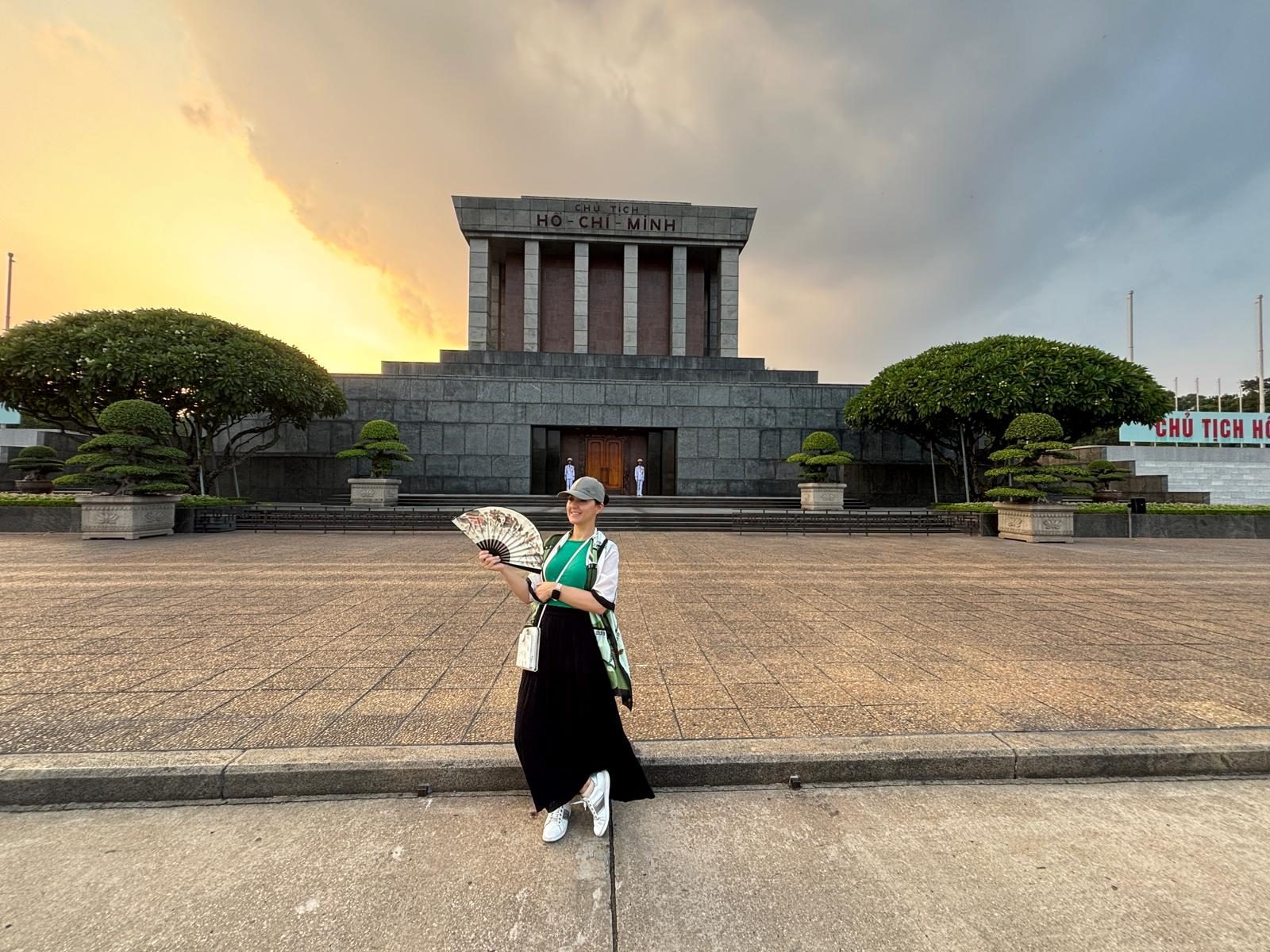
Long skirt, borrowed scarf over the shoulders: dress code met. Behind me, the two sentries in white.
For the Hồ Chí Minh complex, temples and pagodas, you need to cover your knees, and your shoulders too. A light skirt or pants and a scarf in your bag, and you'll get in anywhere.
Rush hour and an ice cream
We head north again along the big boulevards. It's around 5 pm, rush hour, and every red light holds back a tide of scooters that surges forward as one the second it turns green. We pass an old temple with white doors, then join the road that runs between two lakes: a river of motorbikes, in both directions, as far as the eye can see.
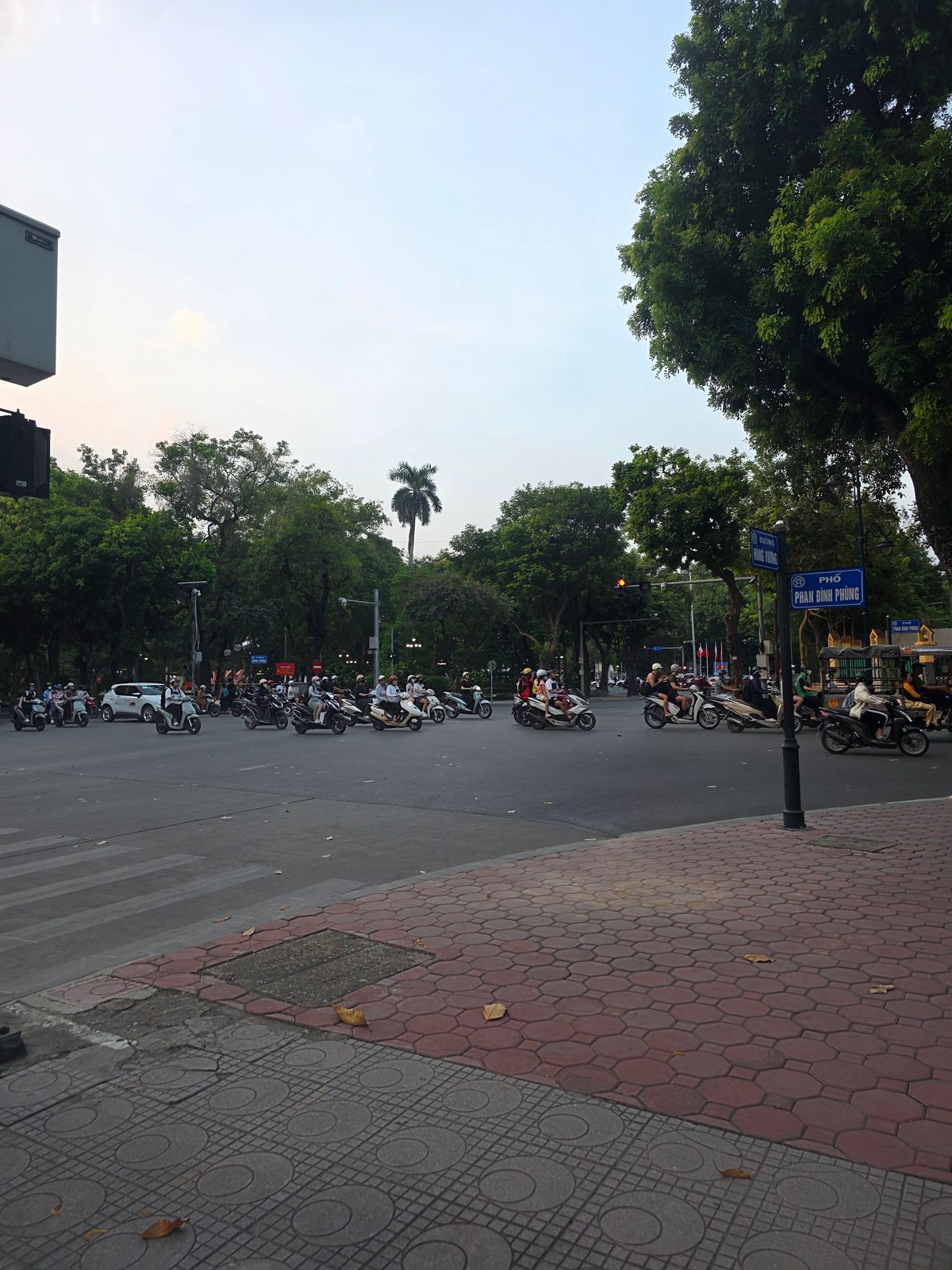
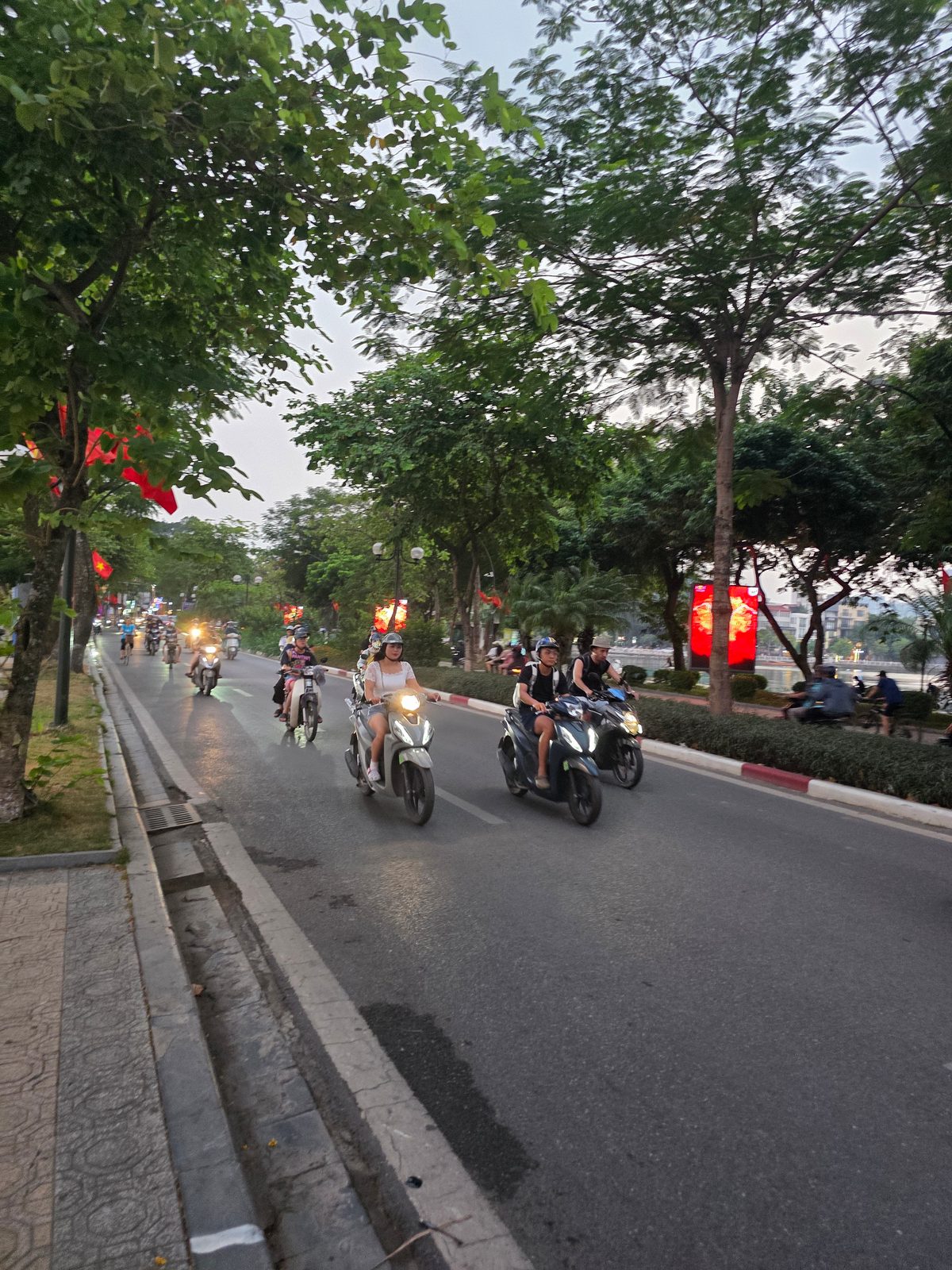
5 pm: green light, and the tide surges forward as one.
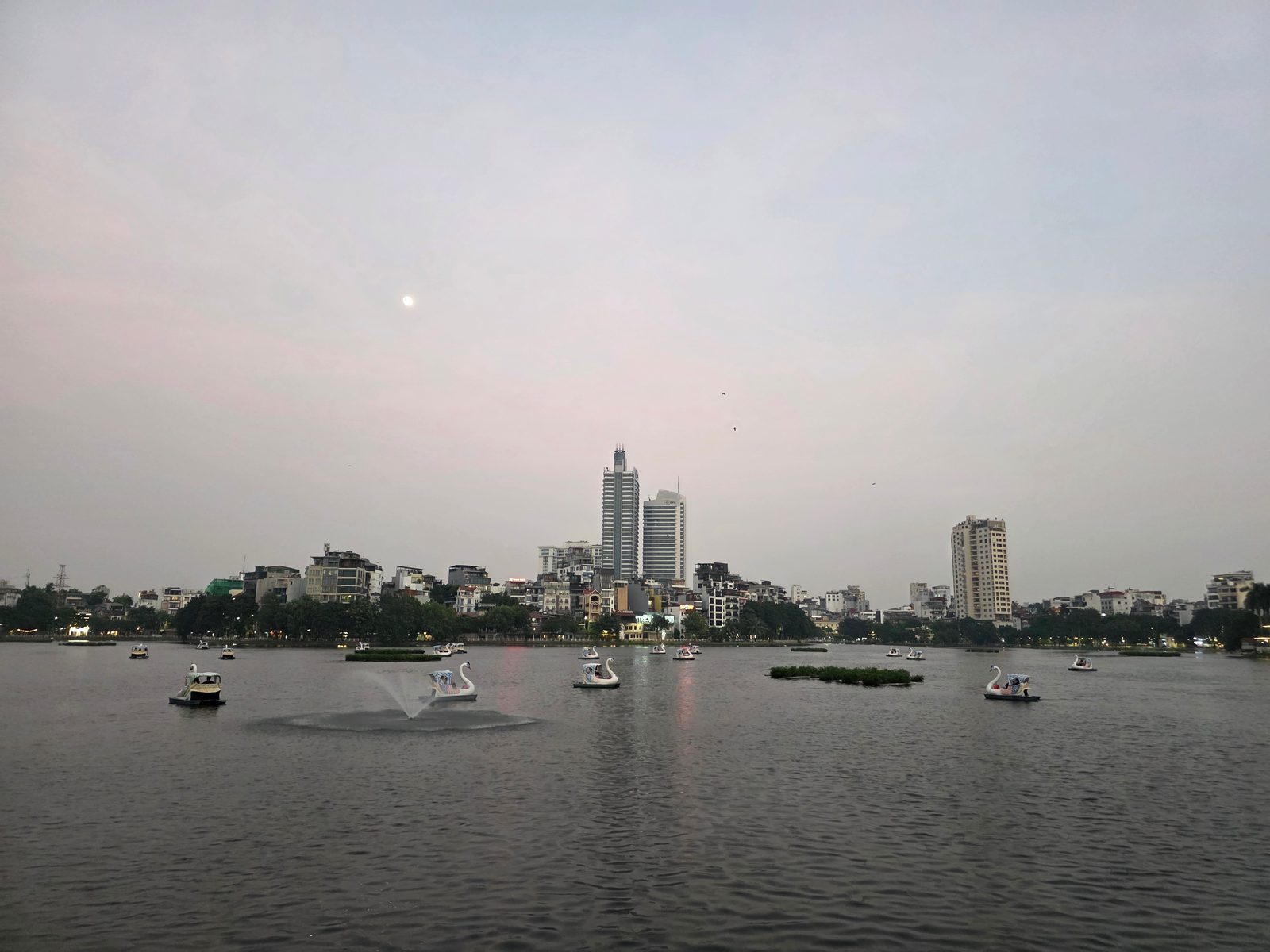
I say out loud that I feel like a little soft-serve ice cream. Twenty seconds later, not one more, we come across a small soft-serve stand. Vietnam grants wishes, apparently. We settle down with our cones on the shore of Trúc Bạch Lake, facing a big café built on the water. Swan pedal boats circle a fountain, a young man is fishing with his feet in the lake, and the moon is already up.
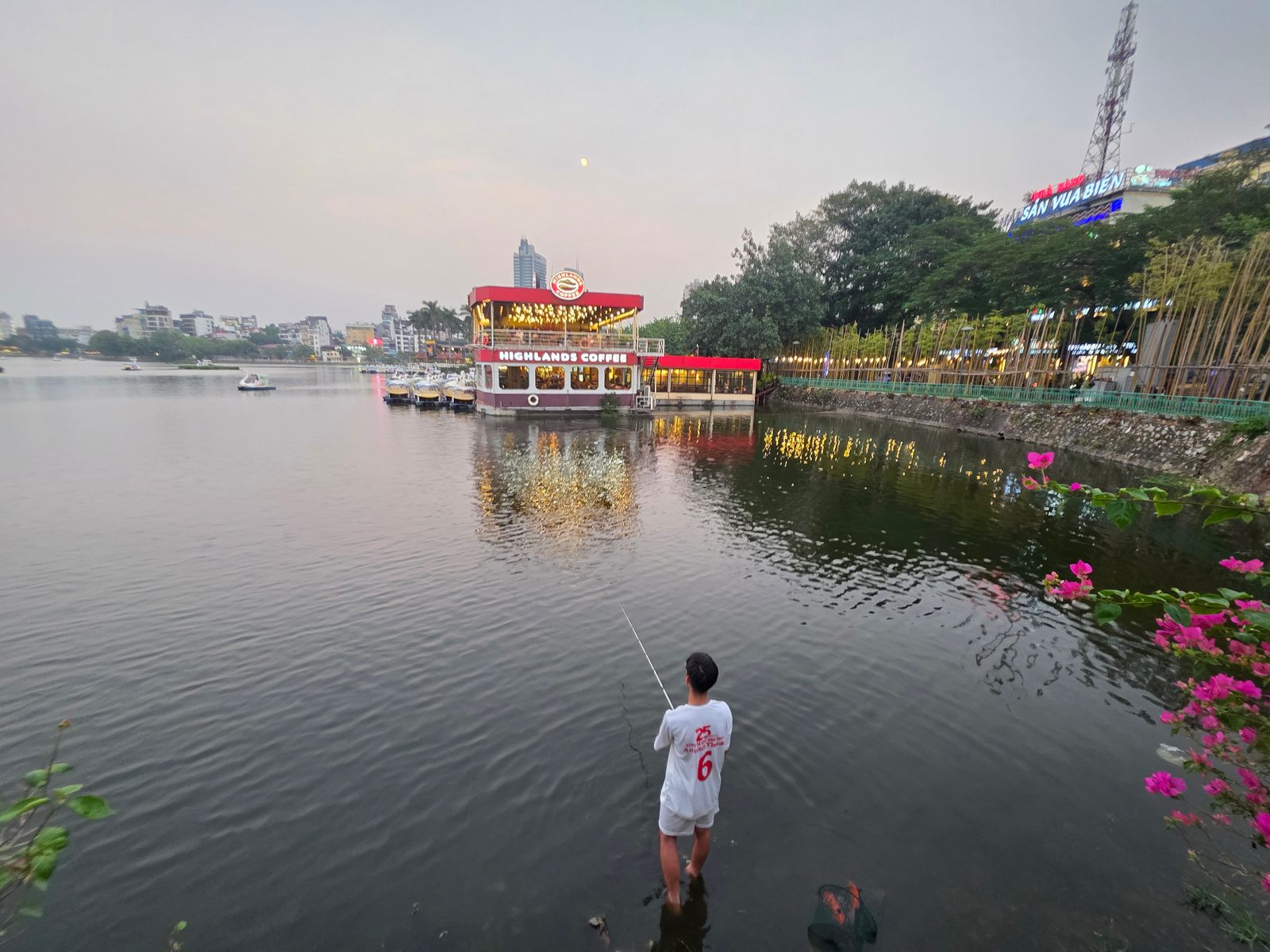
The view from our ice cream: a fisherman with his feet in the water, and the moon already up.
Across the road stretches the great West Lake, immense, where the sky is turning pink. On the promenade, big letters proclaim “Tự hào là người Việt Nam”, proud to be Vietnamese. I strike a pose, obviously.
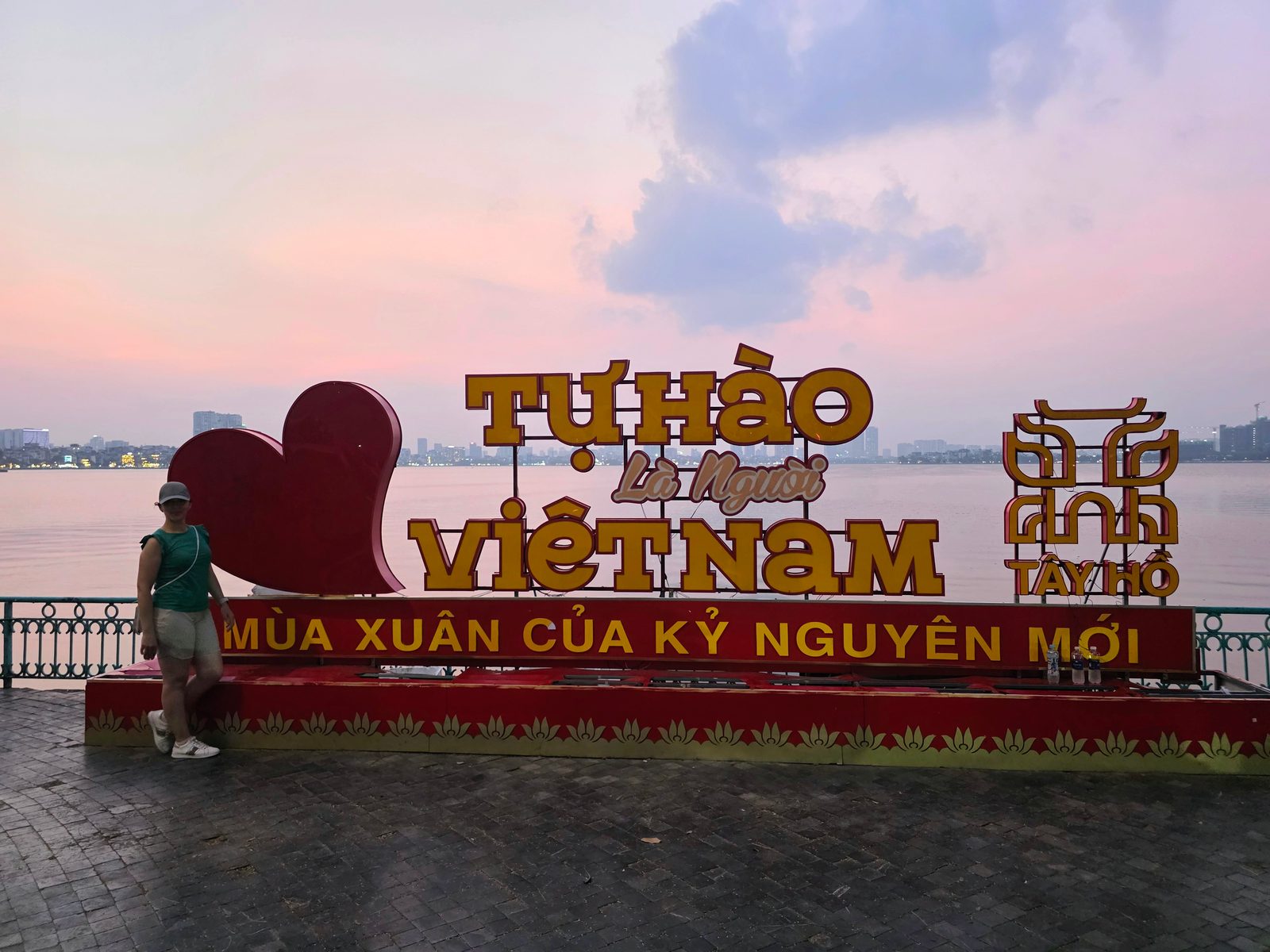
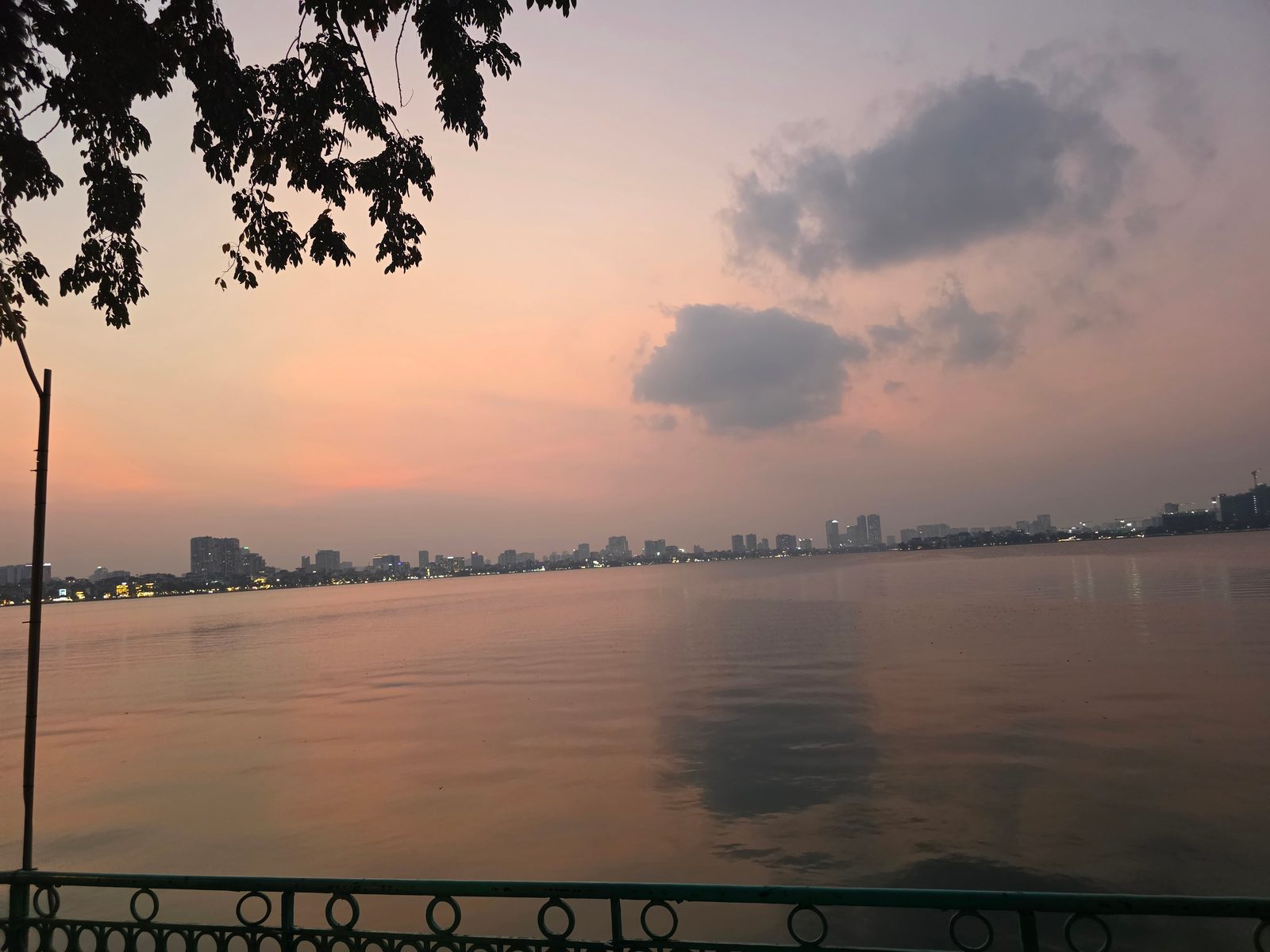
“Proud to be Vietnamese”, and West Lake blushing pink.
At the end of the road, on a little peninsula, Trấn Quốc Pagoda, one of the oldest in Hanoi, with its tall tiered tower. The yellow gate is already closed: we make do with the tower's silhouette against the pink sky. Not bad, as consolation prizes go.
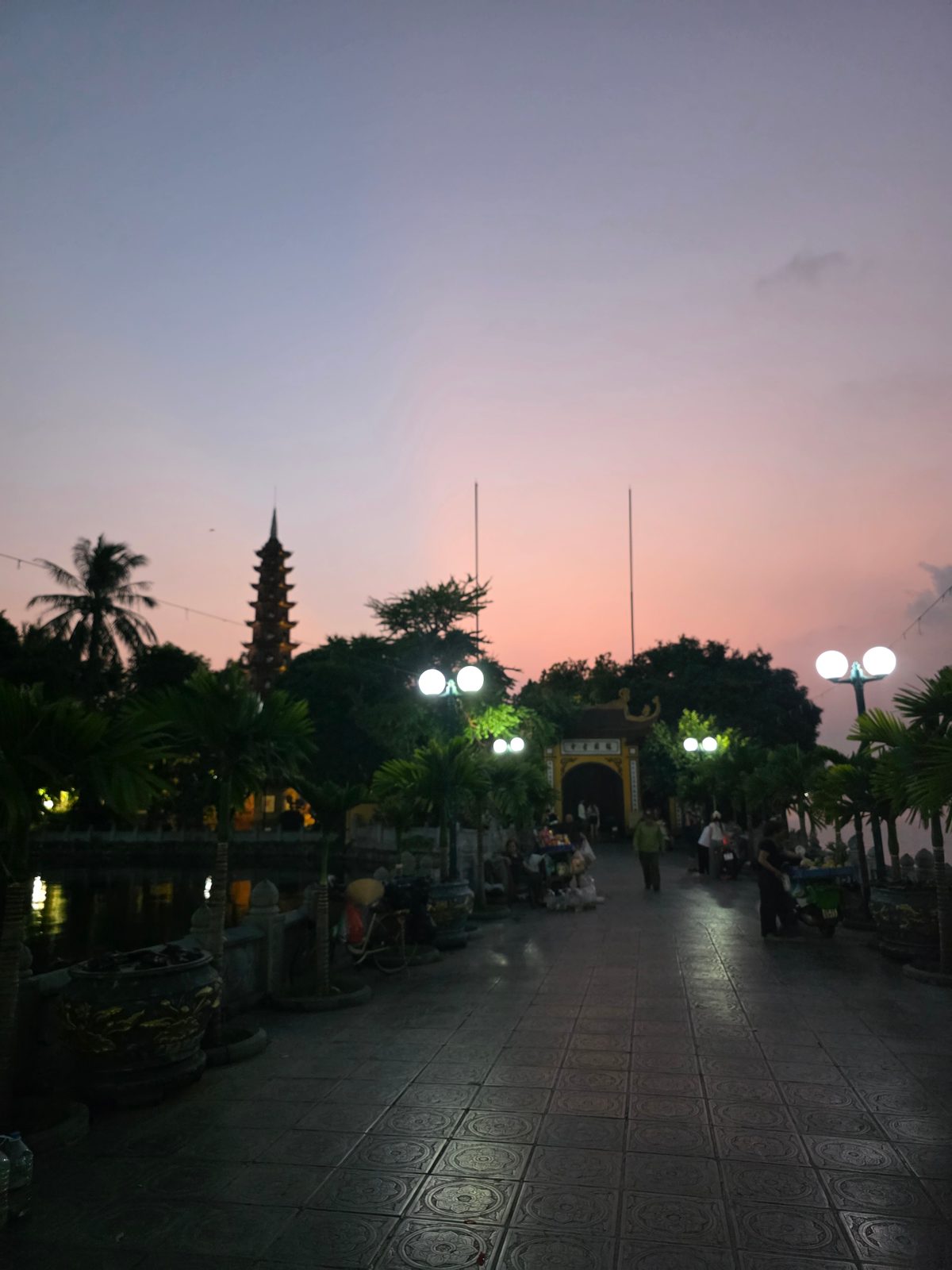
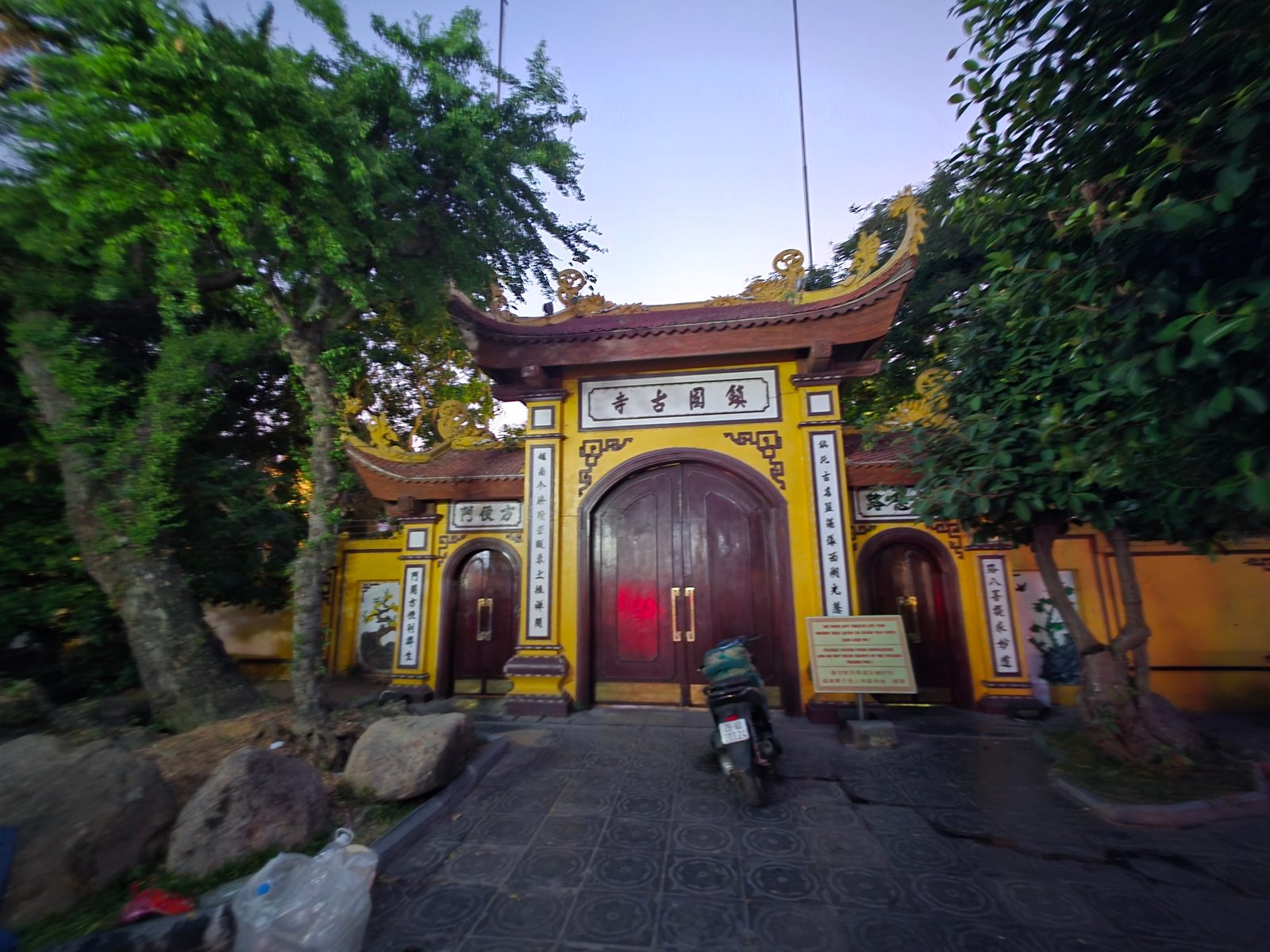
The Trấn Quốc tower at dusk, and a gate already closed.
The city on foot, until nightfall
Then we walk back down toward the center as night falls. The streets at the north end of the Old Quarter are strung with garlands of little flags, the red national flag with its yellow star and the Party flag with its hammer and sickle, by the hundreds, from one sidewalk to the other. On a street corner, a small yellow temple, a red cyclo, and the ballet of scooters.
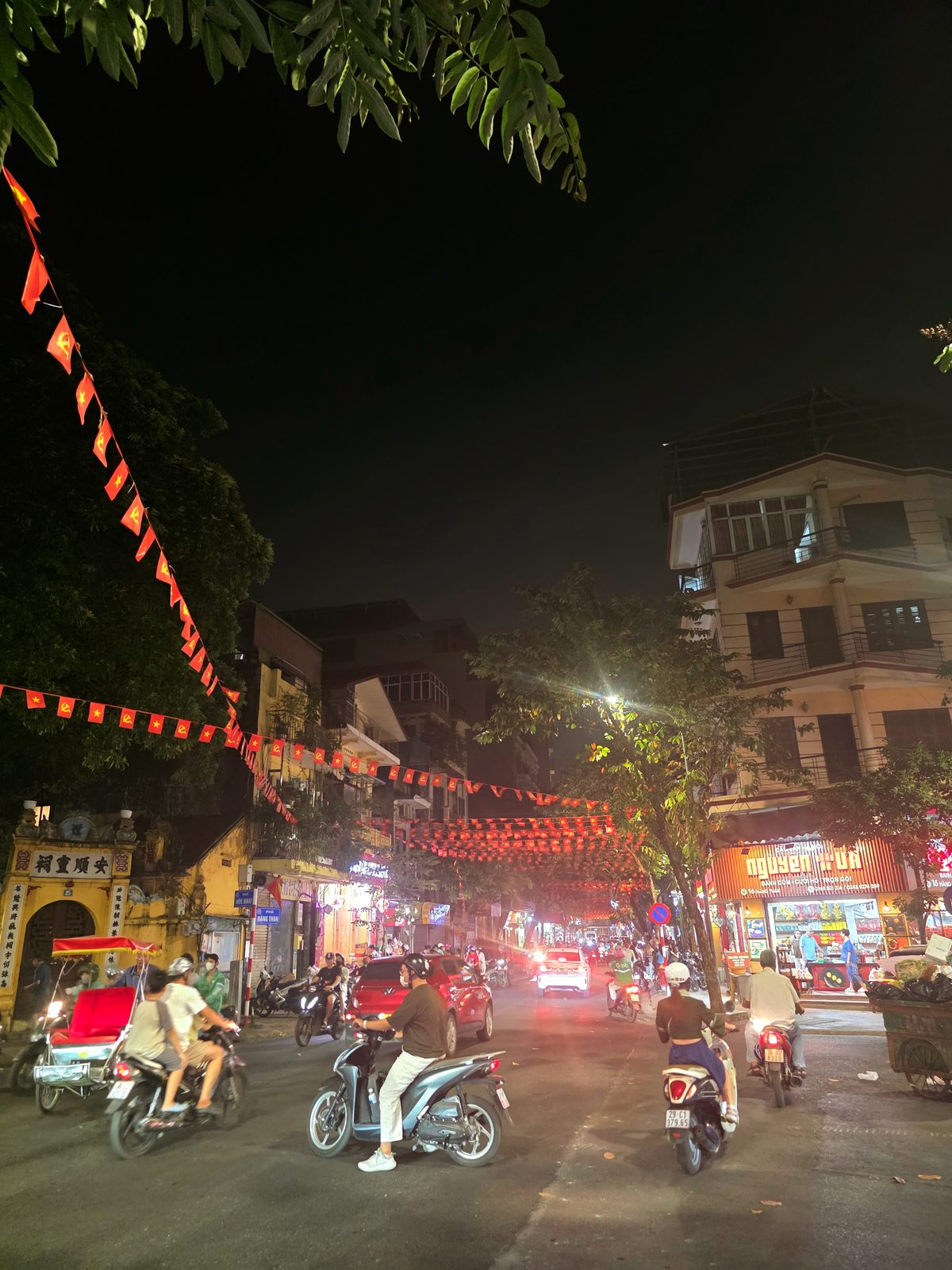
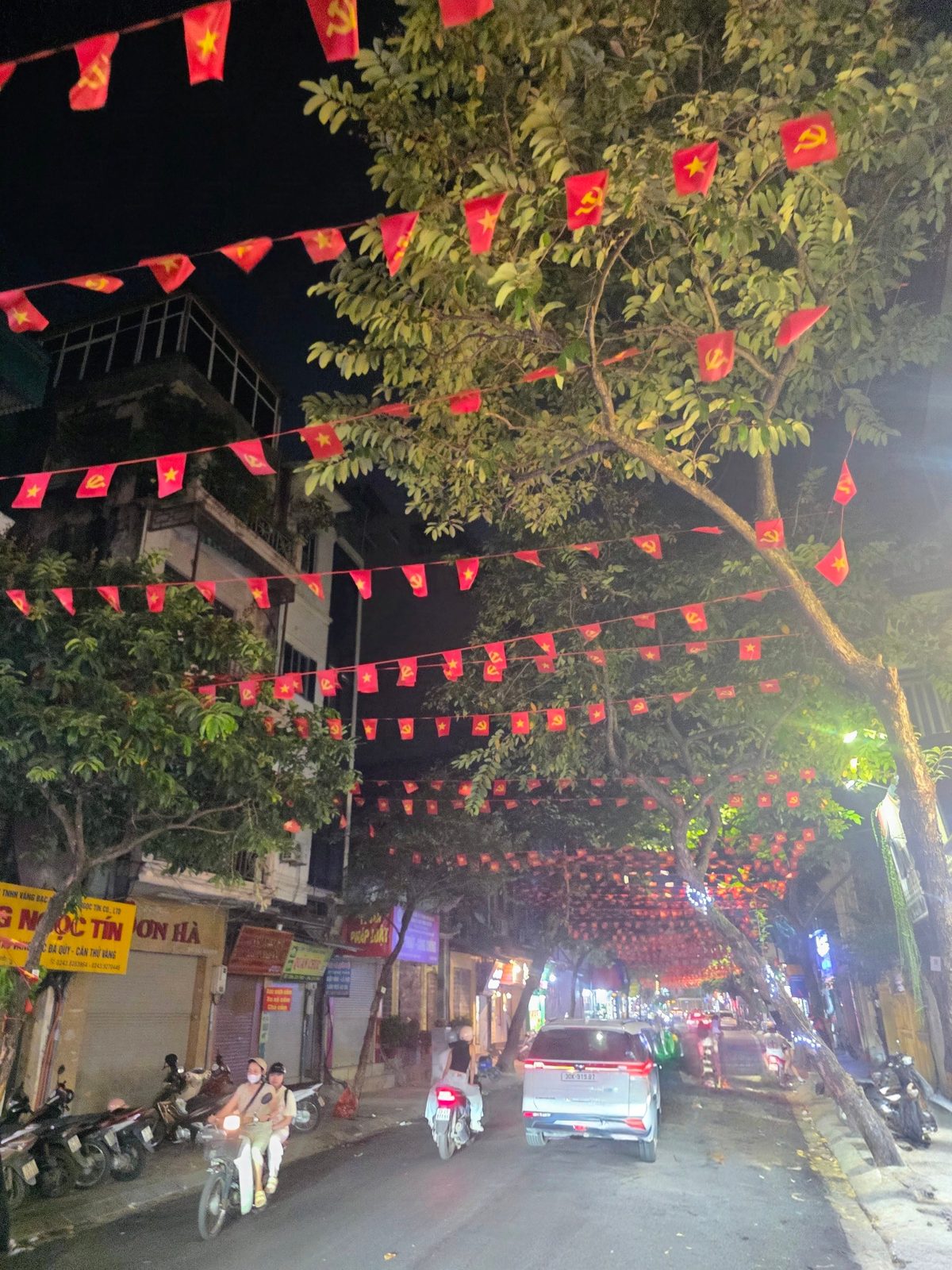
The Old Quarter decked out in flags, from one sidewalk to the other.
Further on, a round, massive tower, lit up like a lighthouse: the old Hàng Đậu water tower, built by the French in 1894 and now an exhibition space. Then, squeezed between buildings, the Ô Quan Chưởng gate, under a mass of bougainvillea: the last of the city's old gates, dating from 1749. The scooters pass underneath as if it were nothing.
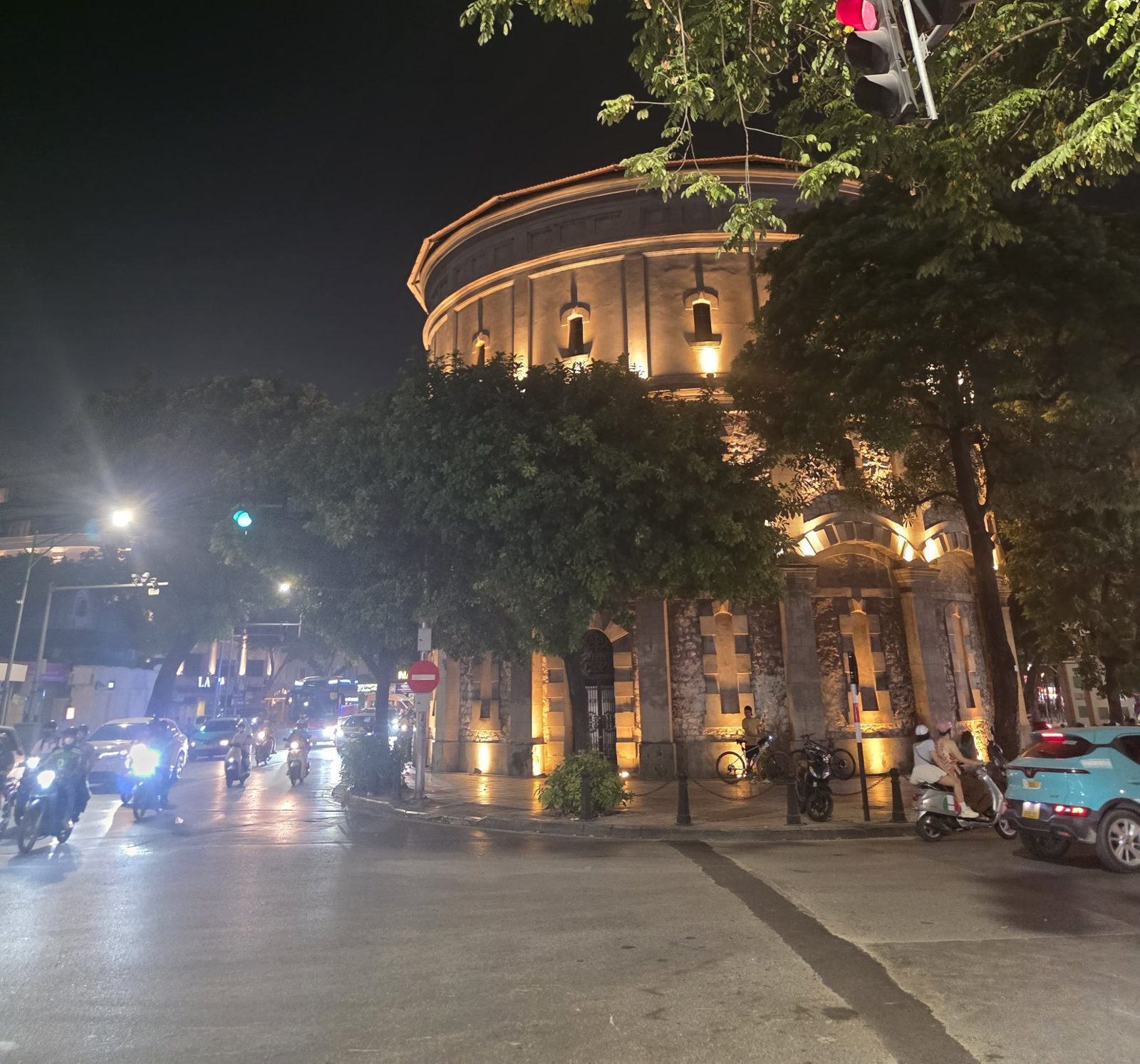
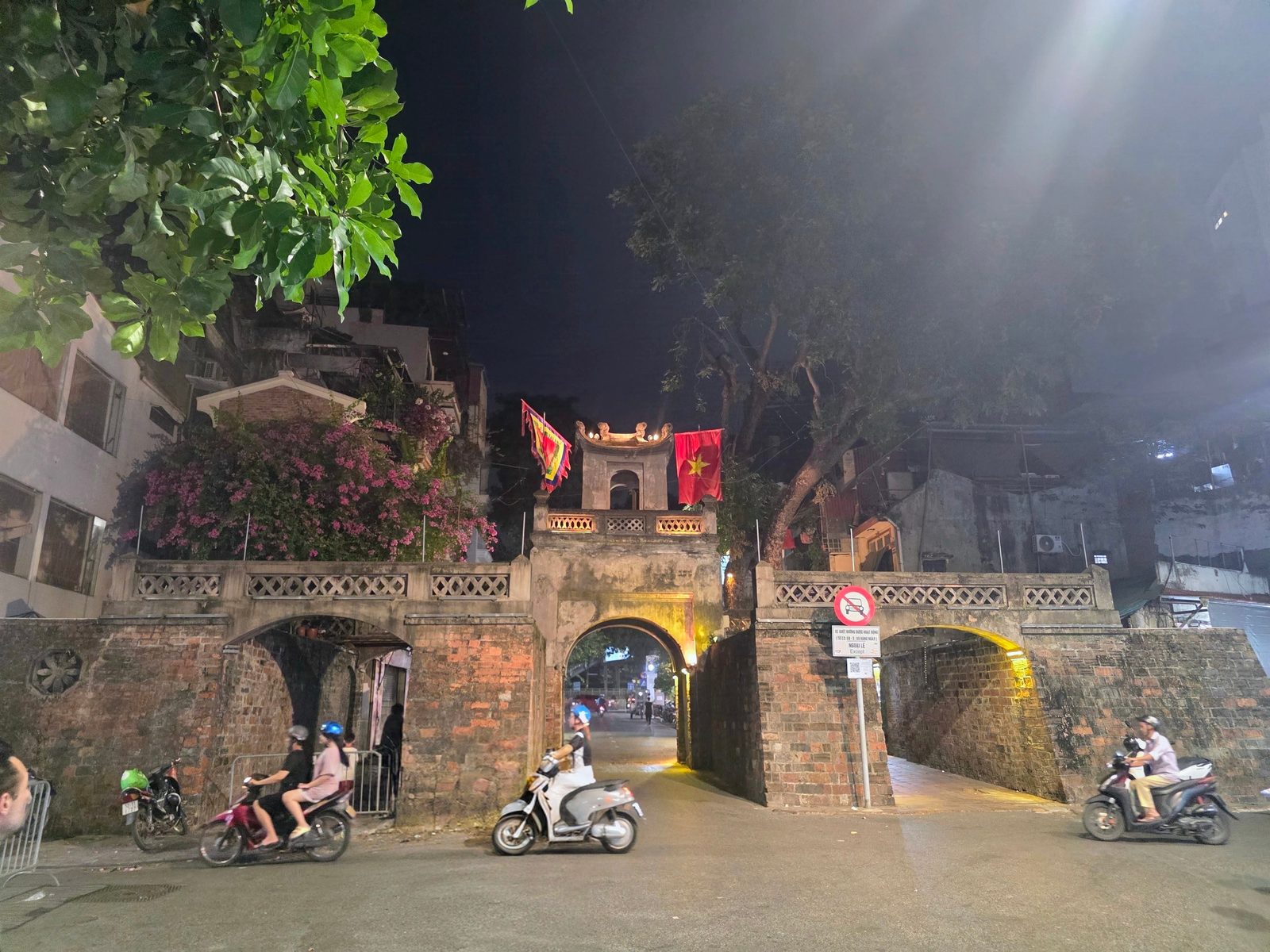
A water tower from 1894, and the city's last gate, from 1749.
We sit down for a drink in a place we like straight away: a big room open to the street, a hostess at the door, a stage where there's live music in the evening, brunches on weekends, and a crowd of neighborhood regulars, a little more upscale than usual.
On Saturday evenings, the heart of the Old Quarter goes pedestrian. On Mã Mây Street, at the foot of an old wall, a troupe of young musicians in traditional dress plays the two-string fiddle, the moon-shaped lute and the zither, with a little box in front of them for coins. A bit further along, silk lanterns hang from the trees above the restaurant terraces.
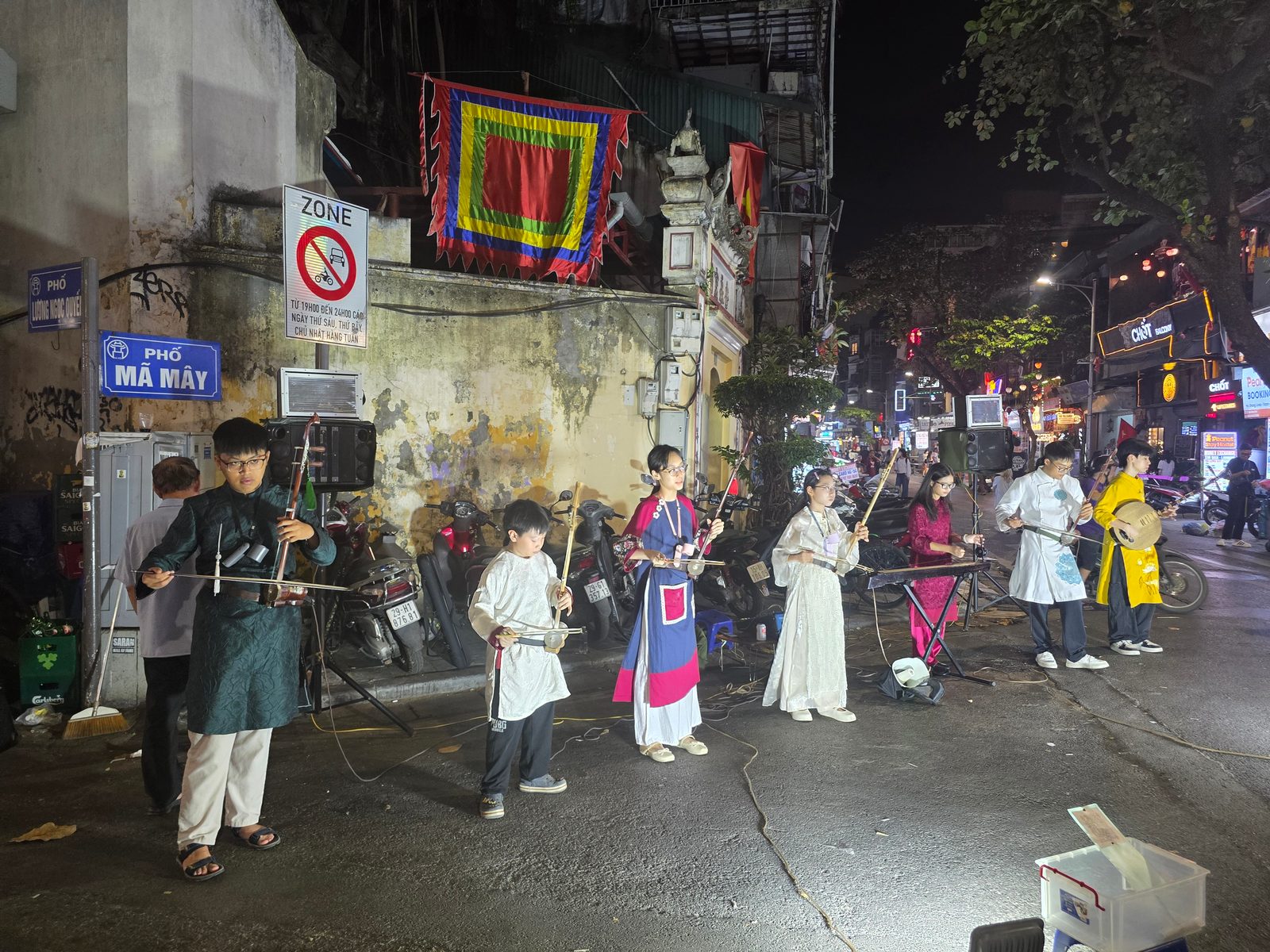
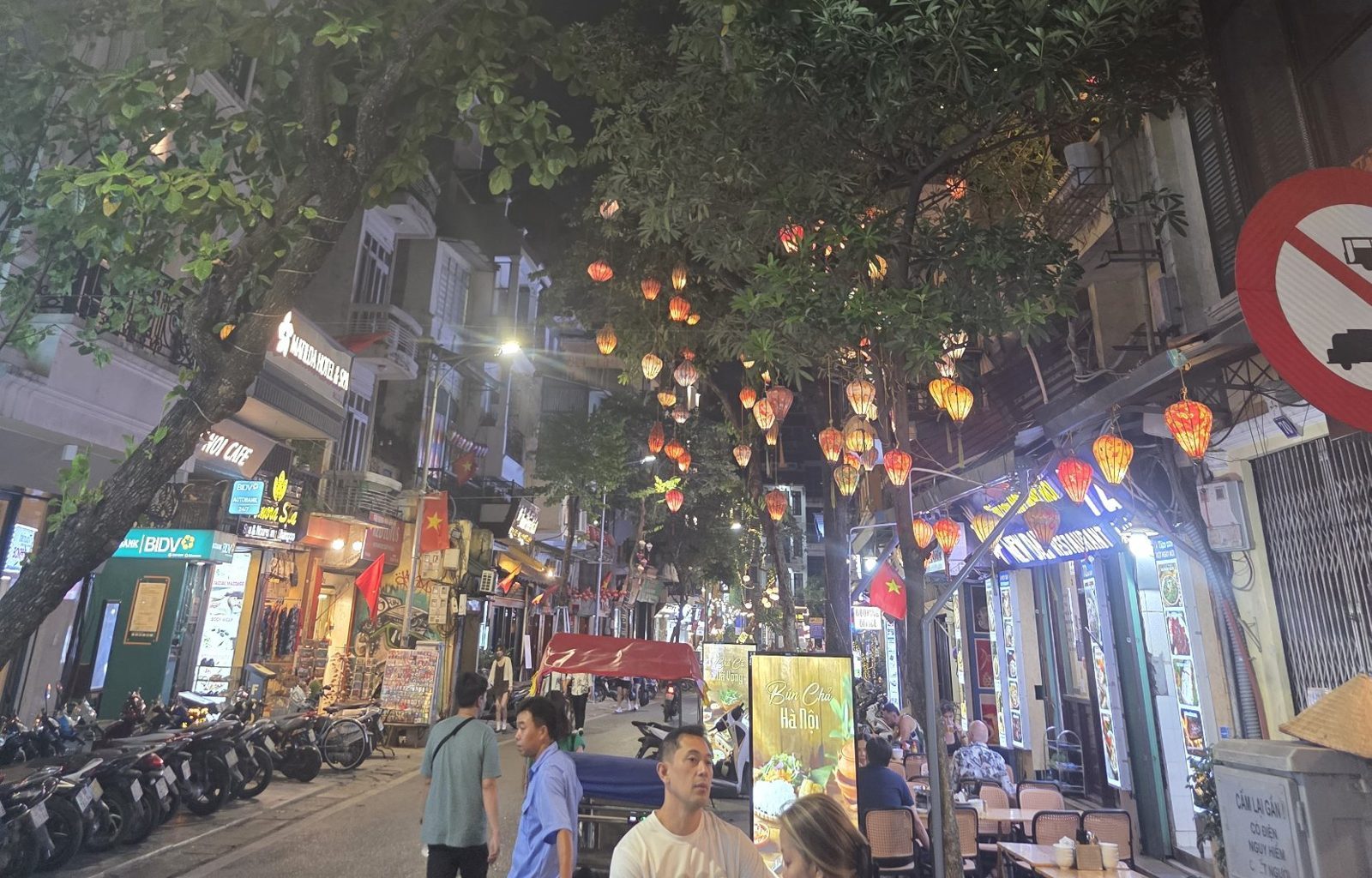
A street concert in costume, and the Saturday night lanterns.
On weekends, the Old Quarter is best explored on foot. From Friday to Sunday, 7 pm to midnight, several downtown streets and the area around Hoàn Kiếm Lake are closed to traffic. It's the best time to wander, and you'll often stumble on a free concert.
Heading back down toward Hoàn Kiếm Lake, a surprise awaits us on the big square: a stage, spotlights, and a free open-air show. A singer in a pink áo dài, and around her a troupe of dancers in white veils twirling huge flower-shaped fans. We stop, and we stay. Really lovely.
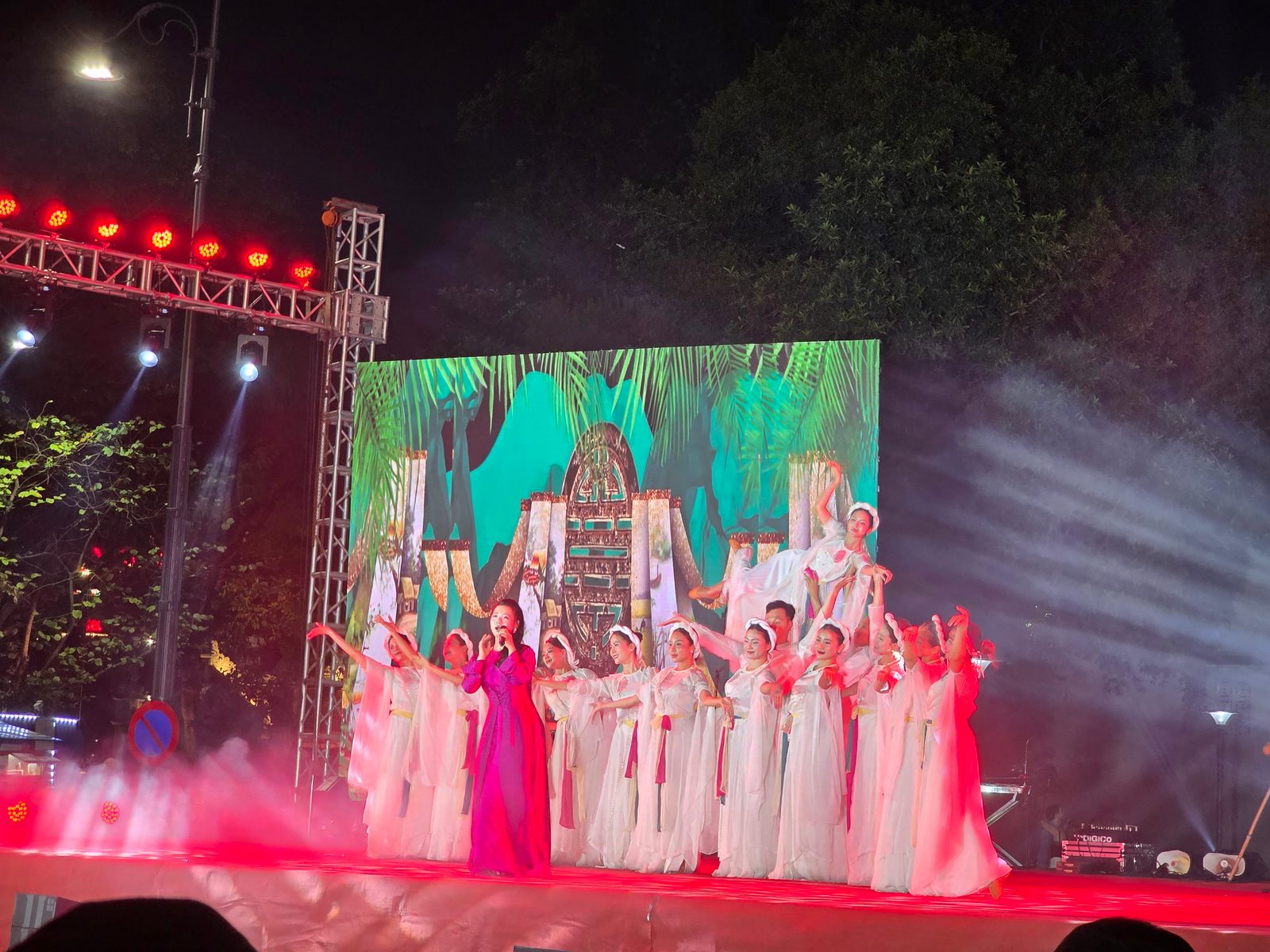
A show for anyone who happens to walk by. We happened to walk by.
Weekend concert, Hoàn Kiếm Lake square
Pedestrian zone, Friday to Sunday evenings · Traditional song and dance
FreeWe keep walking, discovering the city street by street, and push on to the French Quarter. But night has fallen, the streets are emptying, there's hardly anything left to see: we turn back. Dinner at a restaurant downtown.
And to end on a sweet note, Maison Marou, a chocolate shop with a French accent, spotted on the way back. A chocolate éclair filled with a green cream (we'd have sworn it was pistachio, but no: it's matcha, and it really does taste of tea) and topped with squares of dark chocolate, plus a chocolate mousse tartlet sprinkled with crunchy bits. Back at the hotel, legs like jelly. We've seen all of Hanoi on foot, or nearly.
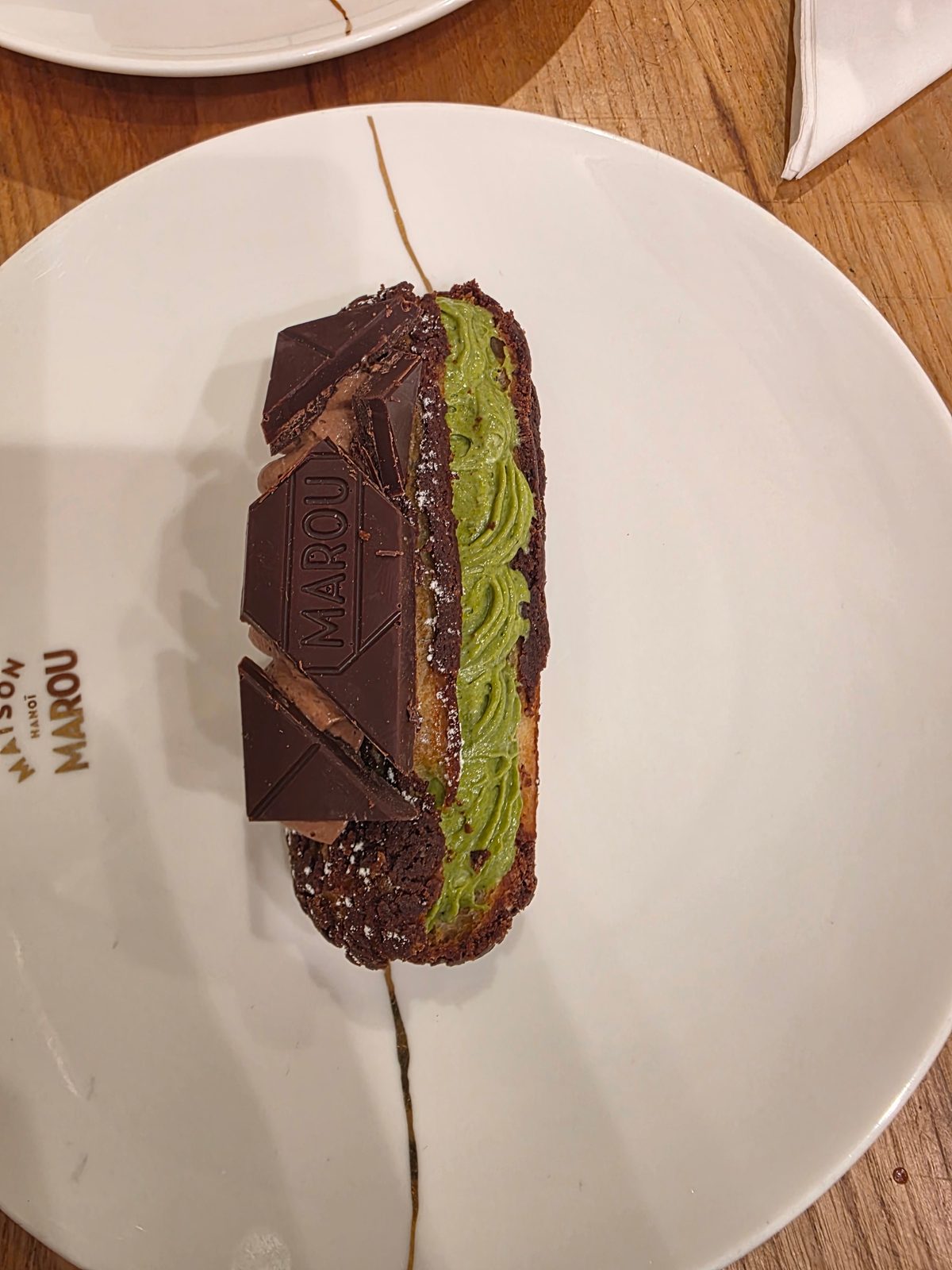
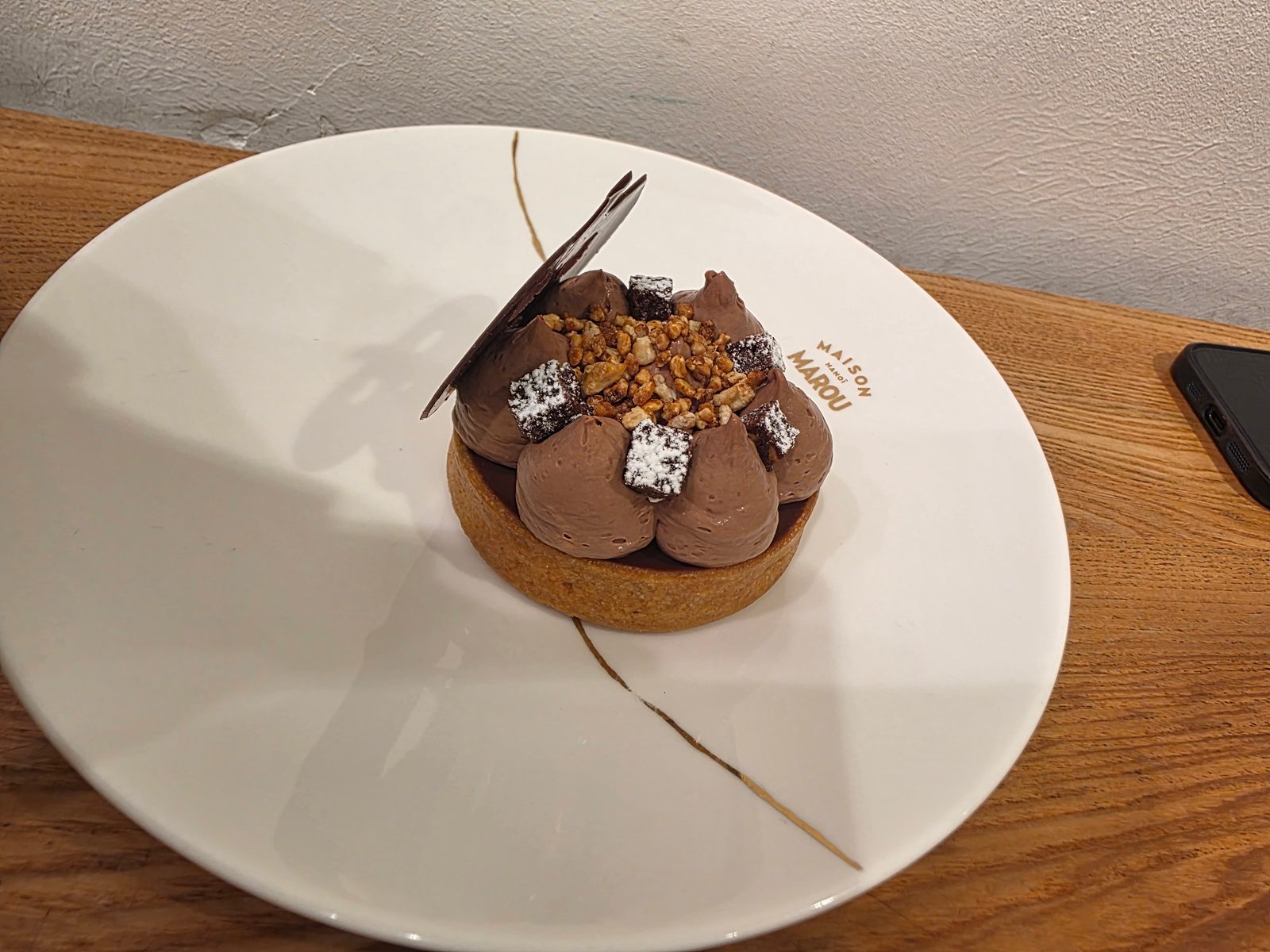
The grand finale: an éclair, a tartlet, and chocolate grown in Vietnam.
Maison Marou, Hanoi
Vietnamese chocolate maker · Matcha éclair, chocolate mousse tartlet
Sweet favoriteMarou is a Vietnamese chocolate maker founded in 2011, with French-Vietnamese roots, that makes its chocolate from cacao grown in the south of the country. Yes, Vietnam grows cacao, and it has become a small source of national pride.
On the way back, one last look at St. Joseph's Cathedral, lit up for the night.
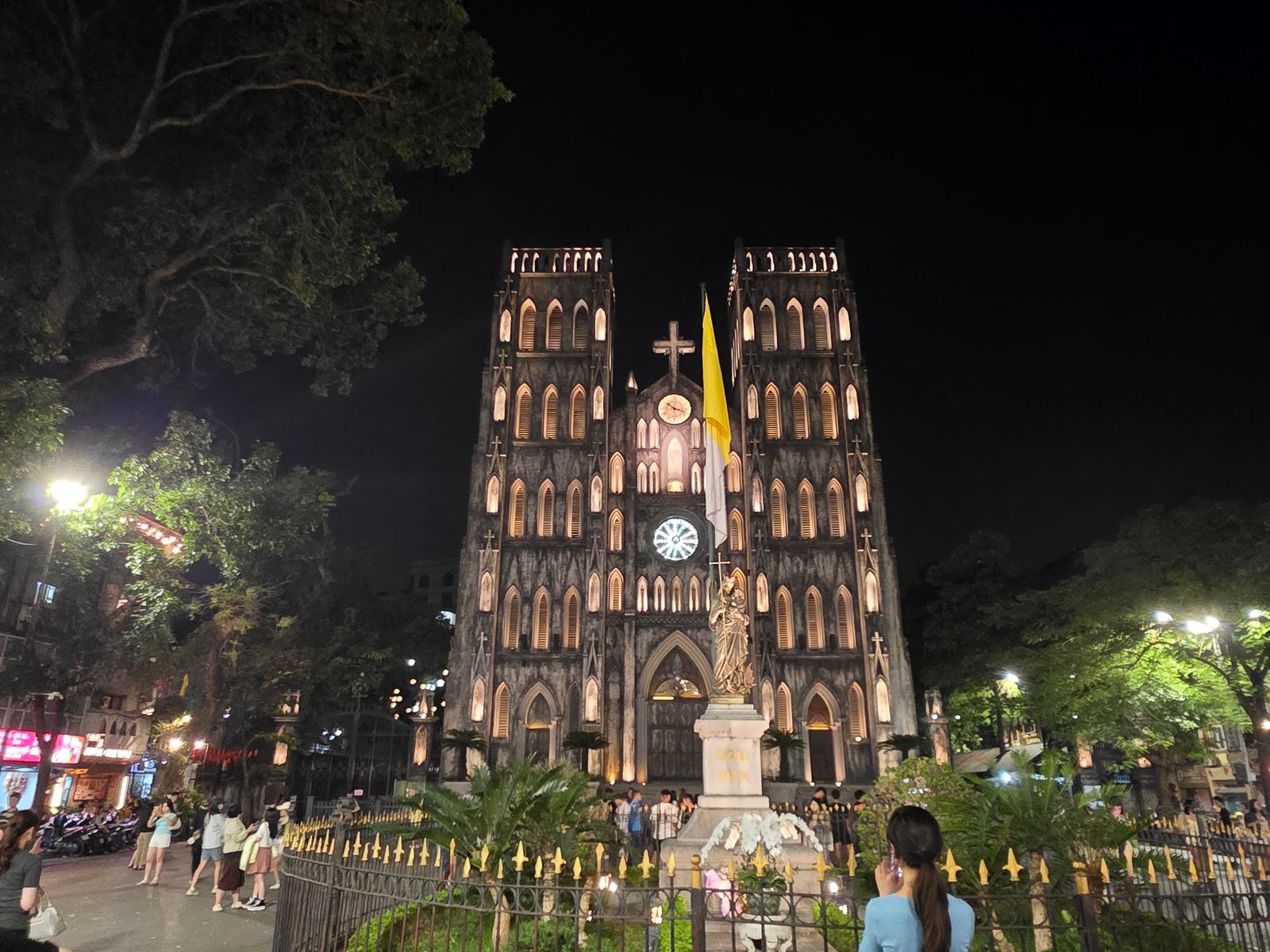
St. Joseph's Cathedral by night. Good night, Hanoi.