Just one full day in Sapa, and a program to match: an herbal bath with the Red Dao in the morning, Fansipan, the highest peak in Indochina, in the afternoon, and the town in the evening. On paper, it was perfect. In reality, a cloud had other plans.
October 28 · 9:35 am
Screen number three
Same bed, same pose. On the train, the window showed the night. Yesterday morning, the glass door showed nothing but white. This morning, at last, the program has changed: the villages, the harvested terraces, the school with its red roofs, the mountain. The whole valley, in full.
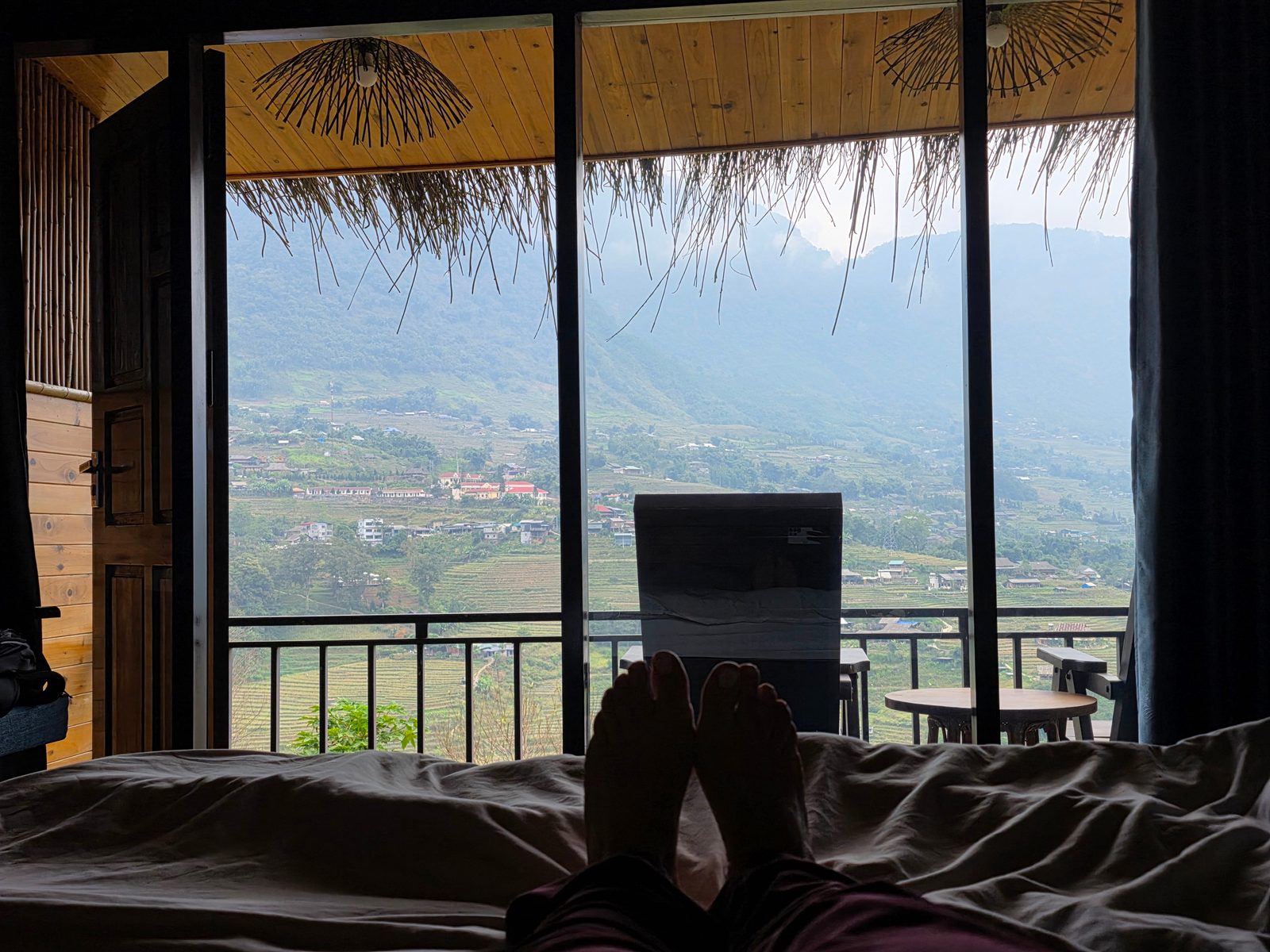
Episode three of the series “my feet, my screen”. Finally in high definition.
October 28 · 10 am
Simmering with the Red Dao
A Grab takes us to Tả Phìn, on the other side of Sapa, about €13.50 one way. We'd planned on the village cave, but I'm a bit claustrophobic, and we wanted to save time for the rest of the day: we skip it. Off to the herbal bath instead, a tradition of the Red Dao, recognizable by their red headdresses.
The place, Red Dao Authentic Herbal Bath, is a community cooperative: the money from the bath goes straight to the village families. Under a tin canopy, three wood fires heat big steaming vats. One woman stokes the embers, another fills buckets. The air smells of herbs and, I think, tea.
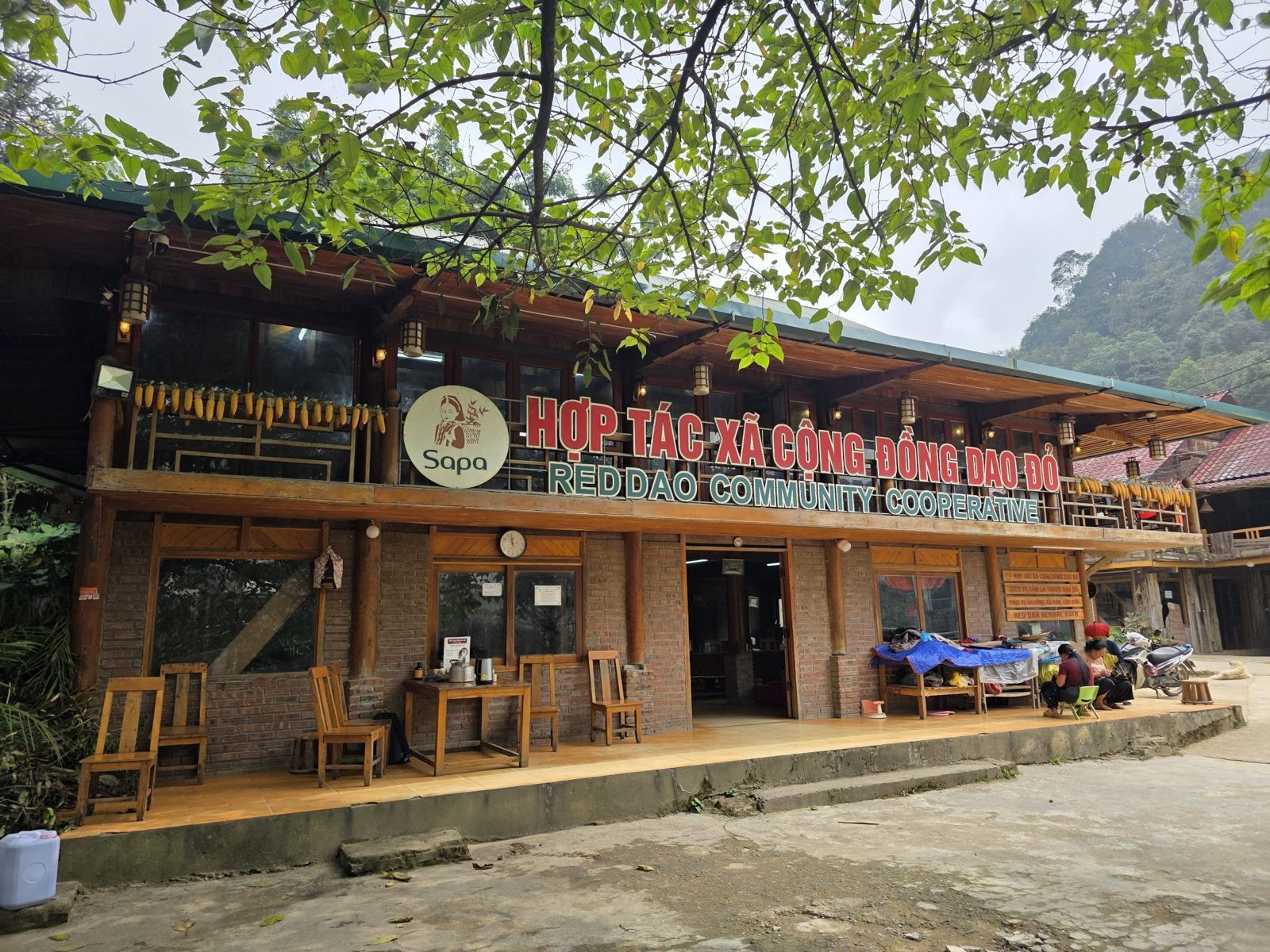
The Red Dao cooperative, and corn drying on the balcony.
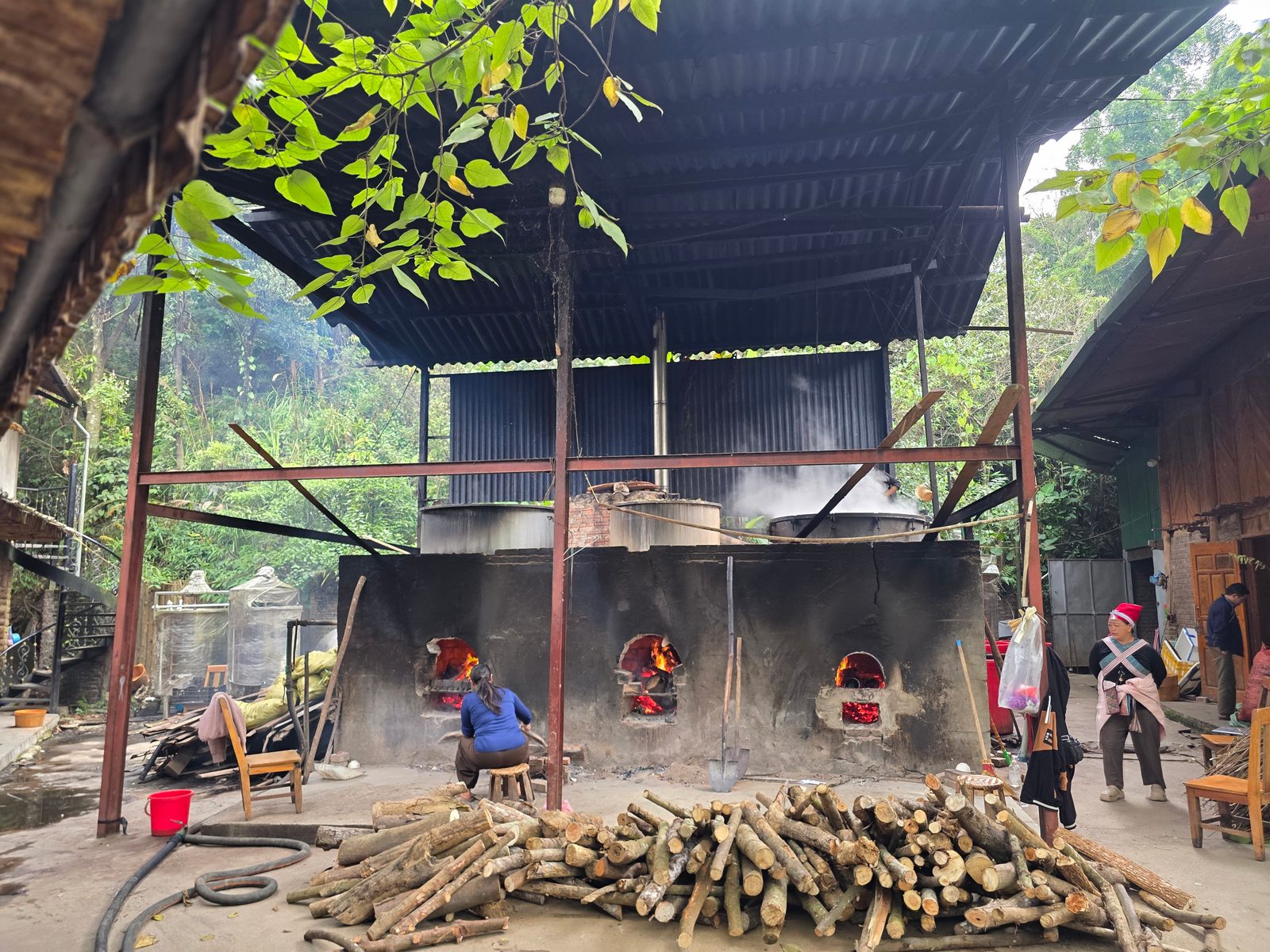
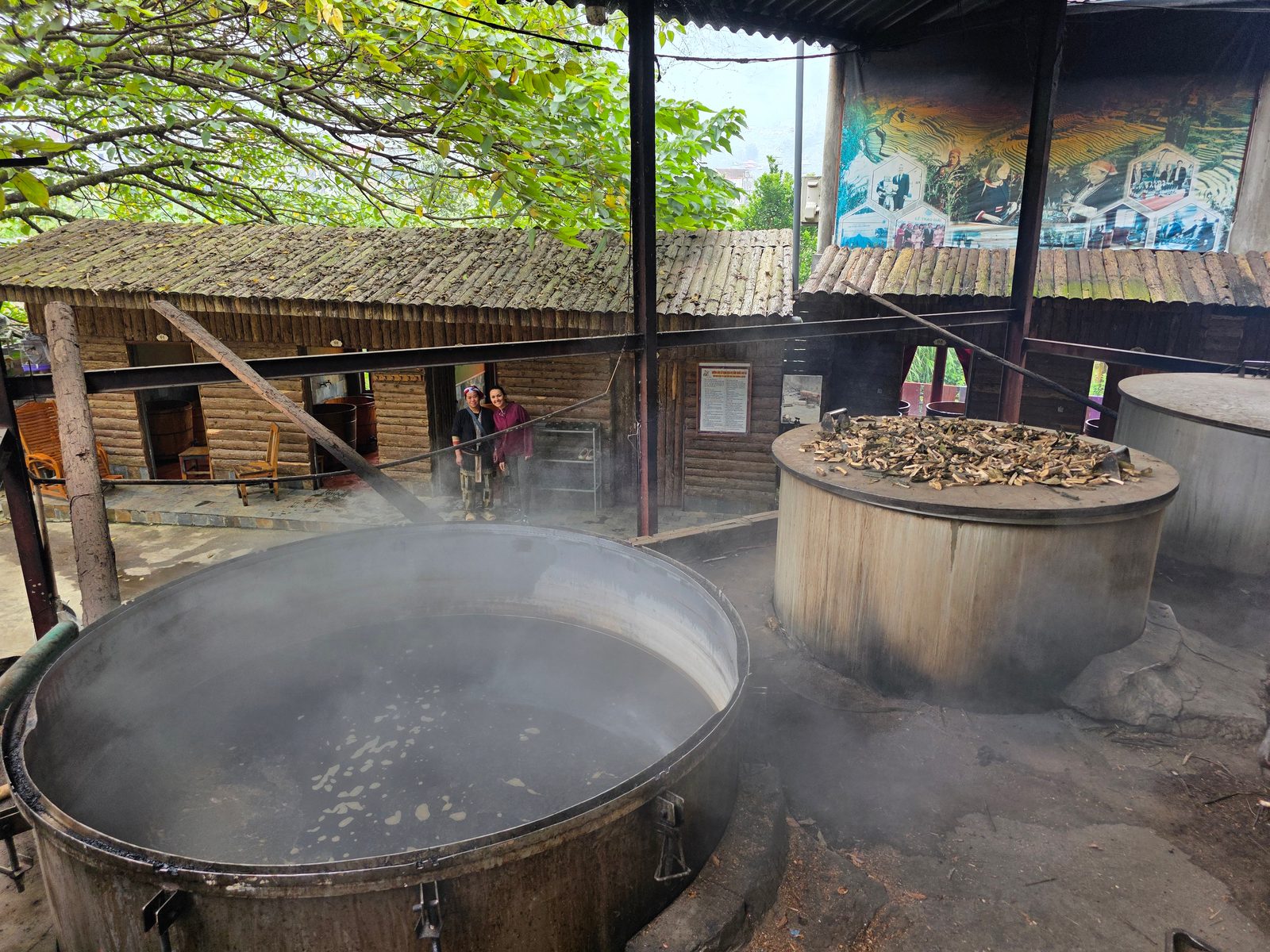
The bath kitchens, then the big pot of herbs. It's not soup, it's our bath.
Red Dao Authentic Herbal Bath, Tả Phìn
Community cooperative · Herbal bath in a wooden tub, ~30 min · Grab from Tả Van: ~€13.50
200,000 VND per person (~€7)In a log cabin, a Dao woman fills the wooden tubs by the bucket. We slip in. Well, we try: the water is way, way too hot. Luckily, there are cold taps. We adjust, get in, settle down. We stay about thirty minutes, but from minute twenty I'm splashing cold water on my face at regular intervals. Coming out, it feels like a hammam: your whole body loose, a little softened, your head light. A lovely experience.
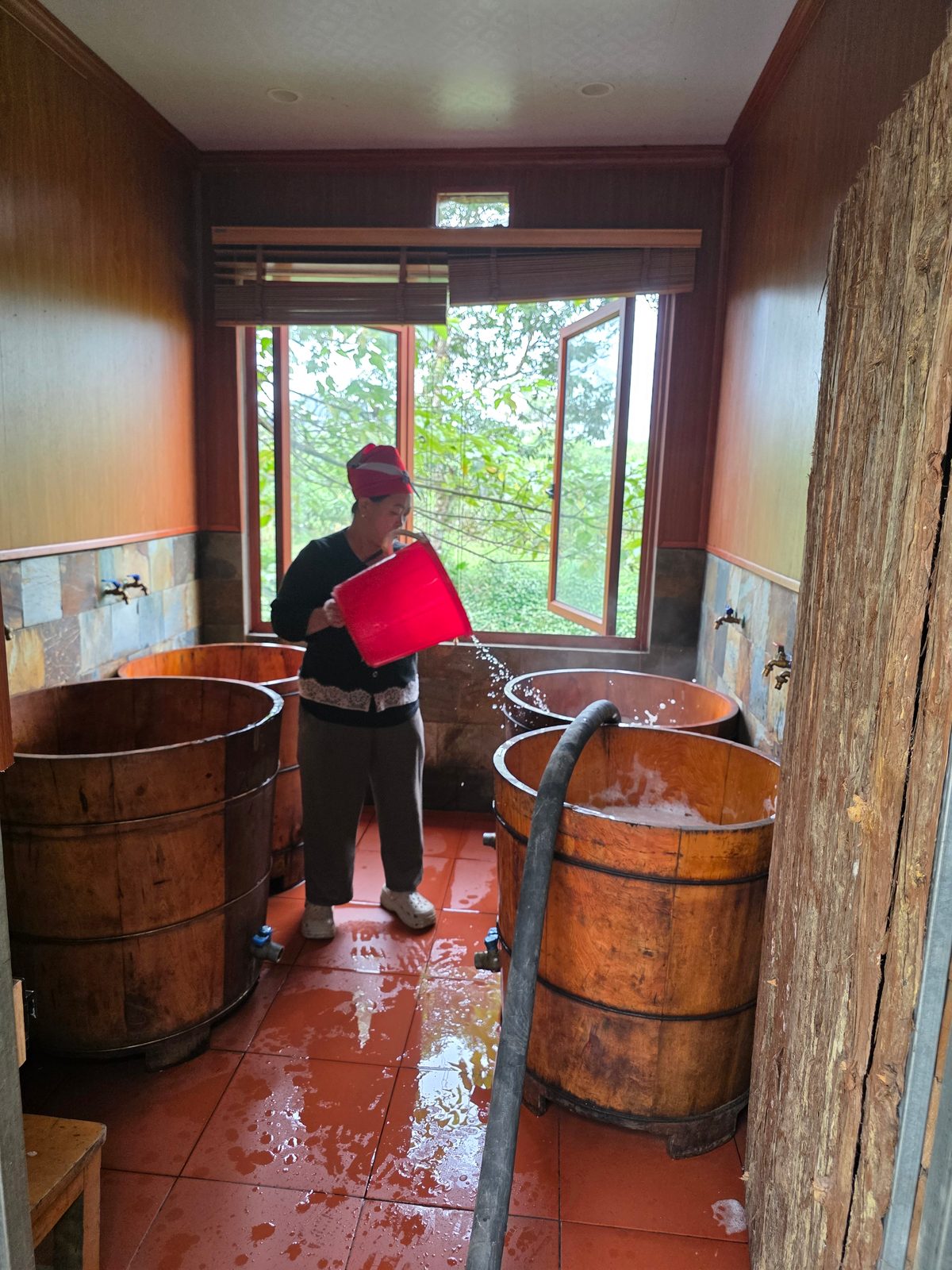
Bucket service. The tubs fill with herbal water.
The Red Dao herbal bath. Expect 200,000 VND per person (~€7). Test the water before getting in: it comes out almost boiling, and you often need to add cold water. Half an hour is plenty. And choose a community cooperative: the money goes straight to the families.
October 28 · 12:40 pm
Disneyland at the foot of Fansipan
Change of plan on the way: Fansipan is happening today. Tomorrow morning, with the trip back to Hanoi, it would have been too tight. Our Grab driver, who waited for us during the whole bath, drops us at the foot of the cable car.
First shock: the site is enormous. Flower-lined avenues, a clock tower, flags, a zen garden planted with succulents and its big Buddha, fountains, rebuilt thatched houses. You'd think you were at Disneyland. The site belongs to Sun Group, a big Vietnamese tourism group, and it shows: nothing is done by halves.
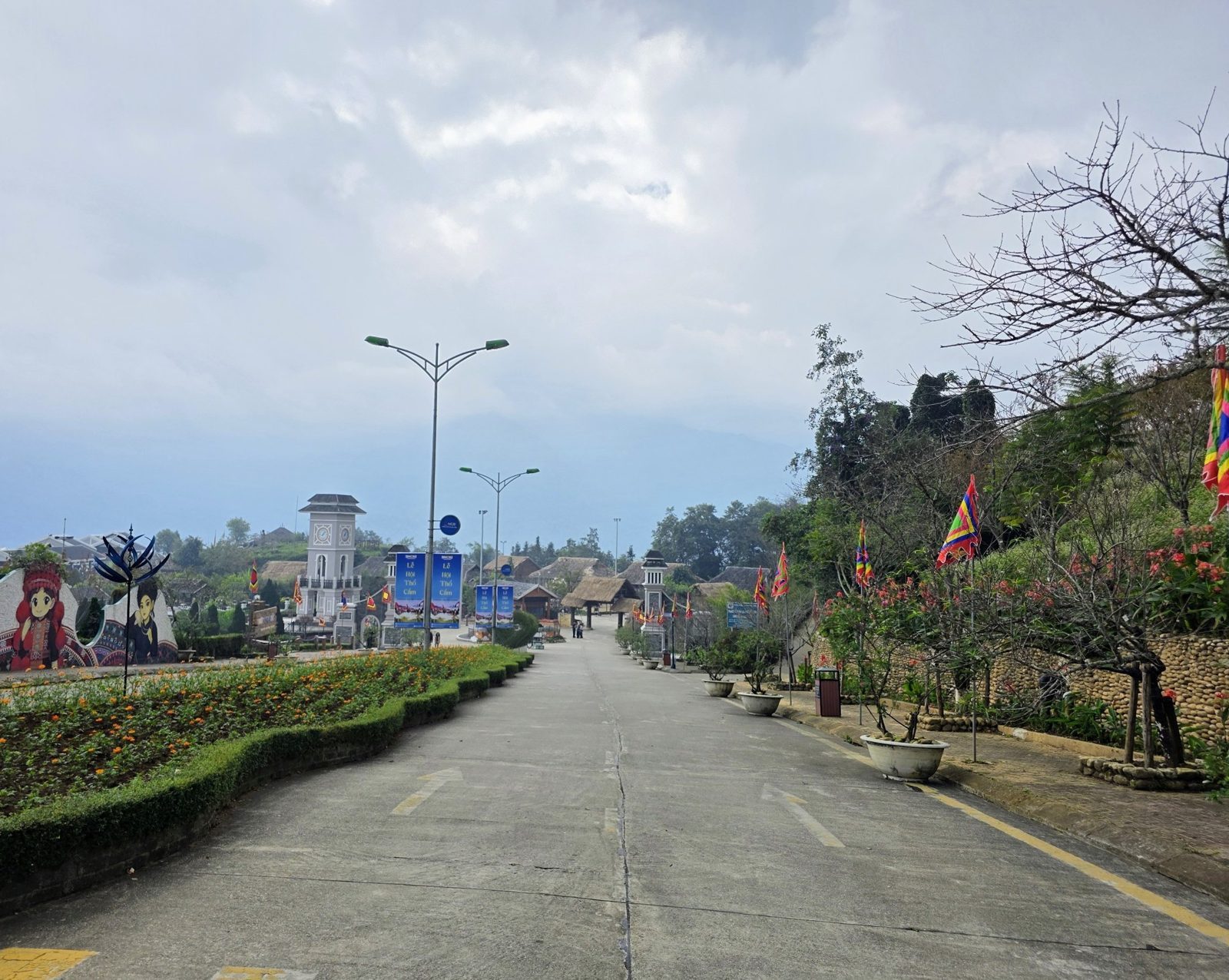
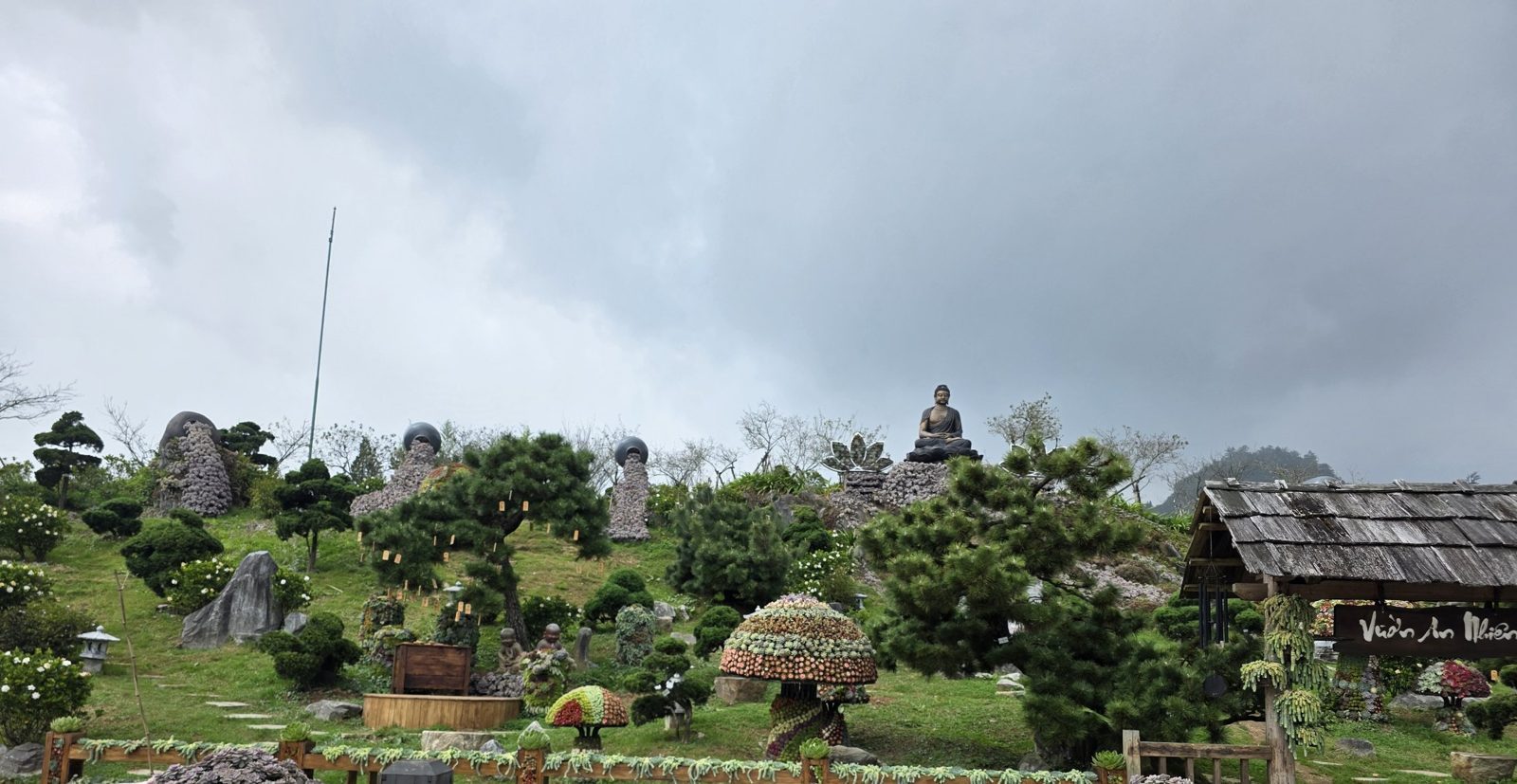
Before the ride up: the avenue, and the zen garden with its Buddha.
We took the cable car and buffet combo, at 1,100,000 VND per person (~€38). The cable car alone costs a little over 800,000 VND: so the buffet works out to about ten euros. There are two restaurants, one halal and one international, with a bit of everything. And it's honestly very good. The funicular from the top station to the summit isn't included: about €6 more per person.
Sun World Fansipan Legend, Sapa
Cable car + buffet · Funicular to the summit extra (~€6/person)
1,100,000 VND per person (~€38)The last ride up is announced for 2:30 pm. At 1:45, we tackle dessert. Then off to the station, where the giant wheel of the machinery swallows the cabins and spits them back out.
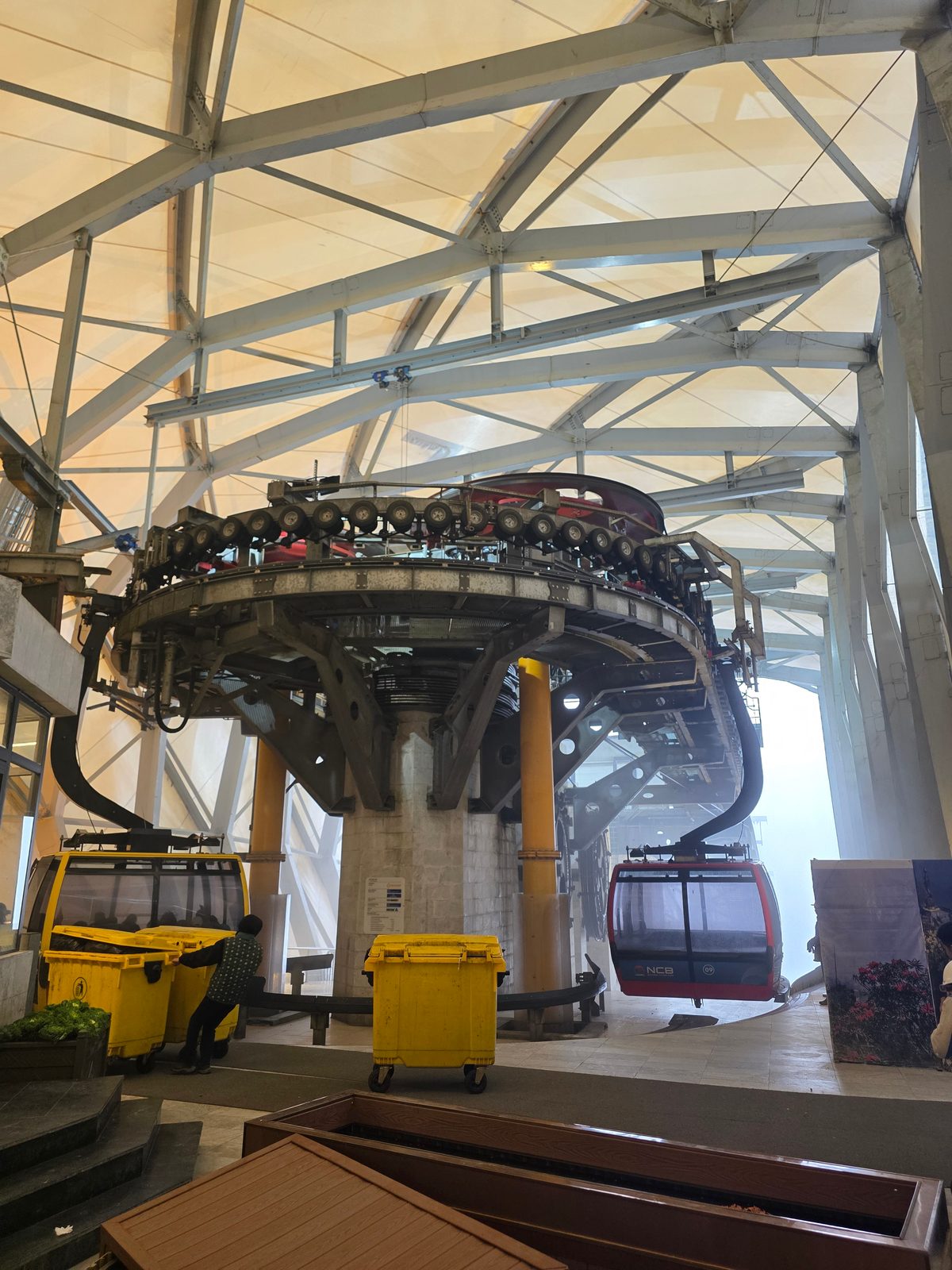
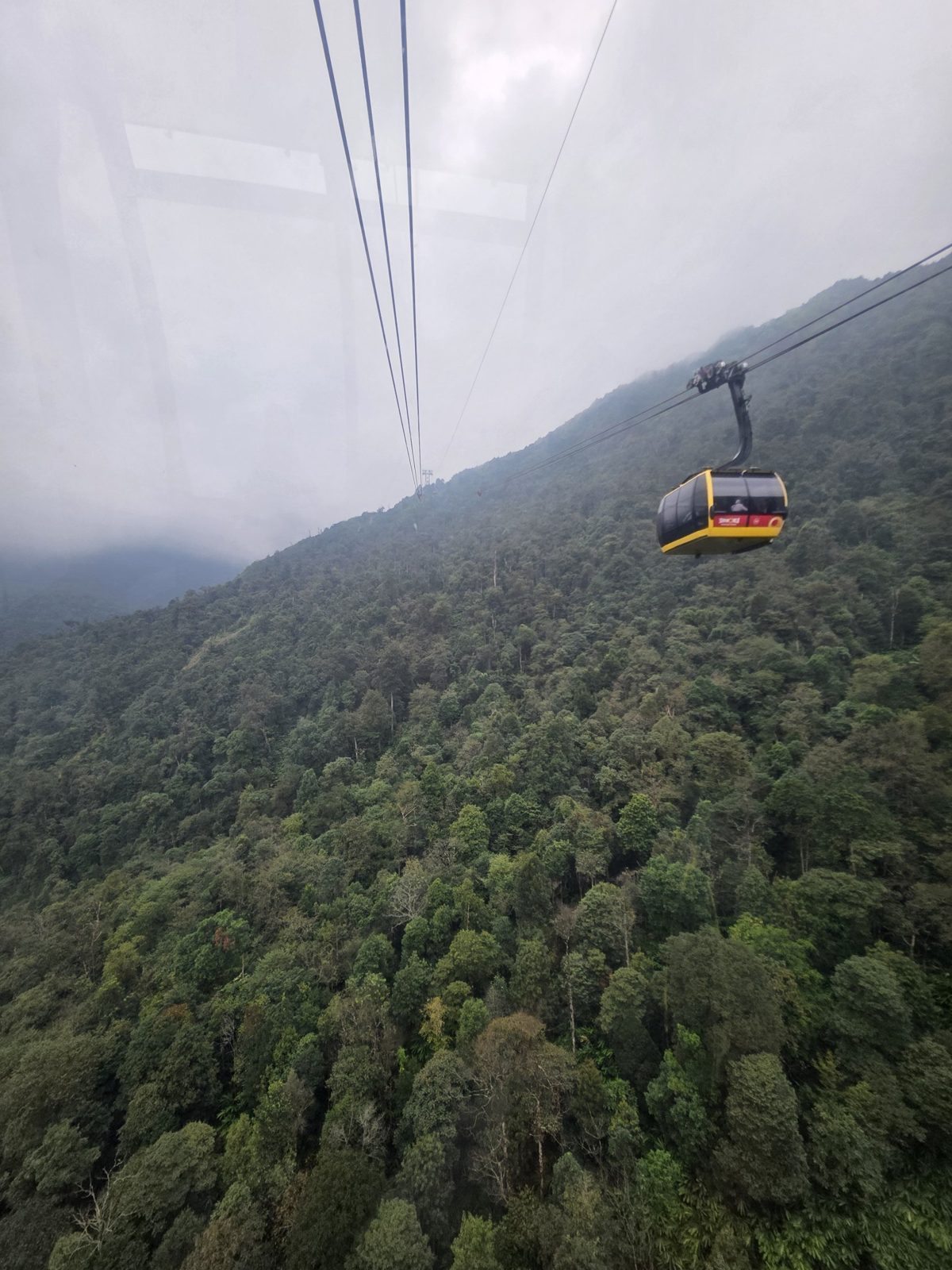
The machinery, then the forest. The engineer in me would have loved a tour of the engine room.
A tunnel into the future
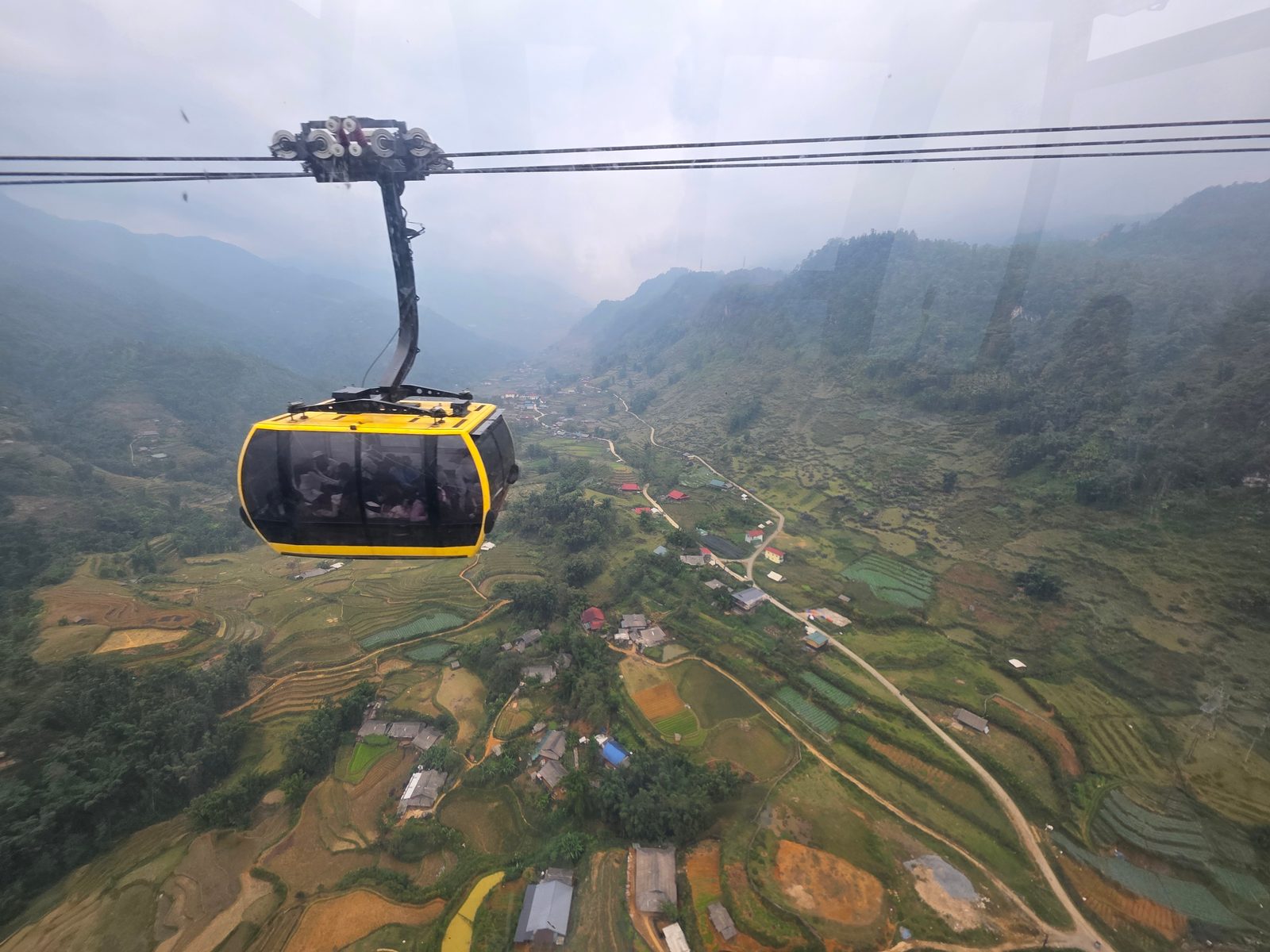
The ride up takes seventeen or eighteen minutes. First, the show: all the rice terraces in the valley seen from above, the villages, the winding roads. Then a very dense forest, with a few tiny isolated houses: families who grow cardamom, we're told.
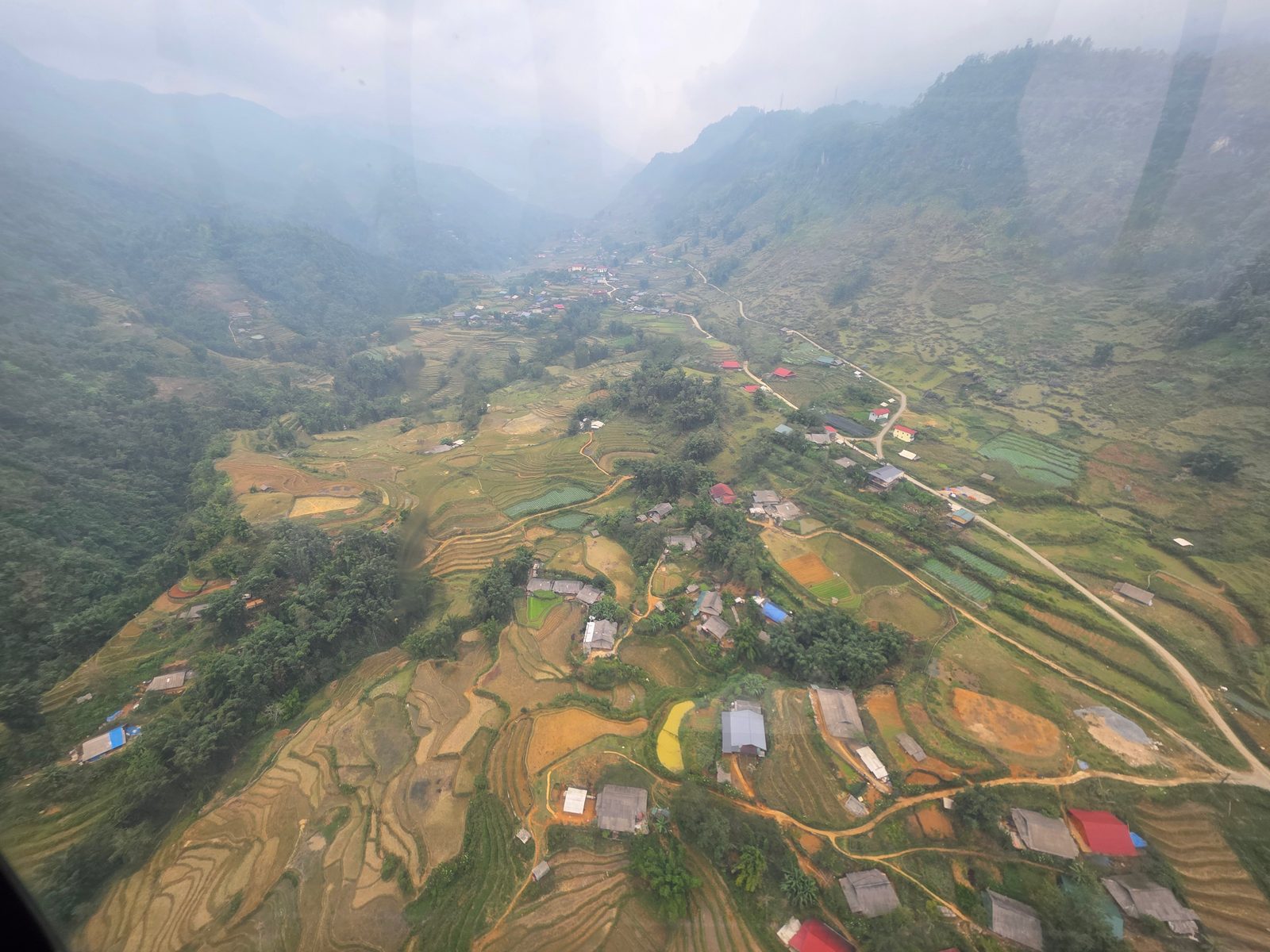
The valley, seen from the sky. Enjoy it: it's the last view of the day.
And then the white. The fog swallows the cabin, all you can see are the two cables running ahead of us, as if we were climbing through a tunnel. A tunnel into the future. At the top: nothing. Absolutely nothing. My dictation app heard “fancy pain” instead of Fansipan. Not wrong.
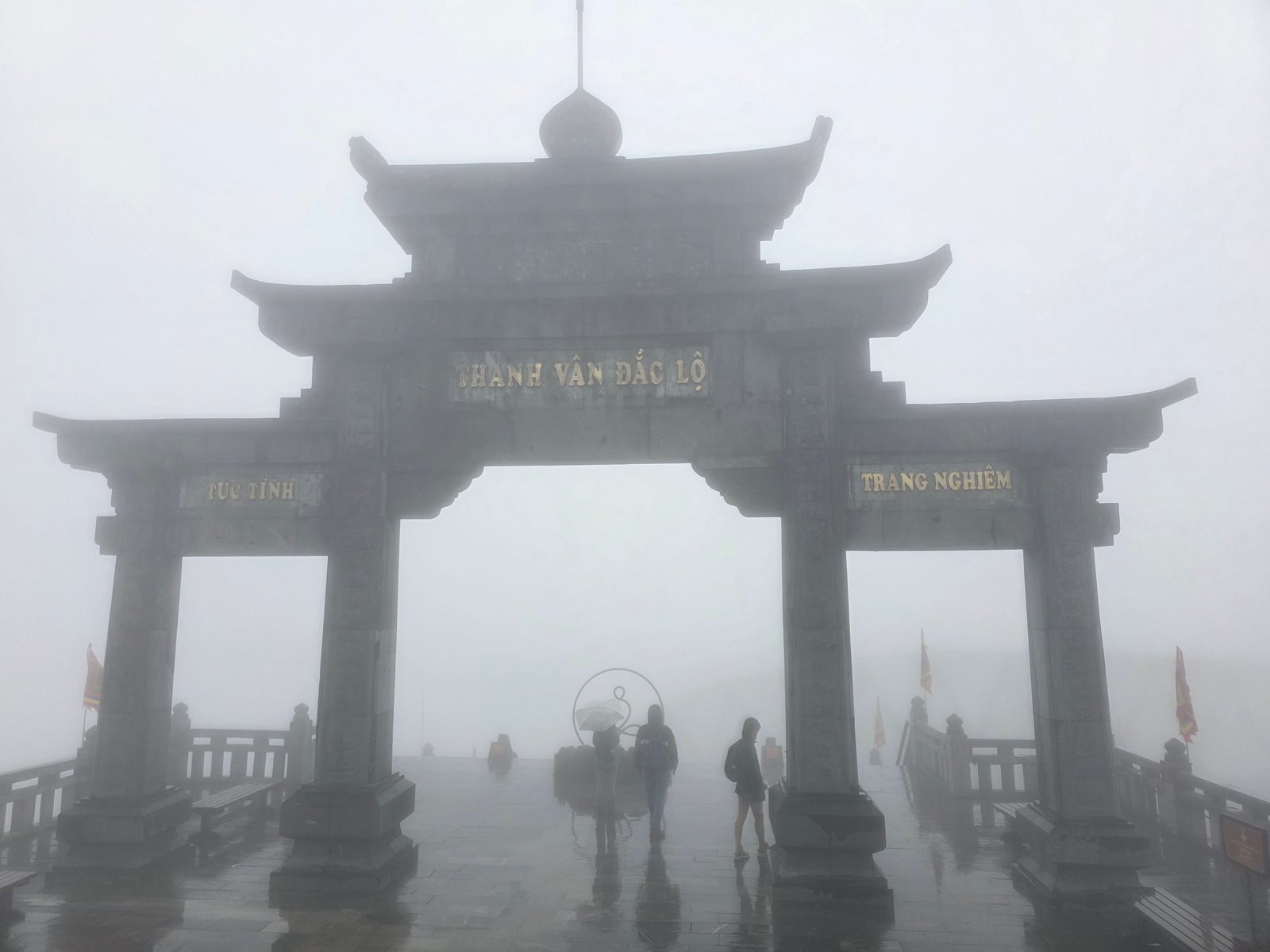
The archway at the top station. Behind it, in theory, there's a view.
Almost at the summit
Careful, we're not at the summit. The cable car's top station is a big platform, with temples, shops, restaurants and cafés. The real summit, the one with the superb view and the giant Buddha, is higher still: you get there on foot up some 600 steps, or by funicular. In the fog, we can barely make out the first flights of stairs.
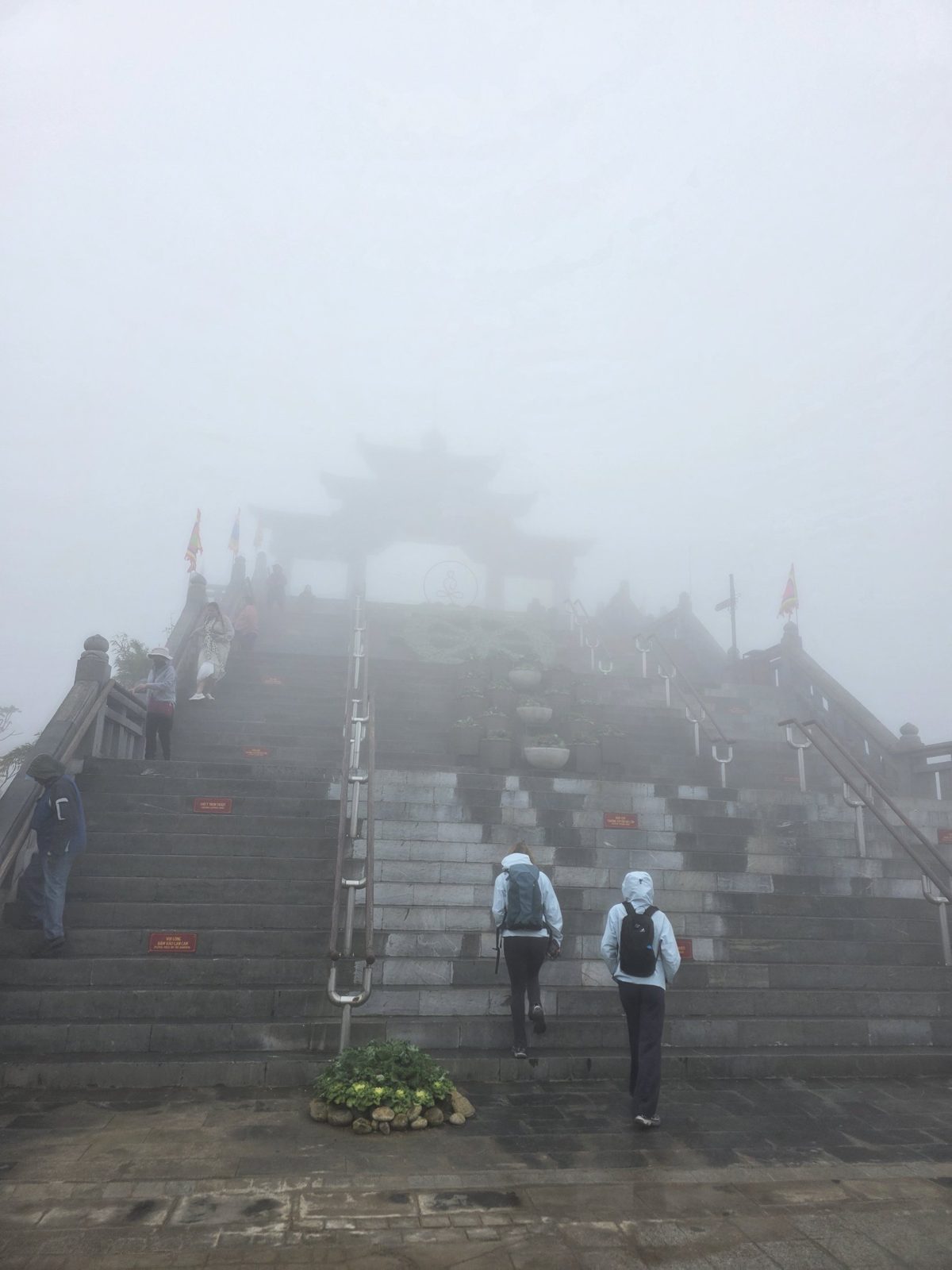
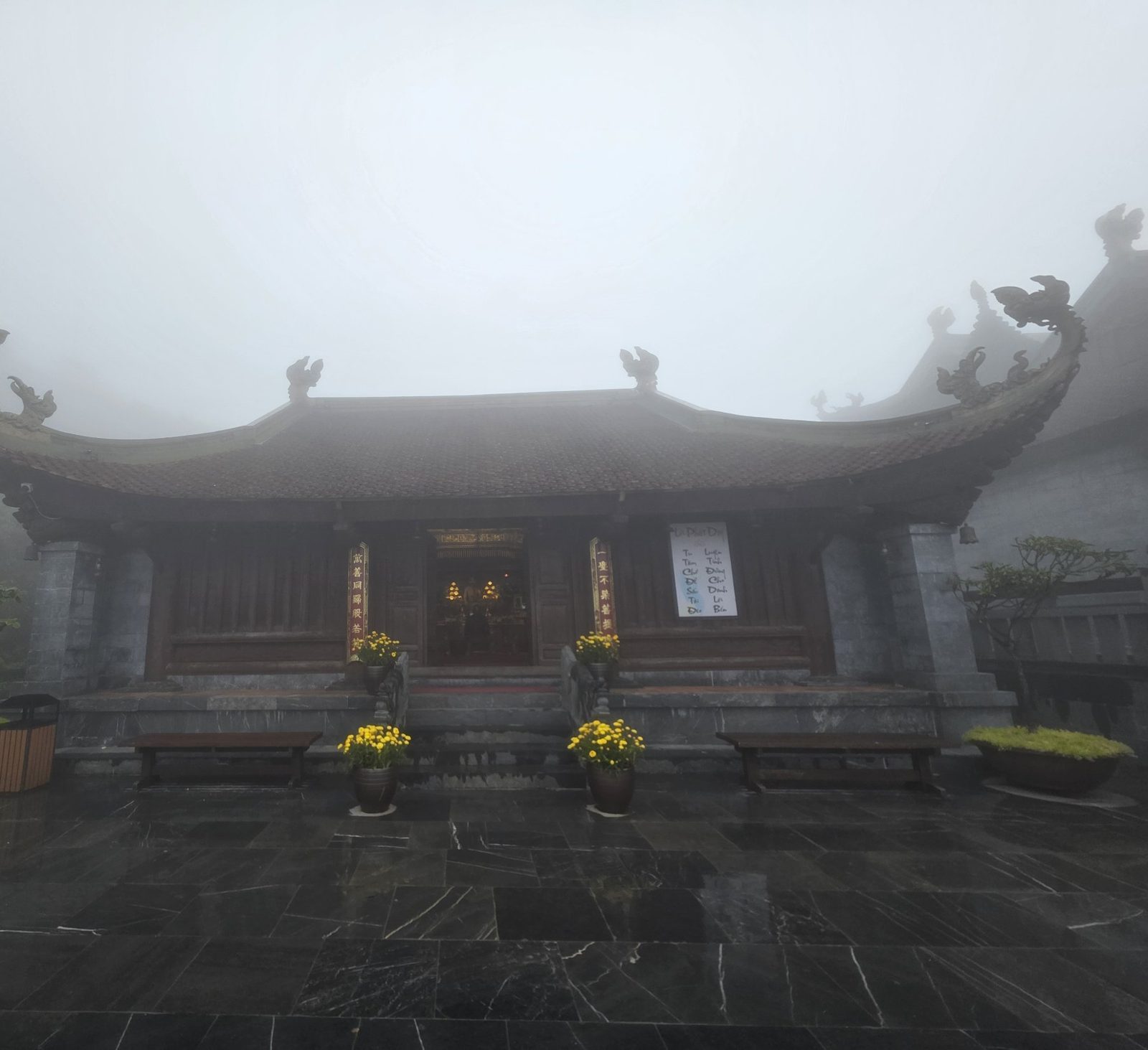
The stairway to the summit, and a pagoda emerging from the fog.
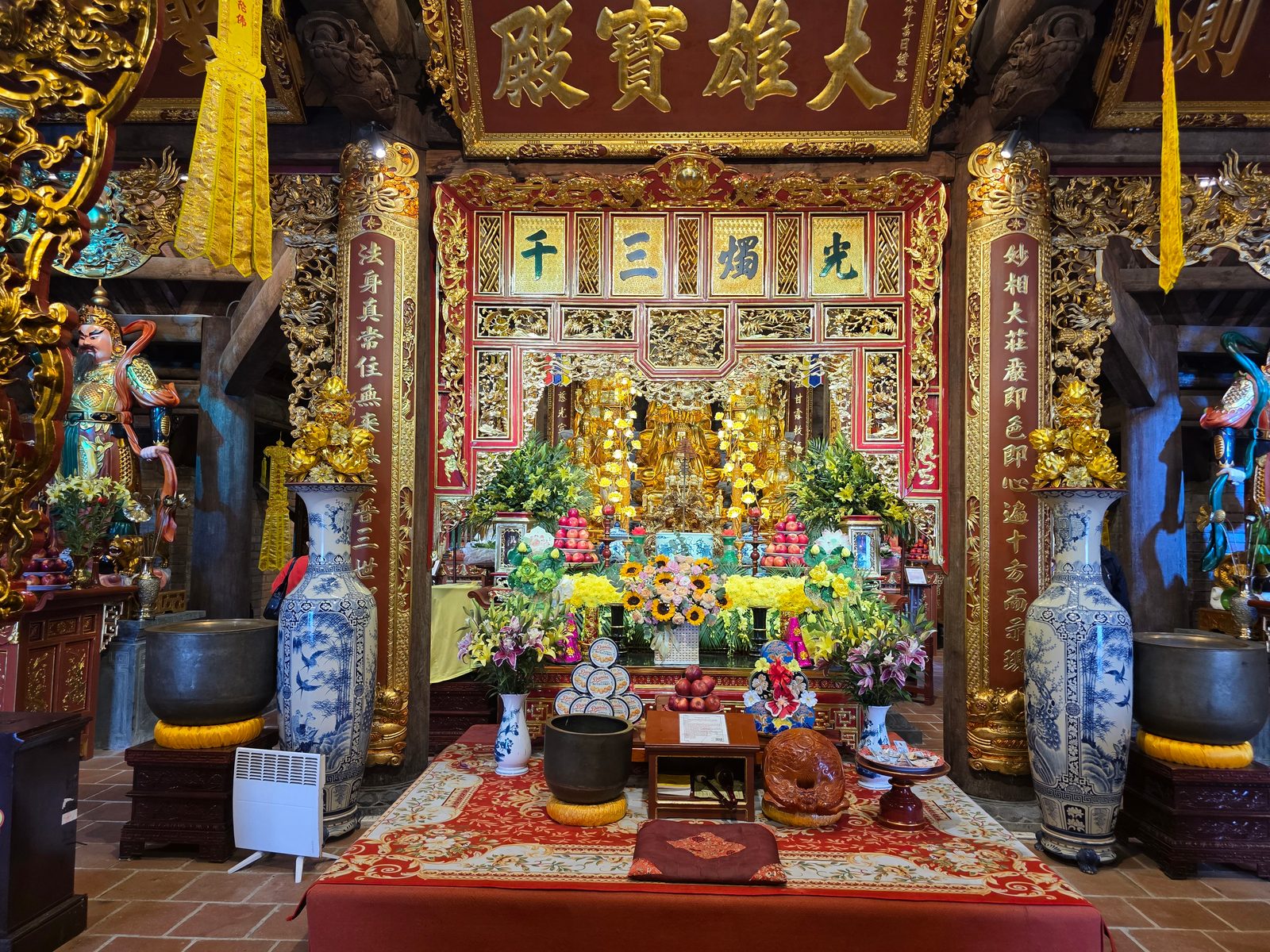
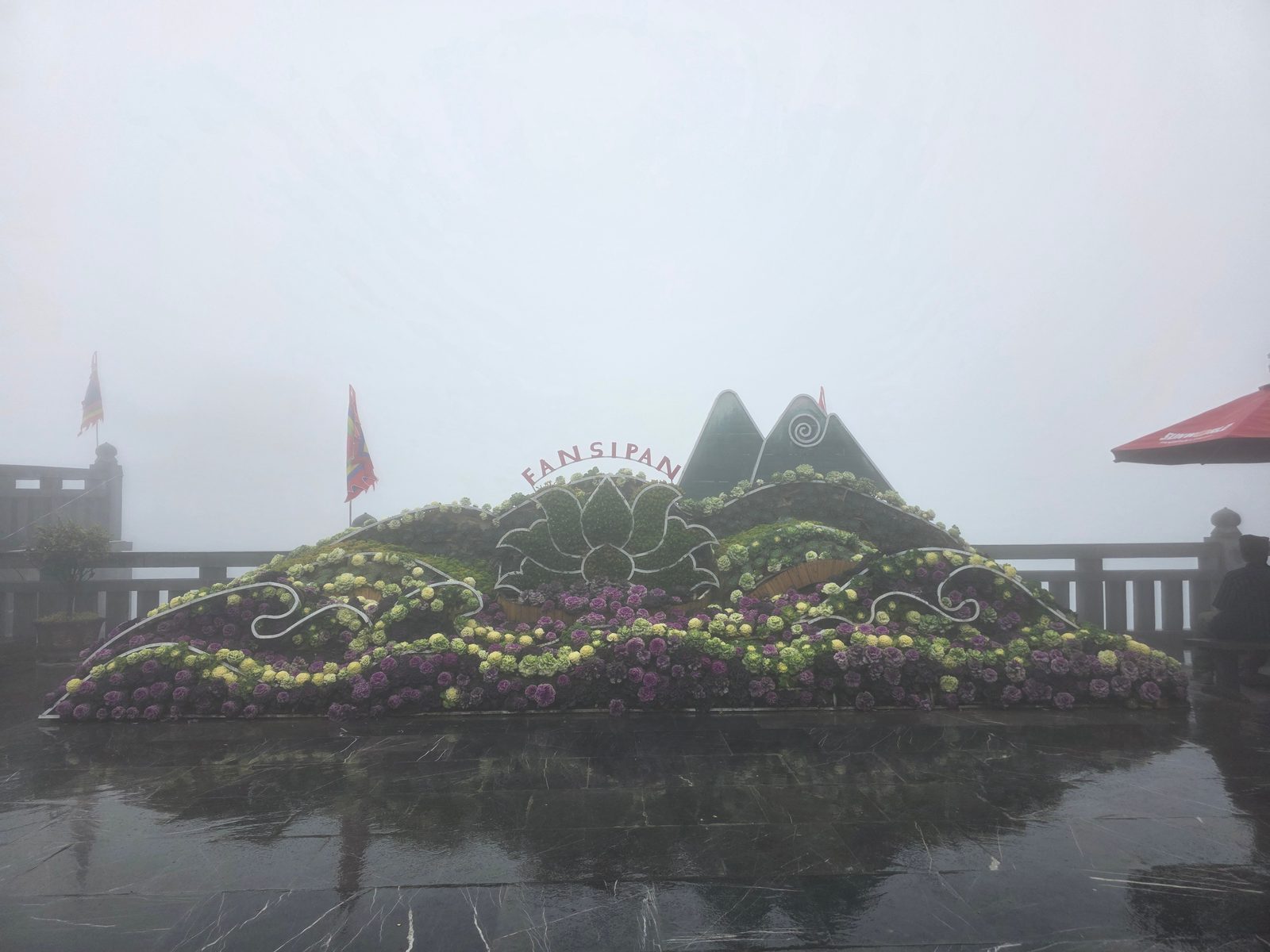
An altar all in gold, and a flowerbed floating in the mist.
We settle into a café, a hot coffee in our hands, hoping it'll clear. It doesn't. The funicular? We pass: no desire to pay again to look at a white wall.
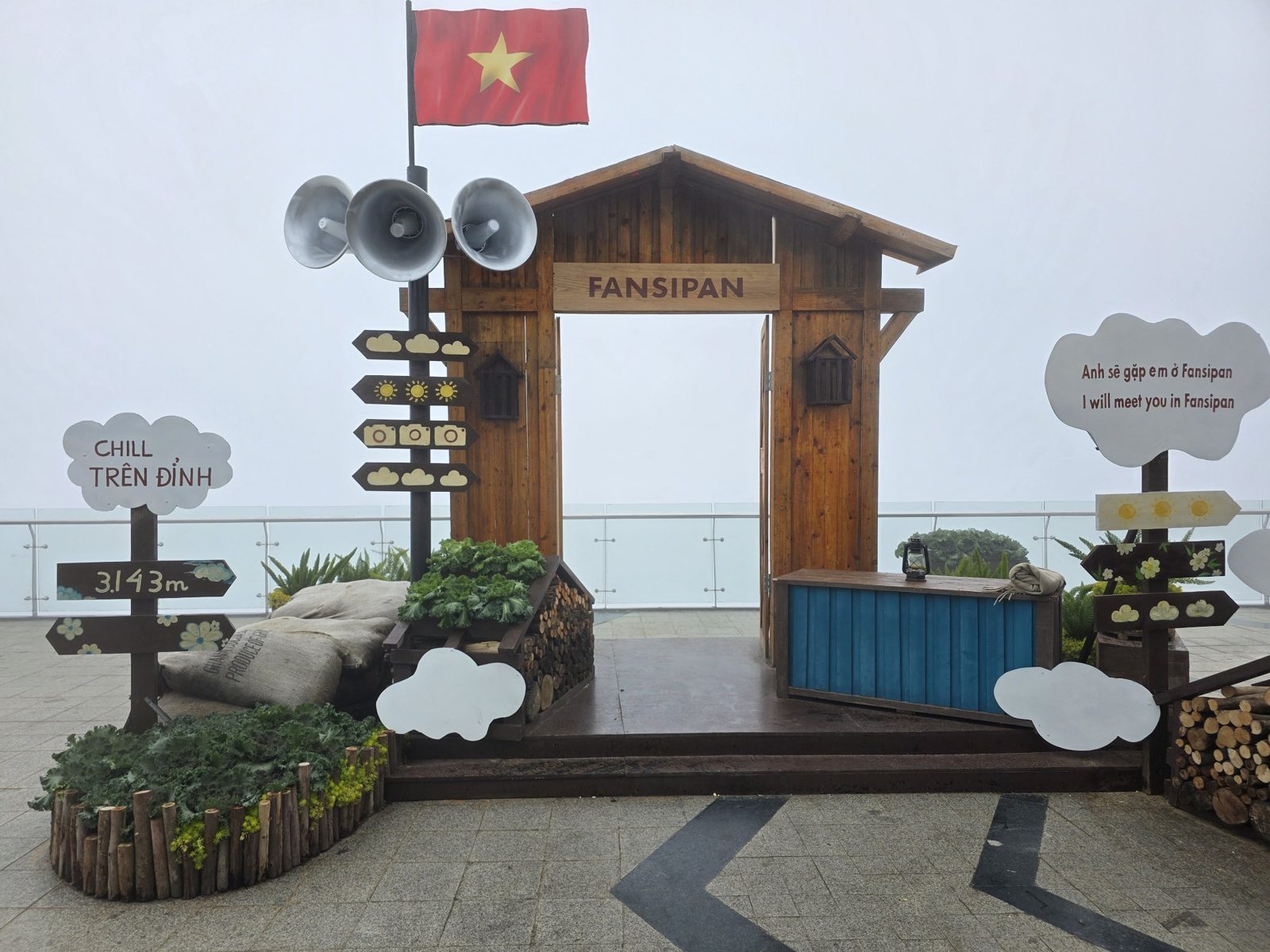
3,143 meters (10,312 feet), says the sign. The scenery is optional.
Fansipan, the user's guide. Before paying for entry, not just the funicular, ask to see the summit webcam: the ticket sellers show it at the counter. If it's white up there, it'll be white for you too. And if you can, stay at least three days in Sapa and try your luck in the morning and late afternoon: it's your best shot at a clear sky.
Colors on the way down
Back at the bottom. While we were gone, the mist came down too, but the gardens haven't lost any of their color: whole paths of pink, red and mauve impatiens, fields of zinnias, giant “LOVE” letters, and a white staircase climbing to nowhere. There's also a huge rose garden. Not many roses this time of year, but given its size, it must be spectacular in full bloom.
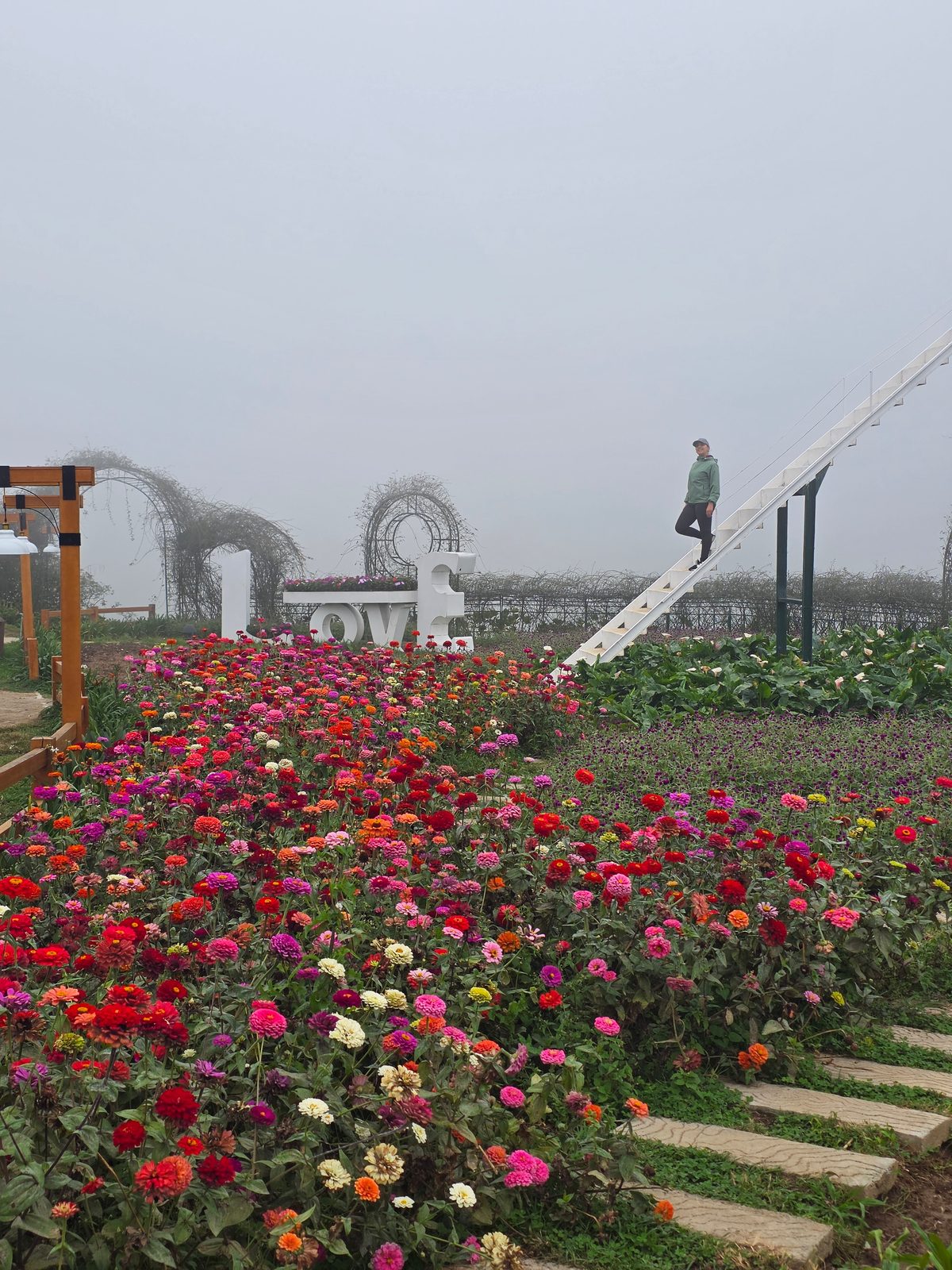
Up top, everything was white. Down here, everything is in color. And a staircase to nowhere, for the photo.
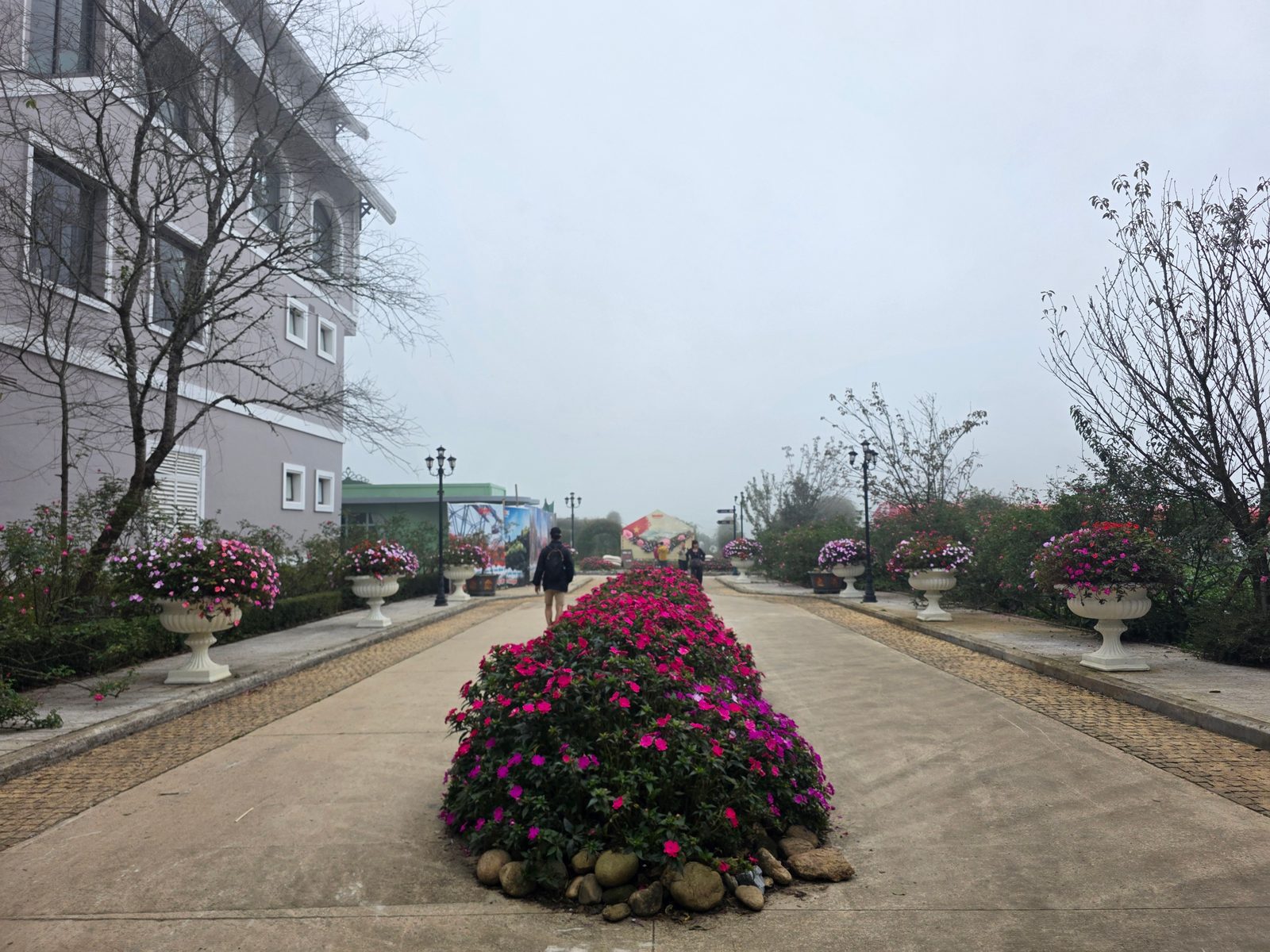
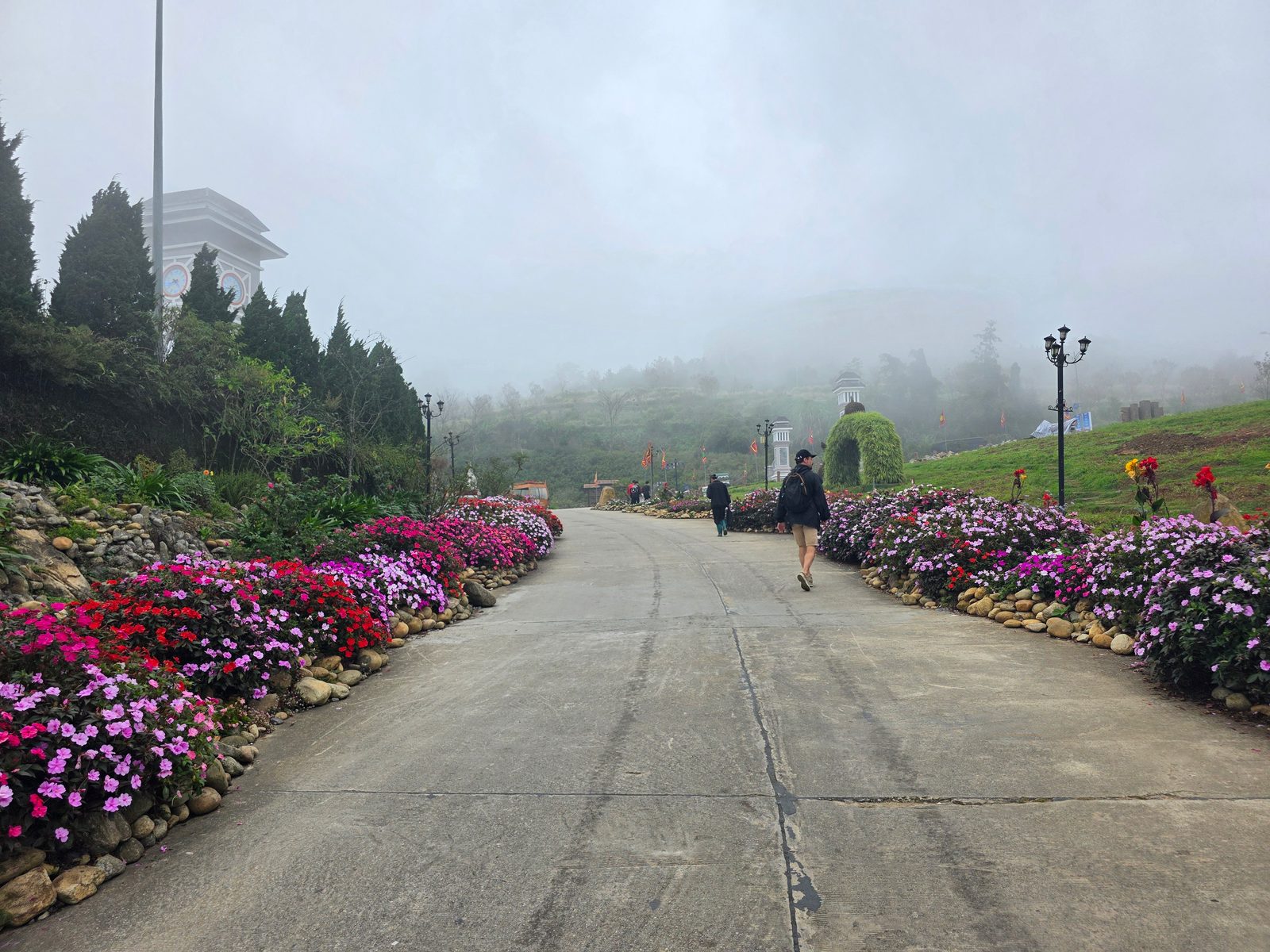
The paths of impatiens, garden side.
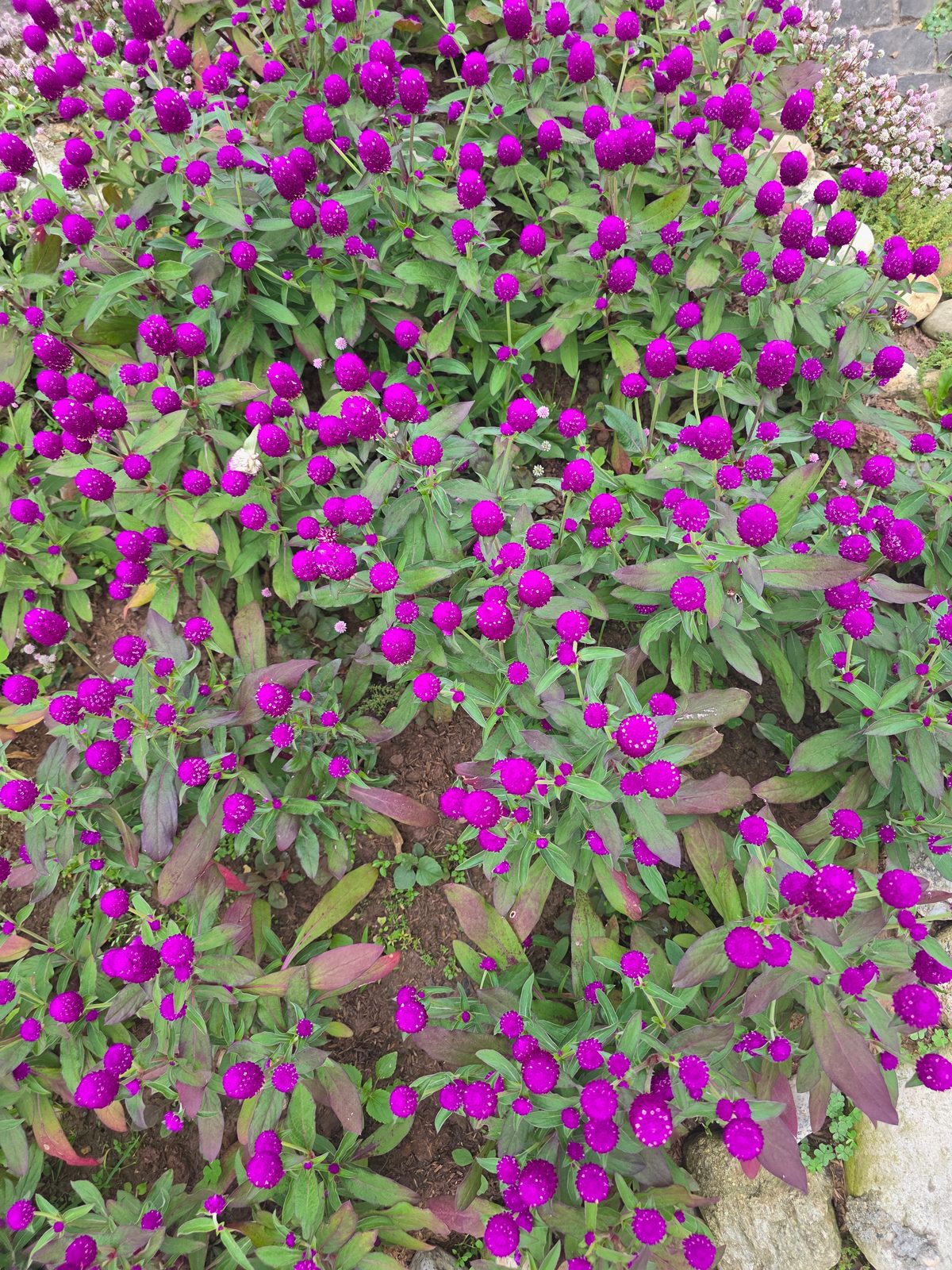
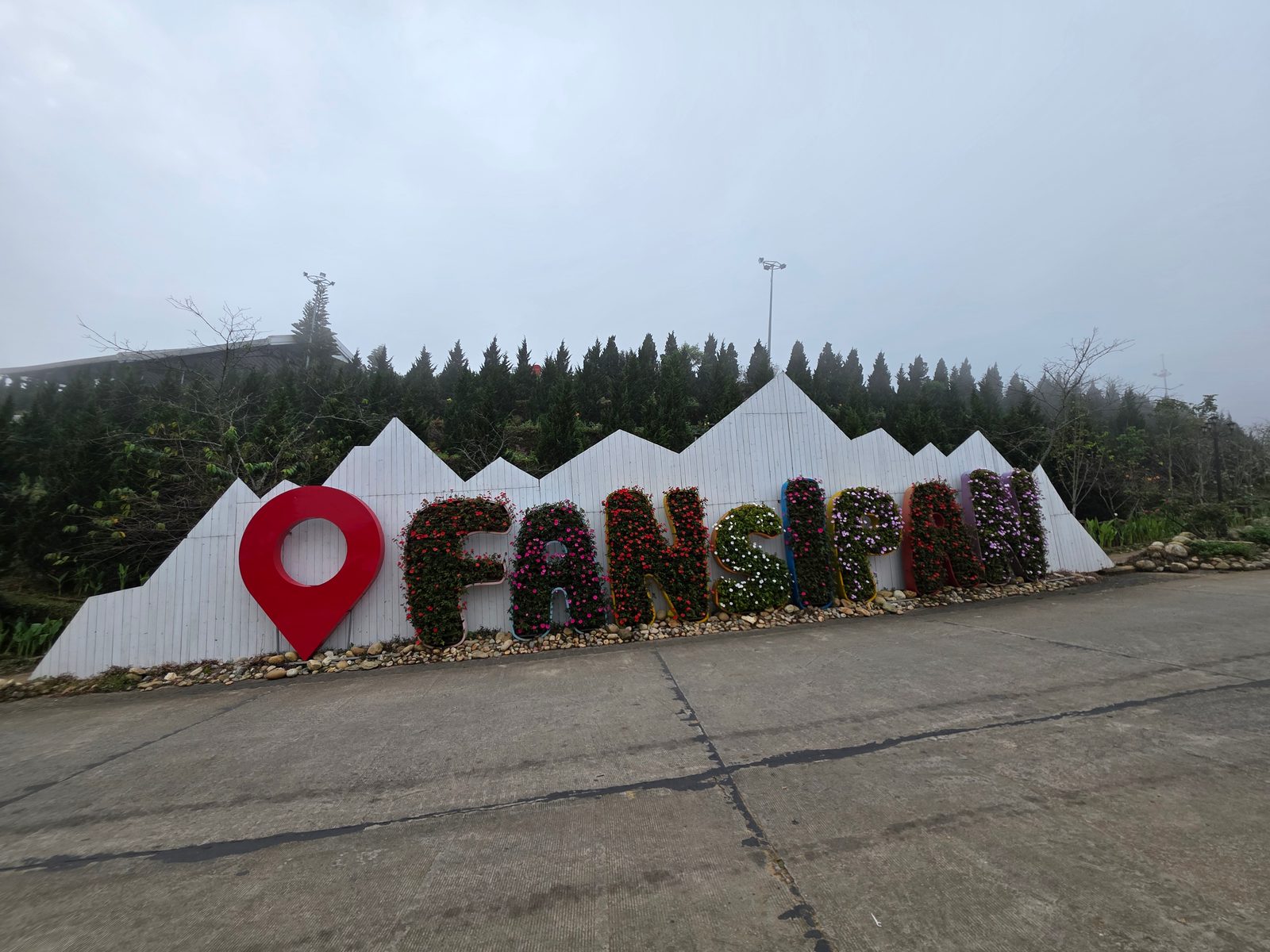
Purple pompoms, and the Fansipan letters.
October 28 · 5:45 pm
The real church and the fake palace
A Grab scooter this time, down to the center of Sapa. First stop: the stone church, built by the French in colonial times. In front of it, a big tiered square where kids play soccer while the mist clings to the hills.
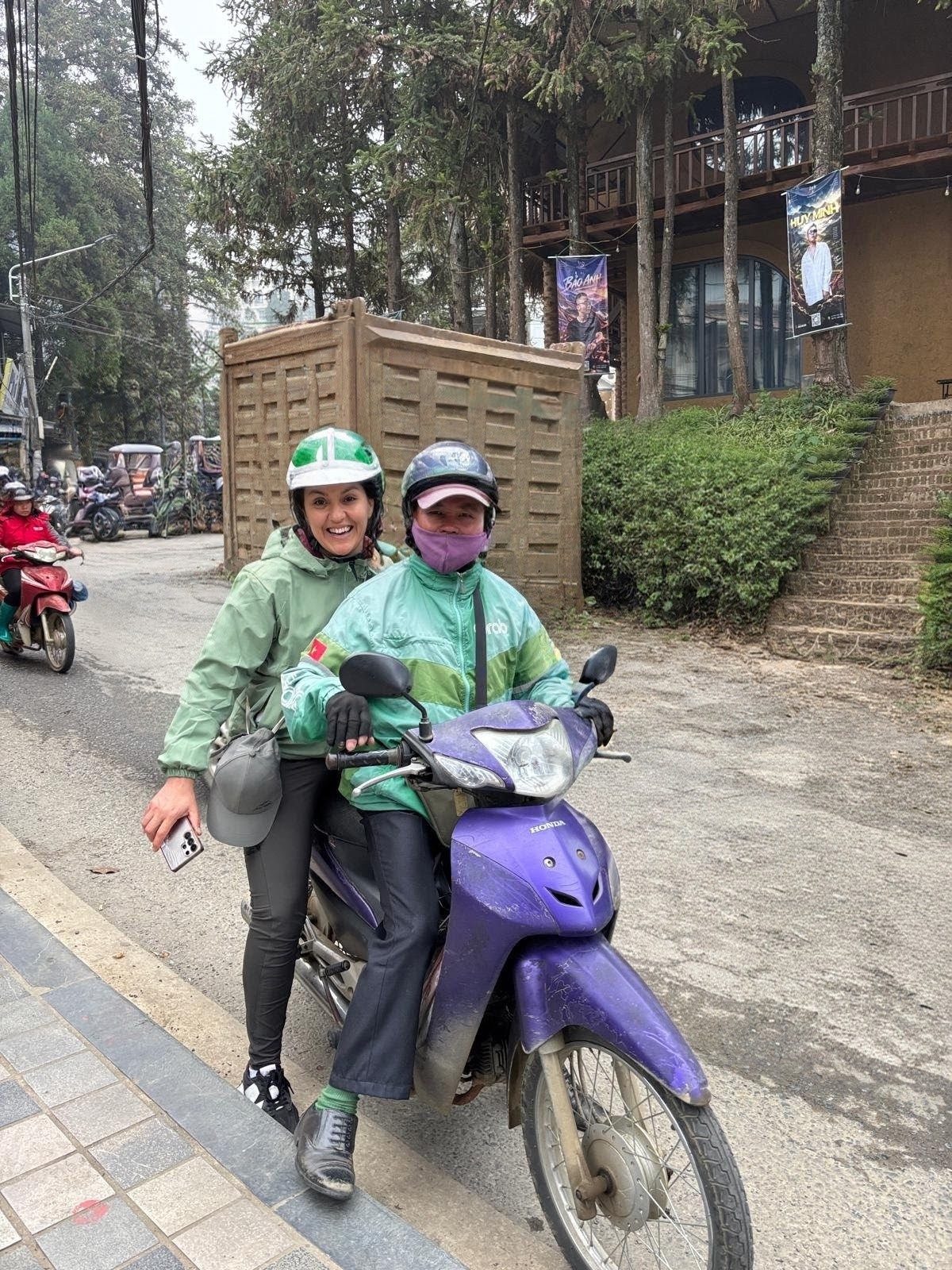
Two-wheeler edition. The smile comes free with the ride.
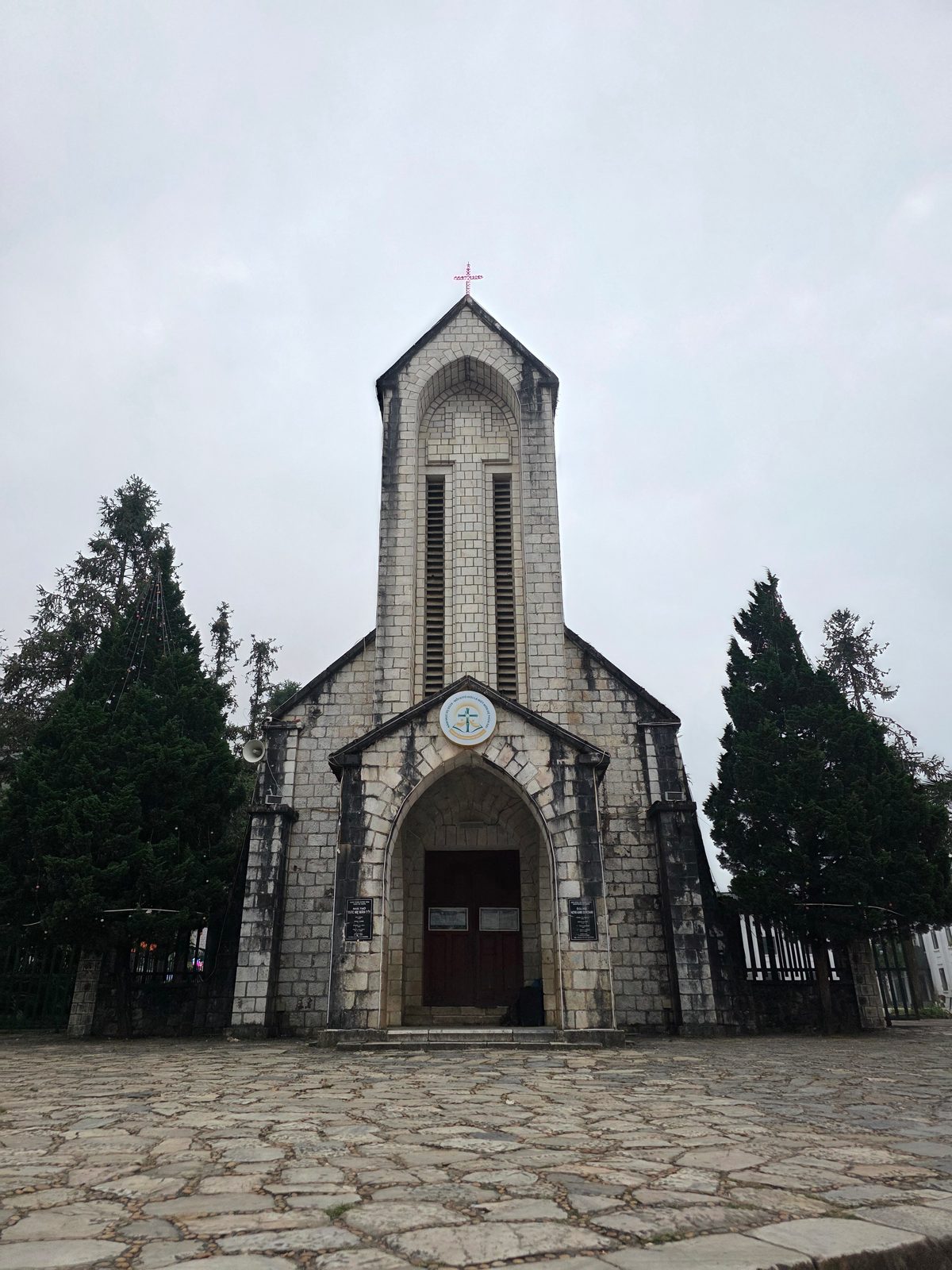
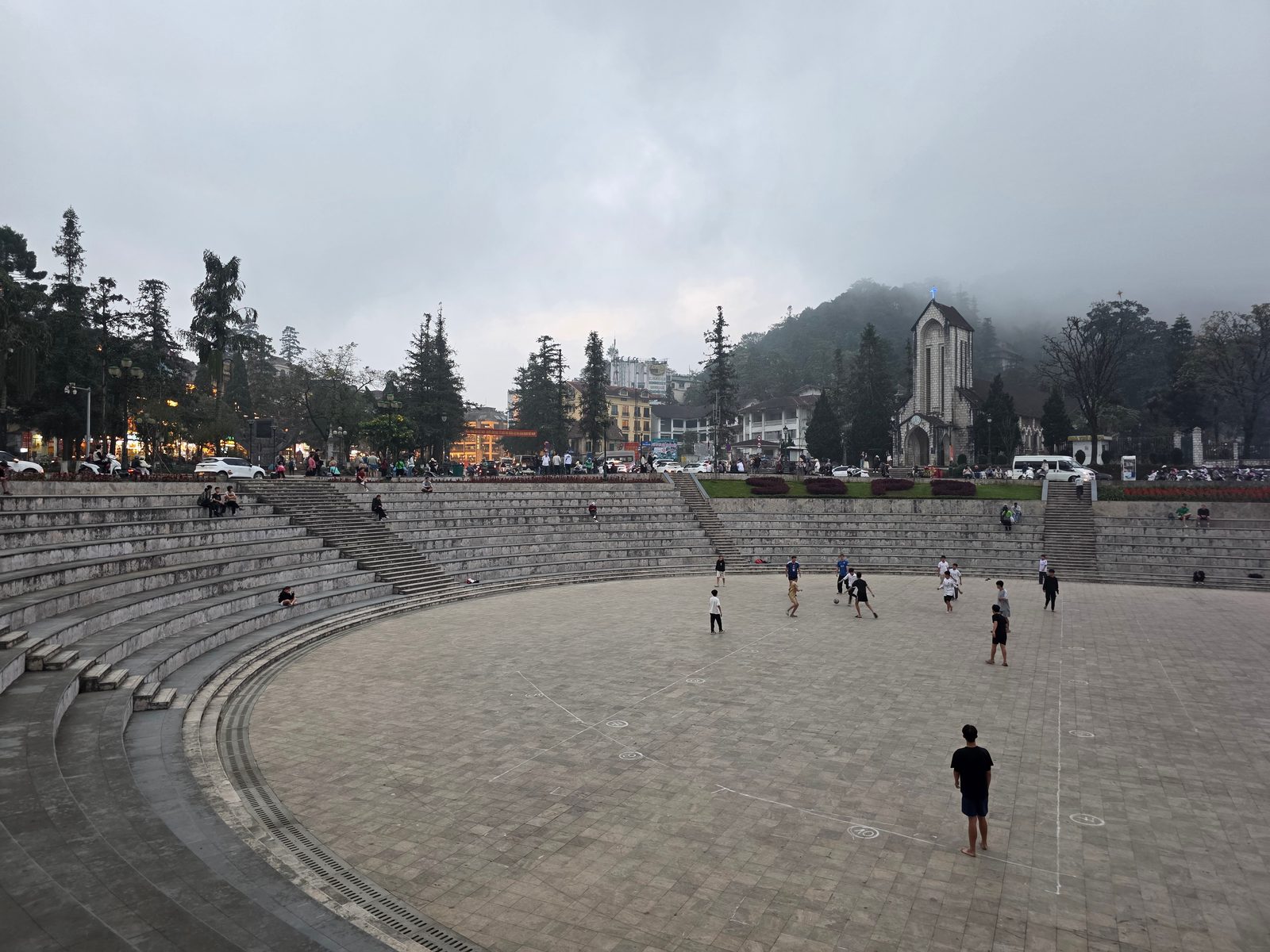
The stone church, and the square where kids play soccer at its feet.
Right across the way, a change of era. A huge yellow and green building, with domes, clocks, balconies and chandeliers: Sun Plaza. I'd have sworn the French built it too. Wrong: it's brand new, and it's Sun Group again. Inside, a sign points to the Mường Hoa funicular station, which runs all the way to the Fansipan cable car. Full circle.
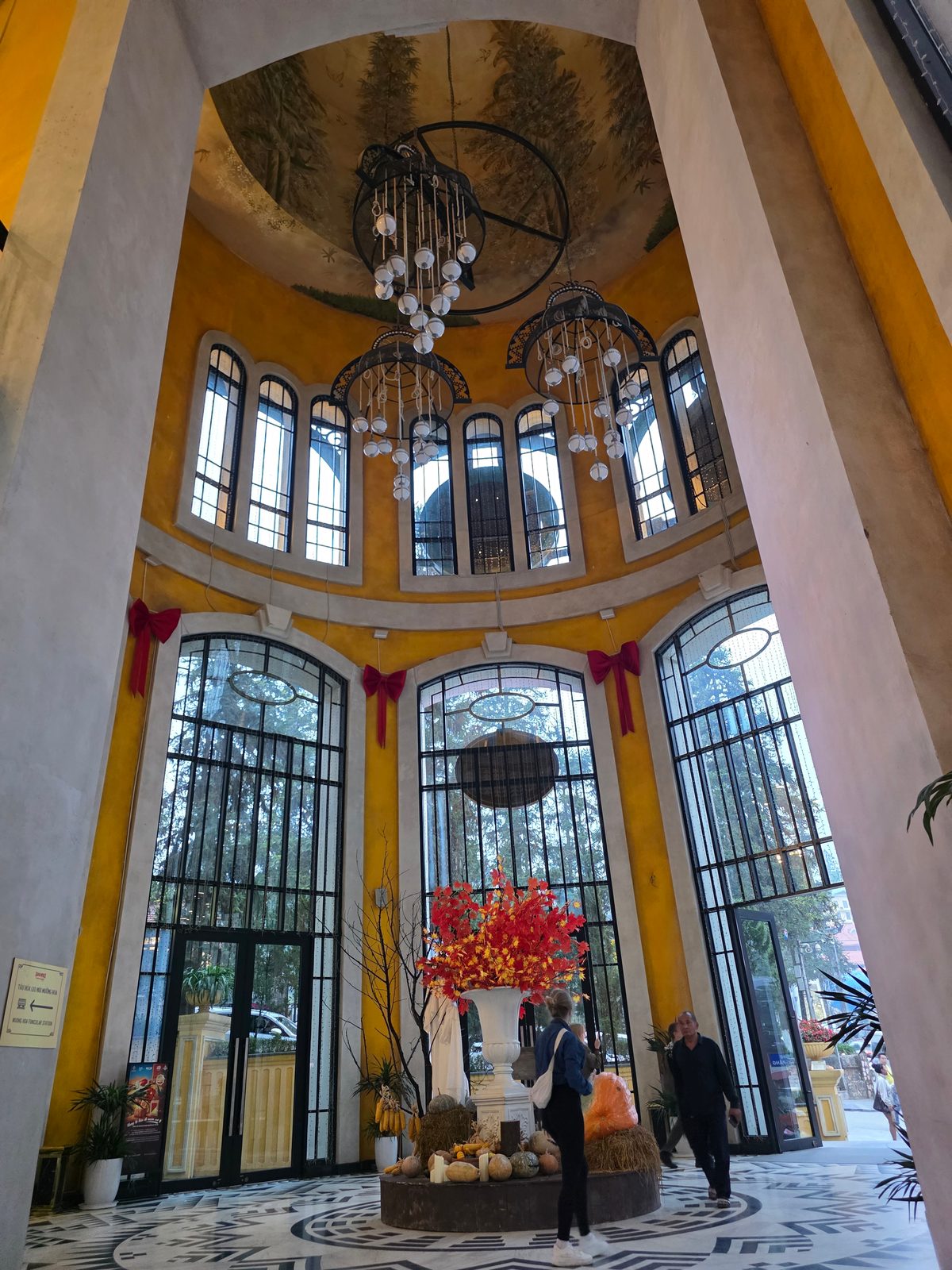
The Sun Plaza lobby. It looks old. It isn't.
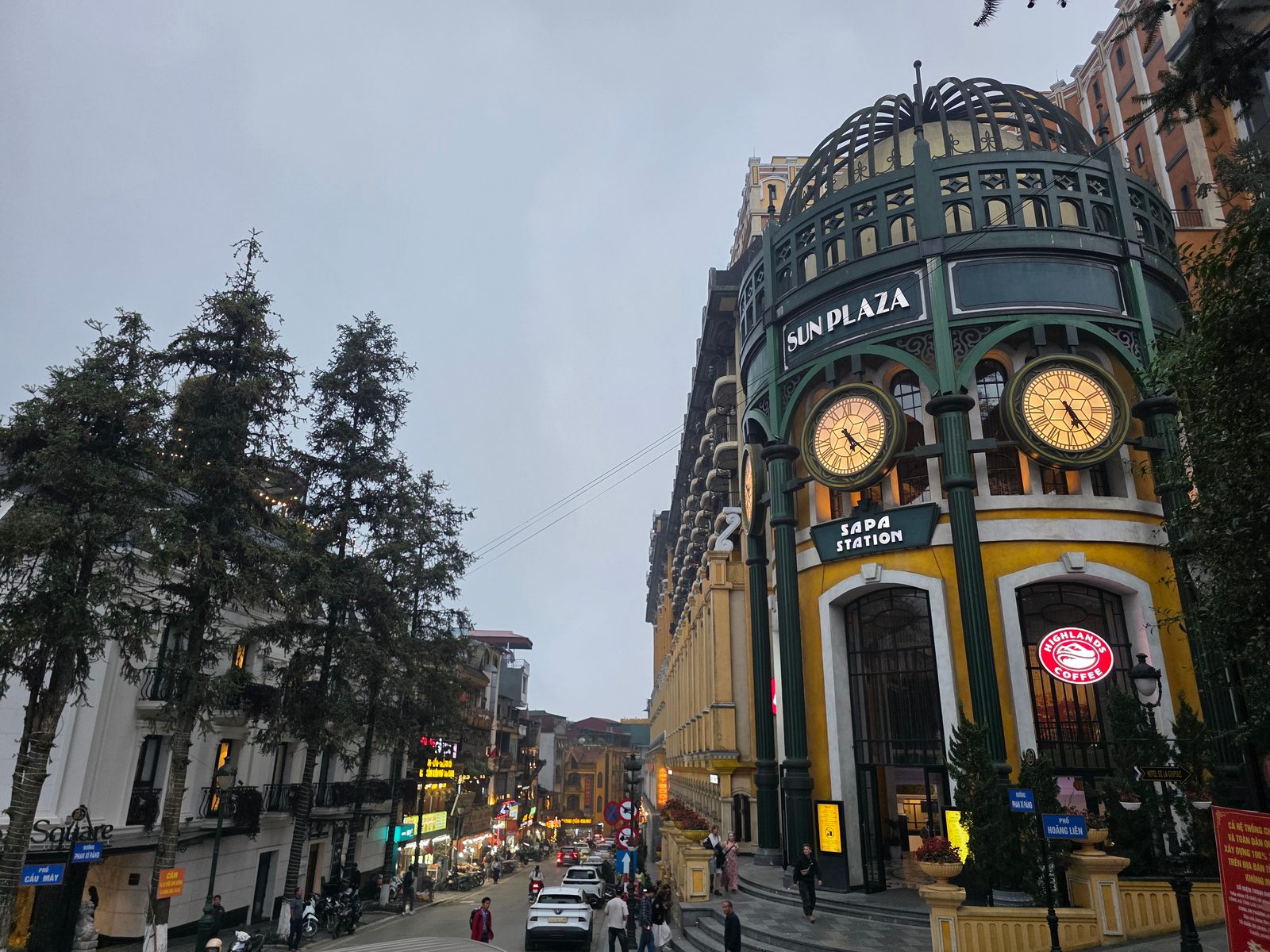
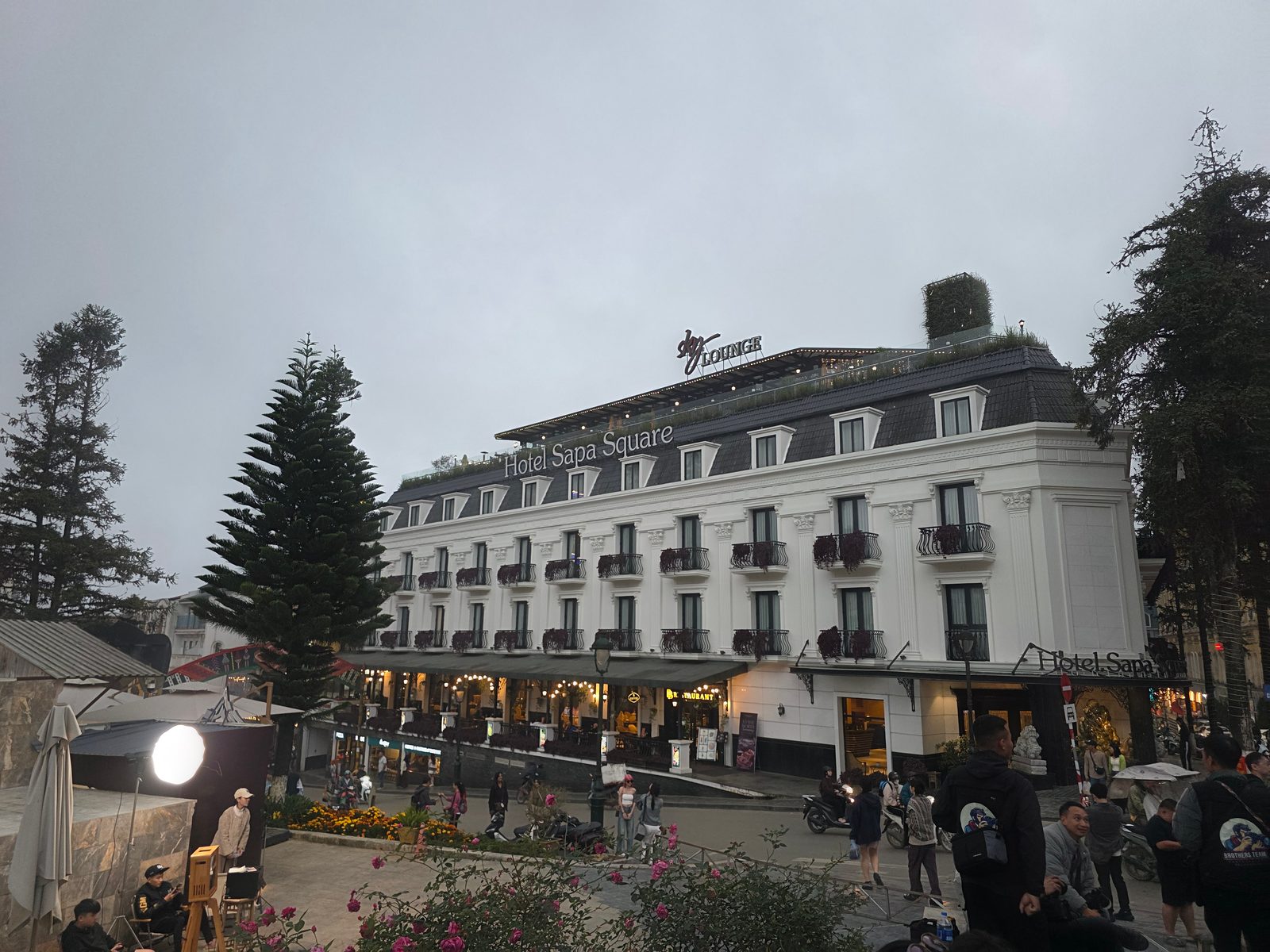
The clock tower, and a big white building on the other side of the square.
As night falls, the neon comes on and Sapa transforms. Lanterns, illuminated signs, restaurants on five floors: you'd think you were in Times Square. It's beautiful, unexpected, and a little strange. You can tell part of the scenery was built for us. On the signs, two words come up everywhere: cá hồi and cá tầm, salmon and sturgeon.
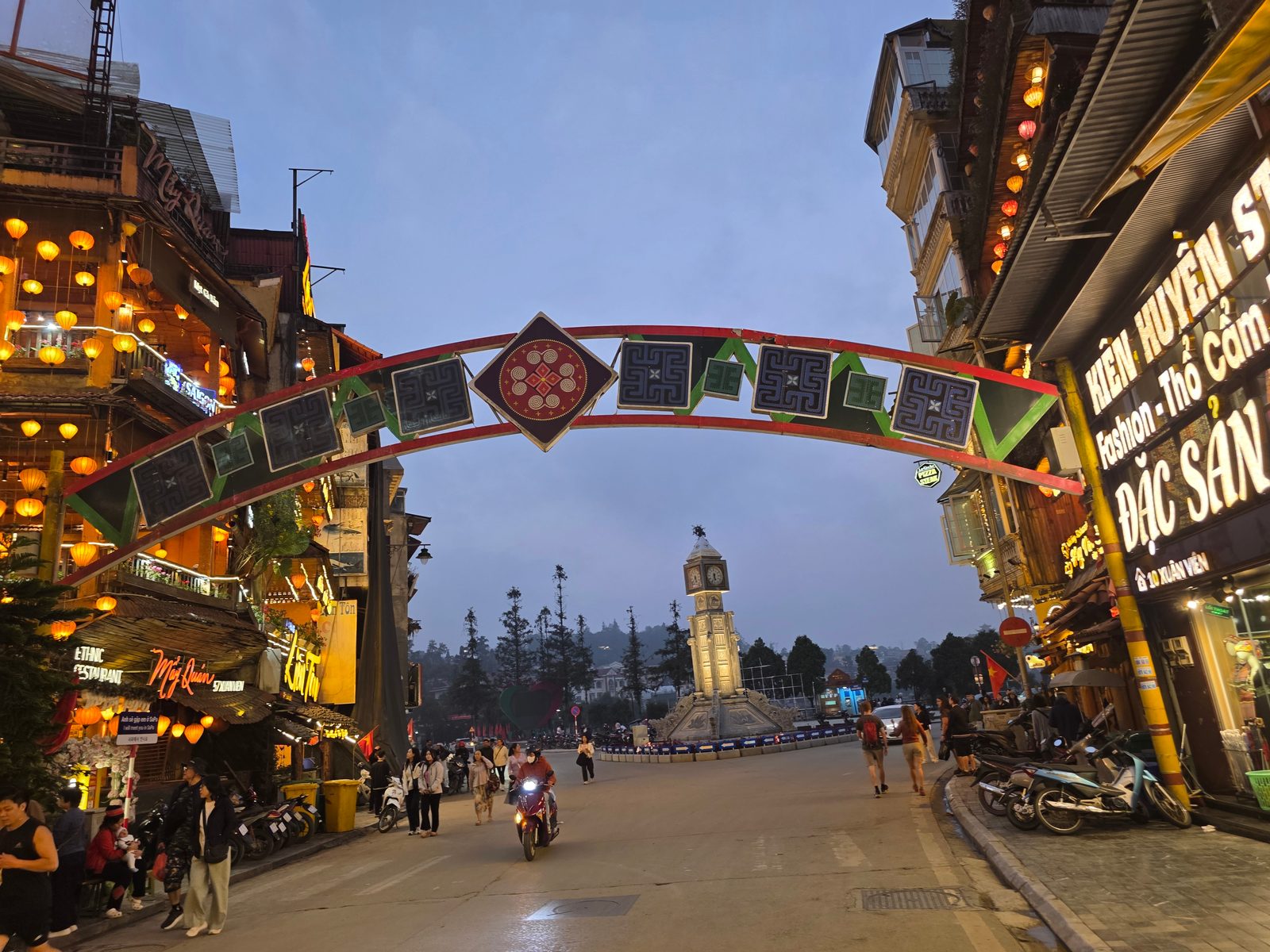
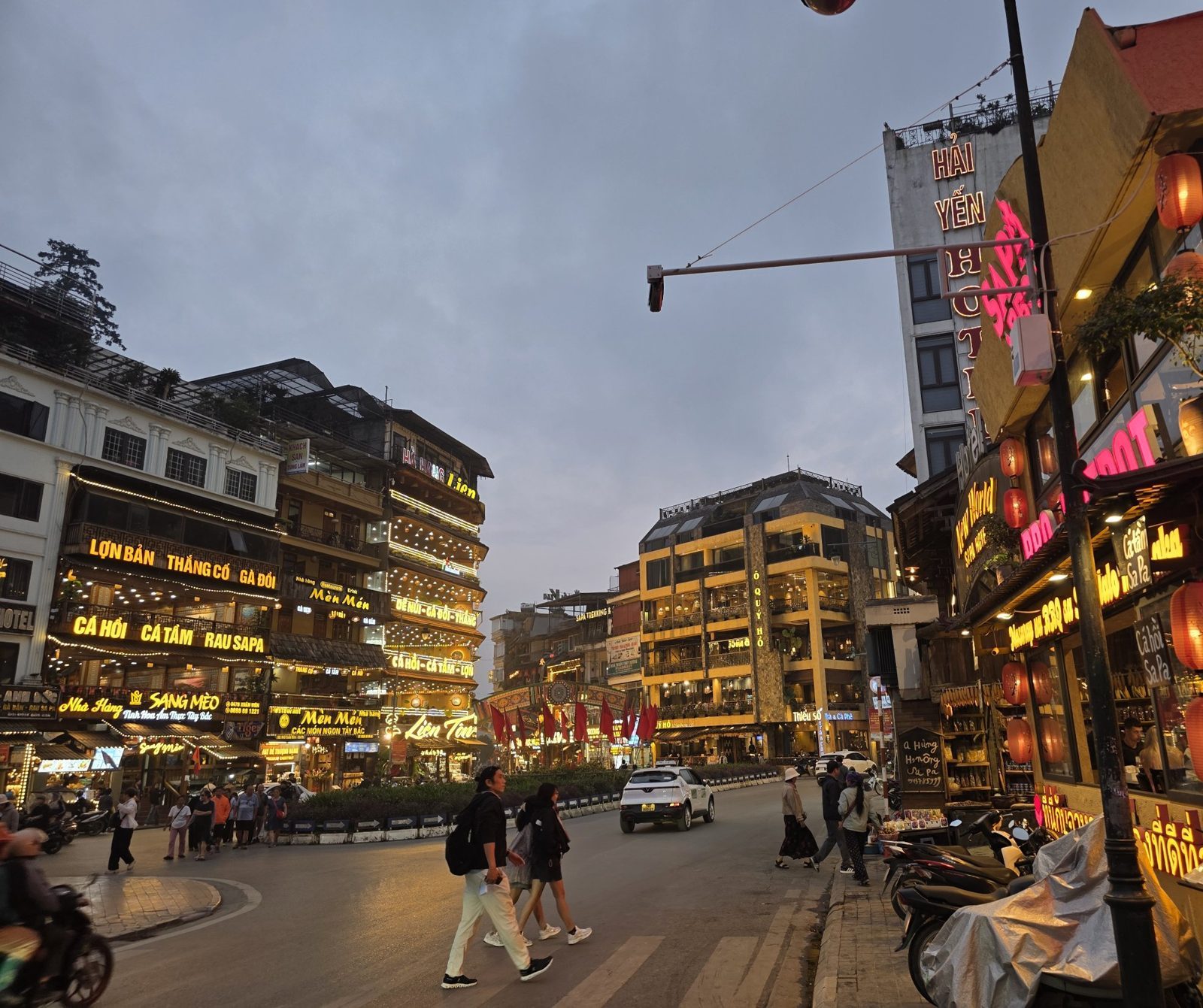
Hmong patterns for an archway, and neon signs for salmon and sturgeon.
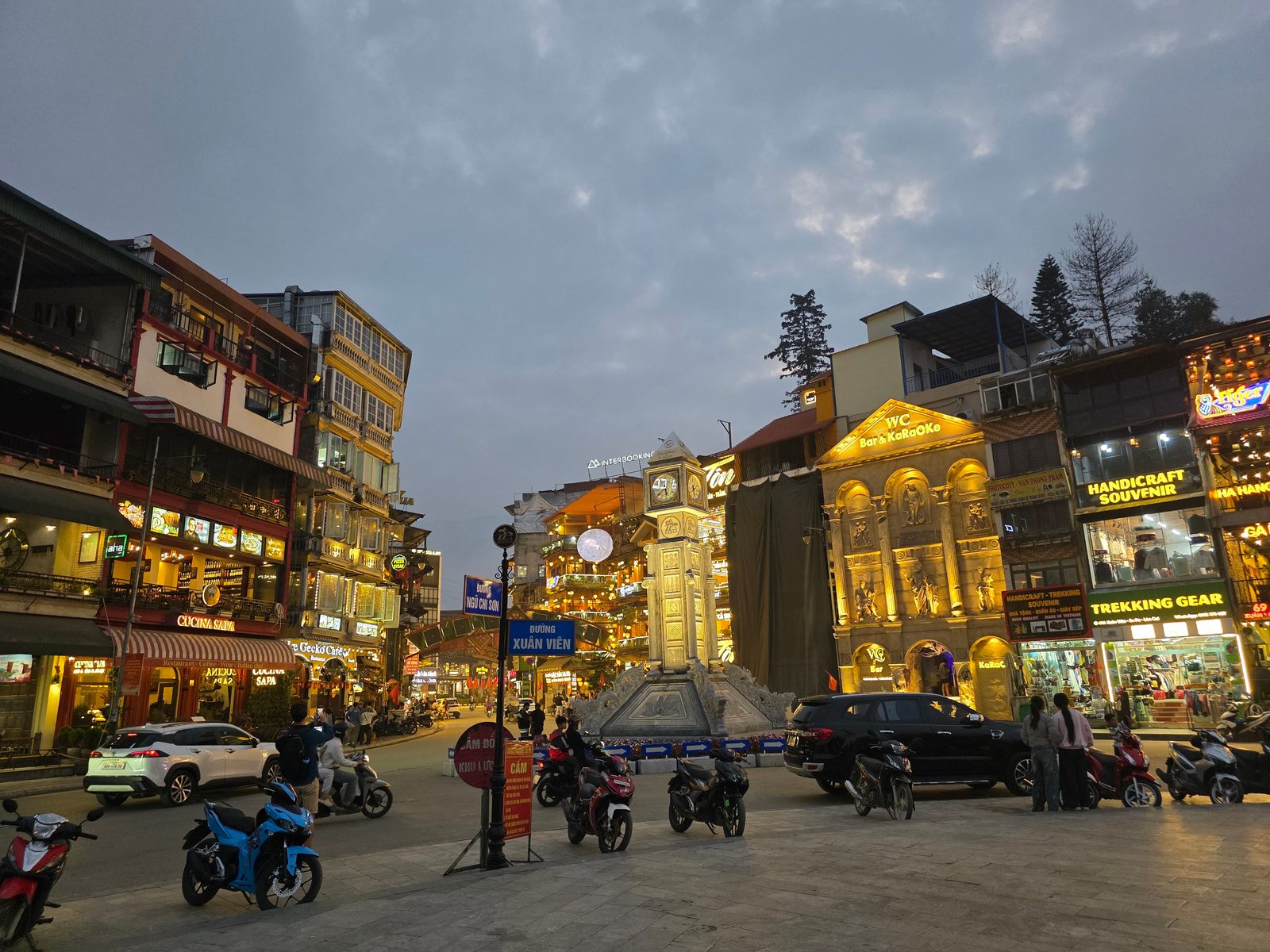
The square lights up. The scooters stay parked.
Salmon in the Vietnamese mountains? The cold waters of the northern highlands are well suited to it. Cold-water fish farming didn't exist in Vietnam in the early 2000s; it took off from the end of that decade, notably thanks to a partnership with Finnish researchers. Today, salmon and sturgeon have become Sapa specialties, in hot pot, as sashimi or grilled.
One last detour by the lake. A light sculpture rises from a bed of marigolds, and the water, perfectly still, reflects all the lights of the town. On the way, a big globe on a traffic circle makes us smile: “Sapa, City in the Fog”. After the day we've just had, we can confirm.
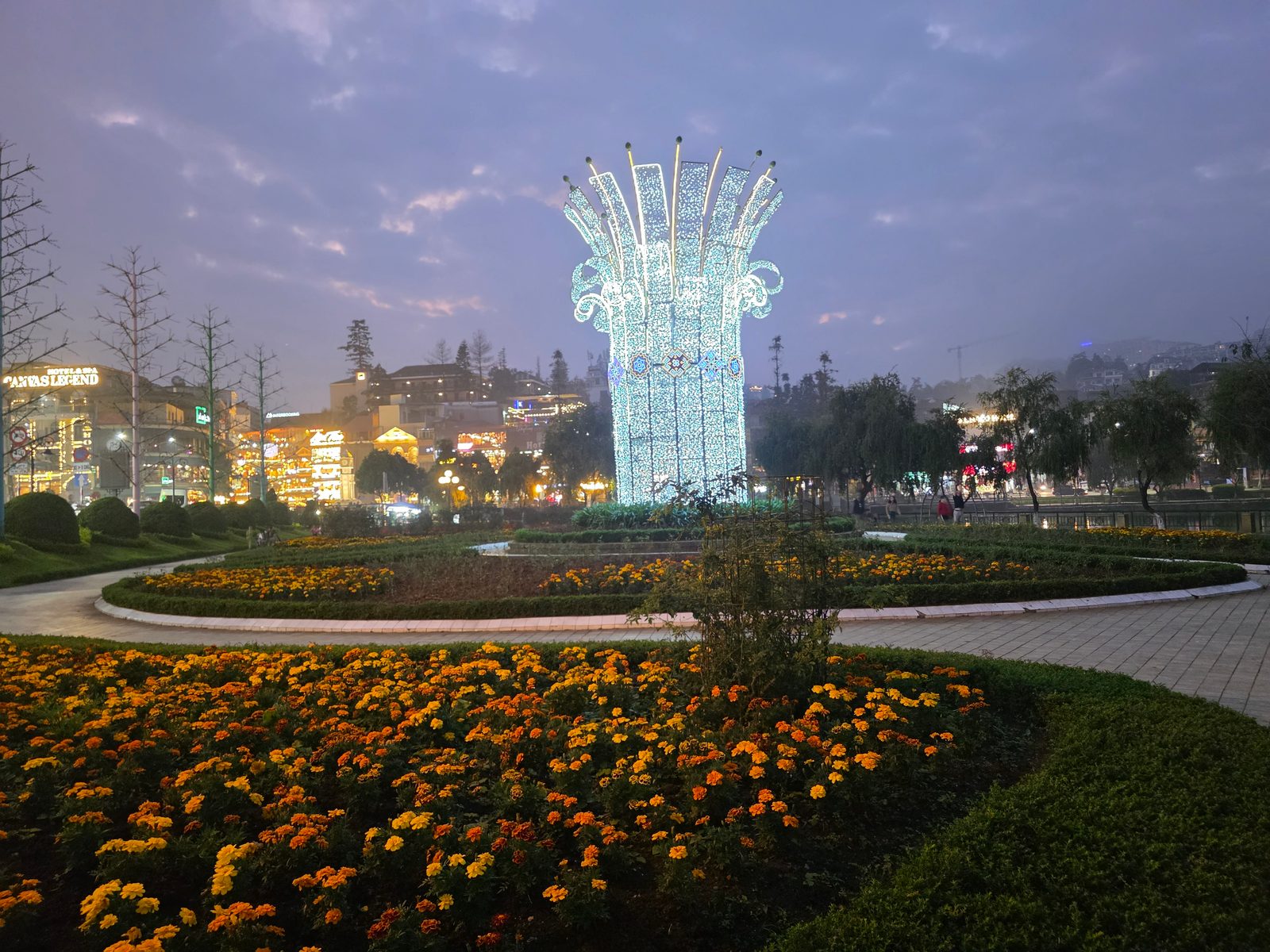
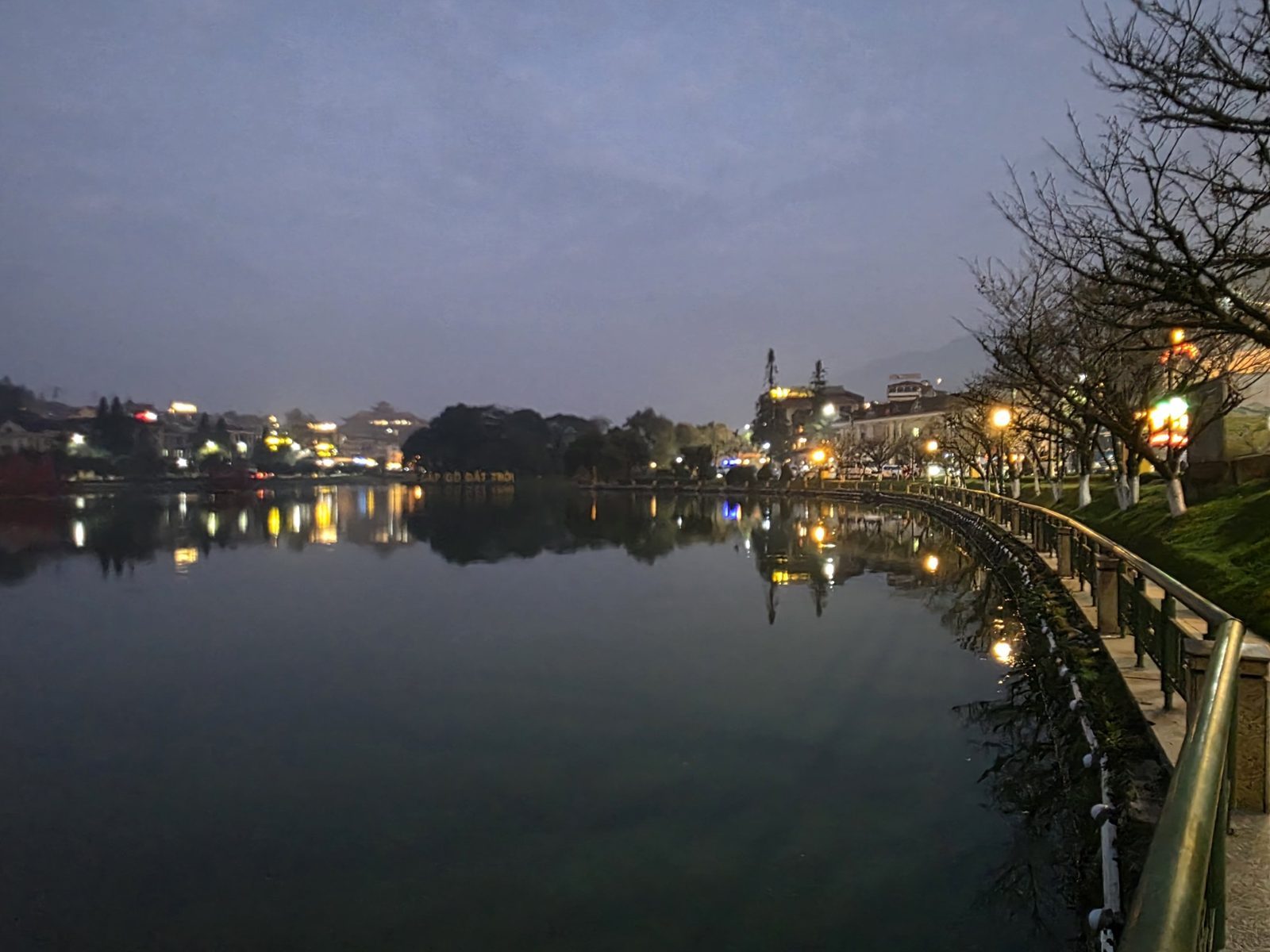
The light sculpture, then the lake reflecting the whole town.
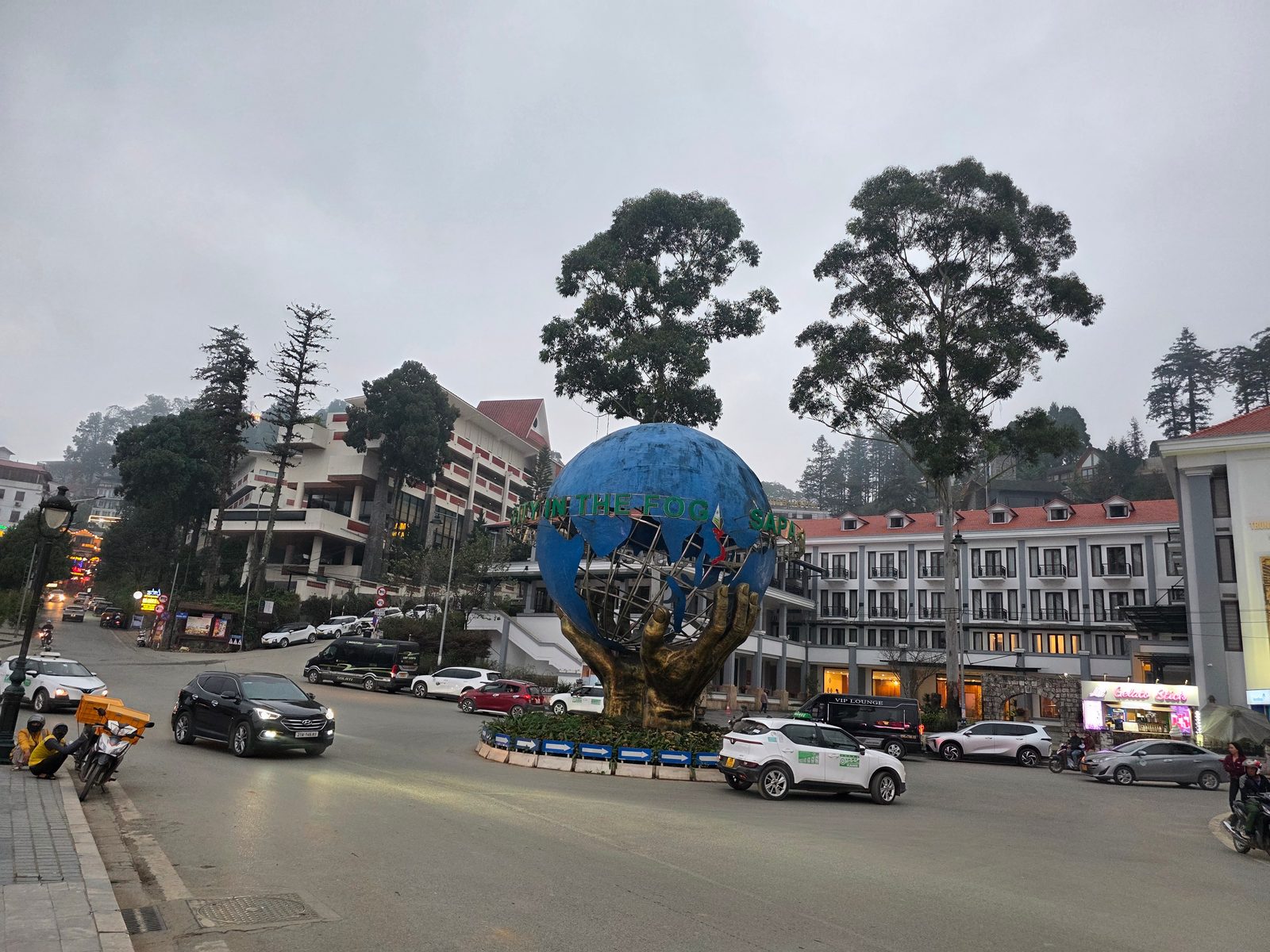
“City in the Fog”. Couldn't have summed up the day better.
October 28 · 7 pm
Dinner for seventeen
Back to Hmong House by Grab, for dinner with our hosts, on time this time. Around the big table, seventeen travelers. On driftwood platters decorated with bougainvillea, the dishes arrive one after another: eggplant fritters, stir-fried squash, water spinach with garlic, tofu with mushrooms, fritters, shredded meat, white rice. Everyone digs in, everyone shares. A delicious dinner.
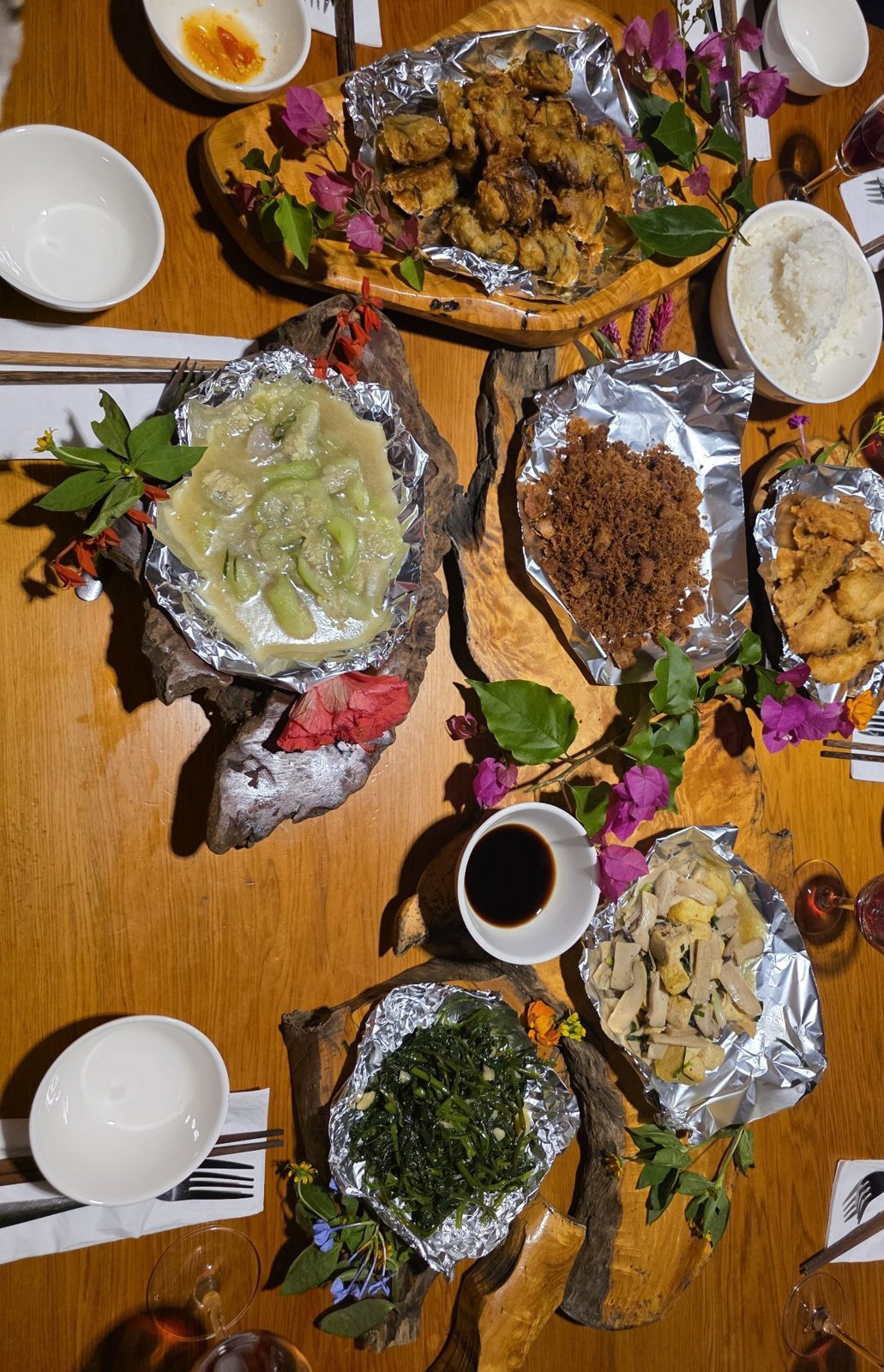
The evening table, dressed with flowers as if for a party.
And Sú, our host, picks up where she left off the night before. She tells us more memories of her childhood, here, in the valley.
Back by Grab, once again. A quick practical note: in Sapa, Grab works wonderfully. In the morning, our driver even waited for us during the whole bath before taking us to Fansipan. Then bedtime. Tomorrow, we head back down to Hanoi.
Getting around Sapa. The Grab app works very well, by car or by scooter, including to reach the villages around Tả Van or Tả Phìn. For a morning with several stops, ask the driver if he can wait for you: ours did, no problem.
To Sú and her sister, also Sú, who run Hmong House with as much courage as smiles: thank you for your welcome, your breakfasts facing the valley, your plates of rice made at 8:30 pm for latecomers, and your stories, which will stay with us for a long time.
To the whole family and the village children, for the songs, the dances and the múa sạp that put our ankles to the test. And to our drivers, including the one who waited for us through the whole herbal bath without ever losing patience.
And to all the travelers we met around the big table at Hmong House, from the four corners of the world: for the fits of laughter between the bamboo poles, the dinners for seventeen and the goodbyes on the last morning. We arrived as strangers, and left with memories in common.